Super Garuda Shield 2026: 5 Key Facts Revealed
Super Garuda Shield 2026 has begun in Indonesia, bringing together the United States, Indonesia and military personnel from numerous partner countries for one of the region’s largest annual multinational exercises.
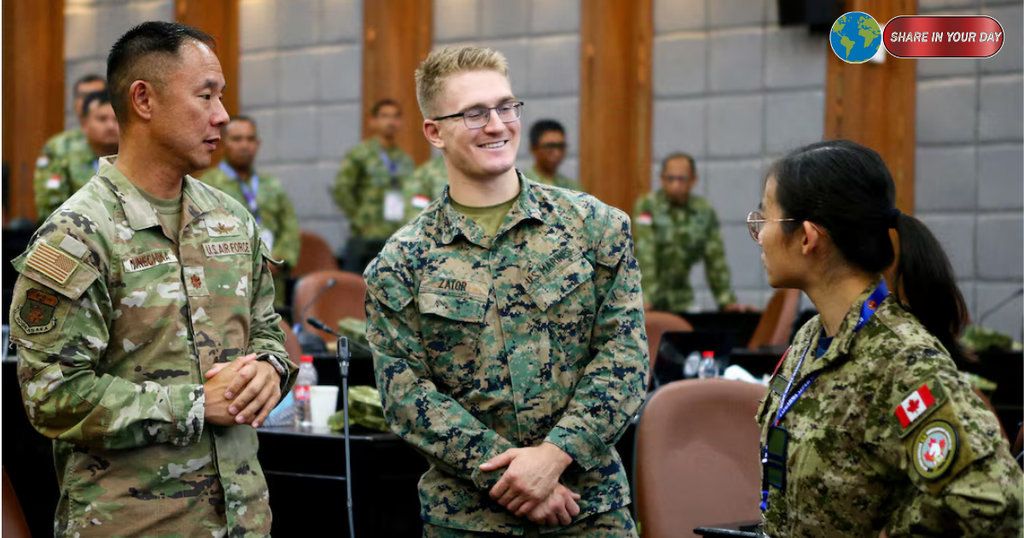
The exercise opened on August 31 and is scheduled to continue through September 11. Reuters reported that more than 4,700 military personnel are taking part, with 13 other countries participating alongside Indonesia and the United States. Japan, South Korea, Australia and Canada are among the participating nations. RReuters+1
The 2026 edition is particularly significant because it is the first Super Garuda Shield exercise since Indonesia and the United States announced a new defence partnership earlier this year.
The drills cover a wide range of military activities, including tactical airborne operations, missile firing, jungle warfare, cyber defence and naval manoeuvres. Exercises are being conducted across several areas of Indonesia, highlighting the increasingly multinational character of the annual event. RReuters+1
Beyond battlefield readiness, the exercise also reflects Jakarta’s broader approach to maintaining defence relationships with multiple major powers while preserving its long-standing independent foreign policy.
Here are five key facts about Super Garuda Shield 2026 and why the exercise matters.
1. Super Garuda Shield 2026 Brings Together More Than 4,700 Personnel
One of the most important features of Super Garuda Shield 2026 is its scale.
More than 4,700 military personnel are participating in this year’s exercise, according to Reuters. The drills involve Indonesia, the United States and 13 other participating countries. RReuters+1
Indonesia’s military has separately reported a broader figure of 4,743 multinational personnel and said that 21 countries are involved as troop-contributing or participating nations. The Indonesian military listed countries including Australia, Brazil, Brunei Darussalam, India, the United Kingdom, Italy, Japan, Germany, Cambodia, Canada, South Korea, Laos, New Zealand, France, Singapore, Thailand, Timor-Leste and Vietnam alongside Indonesia and the United States. TTNI PPID
That level of participation makes the exercise more than a bilateral Indonesia-US event.
It has become a platform for military cooperation across a broad group of Indo-Pacific countries. Personnel from different armed forces have the opportunity to work together, learn common procedures and improve their ability to operate alongside one another.
For Indonesia, that multinational dimension is especially important.
The country occupies a strategically significant position between the Indian and Pacific oceans. Its geography includes thousands of islands and major sea lanes, making maritime security, disaster response and regional military cooperation important components of its defence planning.
2. Super Garuda Shield 2026 Comes After a New US-Indonesia Defence Partnership
The 2026 exercise carries additional diplomatic significance because it follows a new defence cooperation partnership between Washington and Jakarta.
Reuters reported that the two countries’ defence ministers signed the partnership in April. Indonesia has said the agreement will include US support for military modernization initiatives and training for Indonesian troops. IInvesting.com
The timing gives this year’s exercise added importance.
Super Garuda Shield has been held annually since 2006. However, the 2026 edition takes place against a backdrop of broader efforts by Indonesia and the United States to strengthen defence ties. IInvesting.com+1
The exercise therefore provides a practical opportunity to translate political agreements into military cooperation.
Joint exercises can help countries identify differences in equipment, communications, procedures and operational planning. They can also allow troops to build personal relationships that may become valuable during future regional security operations or humanitarian emergencies.
For Washington, closer cooperation with Indonesia provides another avenue for engagement in Southeast Asia.
For Jakarta, the relationship provides access to training and cooperation while allowing Indonesia to maintain its own strategic independence.
3. Super Garuda Shield 2026 Covers Air, Land, Sea and Cyber Operations
The breadth of the exercise is another major feature.
The drills include tactical airborne jumps, missile firing, infiltration exercises, jungle training, cyber defence and naval manoeuvres. RReuters+1
That combination reflects the changing nature of modern military operations.
Military forces increasingly need to operate across several domains at the same time. A conflict or security crisis can involve conventional ground forces, aircraft, ships, cyber networks and information systems.
Training across these areas can help participating forces improve coordination.
For example, airborne operations require close communication between aircraft and ground units. Naval exercises require coordination across ships, aircraft and command structures. Cyber exercises focus on protecting networks and maintaining communications in an environment where digital disruption can affect military operations.
Jungle warfare training is particularly relevant to Indonesia’s geography.
Much of the country’s terrain is tropical, mountainous or heavily forested. Training in those environments can help troops prepare for difficult conditions that cannot easily be replicated elsewhere.
The combination of capabilities makes Super Garuda Shield 2026 broader than a traditional field exercise.
4. The Exercise Highlights Indonesia’s Strategic Balancing Act
The military drills are also taking place against the backdrop of Indonesia’s long-standing foreign-policy approach.
Jakarta has traditionally described its foreign policy as “free and active,” meaning it seeks to maintain strategic independence rather than formally align itself with one major power bloc.
That position is increasingly important as competition between major powers intensifies across the Indo-Pacific.
Indonesia has been strengthening defence and diplomatic ties with the United States while also maintaining significant relations with China and other countries.
The Jakarta Post noted that Indonesia continues to seek good relations with both Washington and Beijing as it follows its independent foreign-policy approach. TThe Jakarta Post
That means the presence of US forces in Super Garuda Shield 2026 should not automatically be interpreted as Indonesia choosing sides in a broader geopolitical confrontation.
Instead, the exercise illustrates Jakarta’s effort to expand its defence partnerships while retaining strategic flexibility.
For Indonesia, multinational military exercises can provide practical benefits without necessarily requiring a formal military alliance.
This approach allows Jakarta to cooperate with different countries on training, disaster response, maritime security and military modernization.
5. Super Garuda Shield 2026 Includes Humanitarian and Disaster-Response Training
Although military combat capabilities receive much of the attention, the exercise also has a humanitarian dimension.
Reuters reported that the 2026 drills include humanitarian and disaster-response activities. RReuters
That is particularly relevant for Indonesia.
The country sits along the Pacific Ring of Fire and is regularly exposed to earthquakes, volcanic eruptions, tsunamis, floods, landslides and other natural disasters.
Military forces can play an important role during major disasters.
They can transport supplies, evacuate civilians, provide medical assistance, establish temporary communications and reach isolated communities when conventional infrastructure has been damaged.
Training these capabilities alongside international partners can improve coordination during a real emergency.
It also gives participating forces an opportunity to understand how different countries organize humanitarian operations.
This aspect of Super Garuda Shield 2026 therefore has significance beyond traditional defence planning.
Why Super Garuda Shield 2026 Matters for the Indo-Pacific
The importance of the exercise extends beyond Indonesia and the United States.
The Indo-Pacific has become one of the world’s most strategically important regions. It contains major shipping routes, rapidly growing economies and several areas where territorial and security disputes remain sensitive.
Indonesia’s geographic position gives it particular importance.
The country’s waters connect the Indian and Pacific oceans and include routes that are important to international trade. Stability in the region therefore has consequences for countries far beyond Southeast Asia.
Multinational exercises can contribute to military interoperability and crisis preparedness.
They can also provide a visible demonstration of cooperation without necessarily representing a permanent military alliance.
That distinction is important.
Exercises are temporary and designed primarily for training. Their presence does not by itself mean participating countries have agreed to fight together in every possible conflict.
Instead, the immediate goal is generally to improve readiness and coordination.
What Makes This Year’s Exercise Different?
Several factors distinguish Super Garuda Shield 2026 from earlier editions.
First is the timing.
The exercise is taking place shortly after the United States and Indonesia announced their new defence partnership.
Second is the increasingly multinational character of the drills.
The Indonesian military says 21 countries are represented in the 2026 exercise, while Reuters describes Indonesia, the United States and 13 other participating countries as taking part in the drills. TTNI PPID+1
Third is the range of activities.
The exercise combines conventional military training with cyber defence, jungle operations, airborne activities, naval manoeuvres and humanitarian response.
Together, these elements make the exercise a broad test of interoperability.
Super Garuda Shield and Indonesia’s Military Modernization
The exercise also fits into Indonesia’s wider efforts to develop its military capabilities.
Indonesia has been pursuing modernization across its armed forces, including improvements in equipment, training and operational readiness.
Cooperation with the United States can provide Indonesian personnel with opportunities to train alongside a highly advanced military and become familiar with different systems and procedures.
However, Indonesia’s defence relationships are not limited to Washington.
Jakarta has also developed military and defence ties with countries across Europe, Asia and the broader Indo-Pacific.
The wide participation in Super Garuda Shield 2026 reflects that approach.
Rather than relying on one external partner, Indonesia can build a network of relationships with multiple countries.
What the Exercises Mean for Regional Security
Military exercises can send several messages at once.
At the operational level, they allow troops to practice.
At the diplomatic level, they demonstrate that countries are willing to cooperate.
At the strategic level, they can signal that participating governments are investing in their ability to respond to security challenges.
But the meaning of an exercise depends on the countries involved and the political circumstances surrounding it.
In Indonesia’s case, the exercise is notable precisely because Jakarta continues to emphasize strategic autonomy.
The country can deepen defence cooperation with the United States while maintaining relations with China and other major powers.
That balancing strategy is likely to remain important as competition between major powers continues to shape the Indo-Pacific.
Super Garuda Shield 2026 Runs Through September 11
The current exercise is scheduled to run from August 31 through September 11.
During that period, participating personnel will conduct activities across several locations in Indonesia. RReuters+1
The distributed nature of the exercise reflects Indonesia’s geography and allows troops to train in different environments.
For military planners, operating across multiple locations can provide a more realistic test of command, communications and logistical systems.
It can also expose personnel to different terrain and weather conditions.
The Indonesian military has emphasized the importance of interoperability and preparedness as security challenges in the Indo-Pacific become increasingly complex. TTNI PPID
A Broader Test of Military Cooperation
Ultimately, Super Garuda Shield 2026 is about more than the number of troops or the weapons being used.
Its larger purpose is to test whether military personnel from different countries can operate effectively together.
That involves communication.
It involves logistics.
It involves command structures.
And it involves understanding how partner forces respond to rapidly changing situations.
Those capabilities can be important during both military crises and natural disasters.
For Indonesia, the exercise offers a chance to strengthen its armed forces while deepening relationships with countries across the Indo-Pacific.
For the United States and other participating nations, it provides an opportunity to improve their understanding of operating alongside Indonesian forces in one of the region’s most strategically important countries.
What Comes Next?
As Super Garuda Shield 2026 continues through September 11, attention will focus on the results of the various training activities and the level of cooperation achieved among participating forces.
The exercise is unlikely to resolve the region’s larger strategic challenges.
However, it can improve the practical ability of countries to communicate and cooperate when facing common security or humanitarian problems.
The new US-Indonesia defence partnership gives this year’s drills an additional layer of importance.
It suggests that military cooperation between Jakarta and Washington is entering a new phase, while Indonesia continues to preserve its broader policy of strategic independence.
For the Indo-Pacific, that balance will be worth watching.
Super Garuda Shield 2026 demonstrates how Indonesia is positioning itself at the center of regional security cooperation without formally abandoning its independent foreign-policy approach.
With thousands of personnel, numerous participating nations and exercises spanning land, air, sea, cyber and humanitarian operations, the 2026 edition represents a significant step in the evolution of Indonesia’s annual defence exercise.
The drills may last less than two weeks.
Their broader strategic significance could last considerably longer.