Shein Hong Kong IPO Debut Reveals 5 Key Market Signals
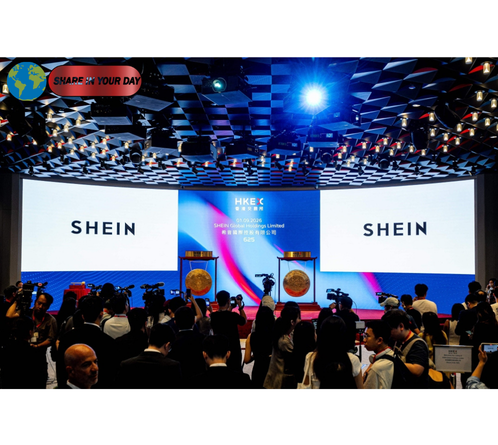
The Shein Hong Kong IPO has finally brought one of the world’s most closely watched fast-fashion companies onto the public market, but its debut delivered a sobering message for investors. Shares of the online fashion retailer began trading in Hong Kong on September 1 after a lengthy and complicated path to a public listing, with market performance reflecting concerns about the company’s growth prospects, competitive advantages and regulatory challenges.
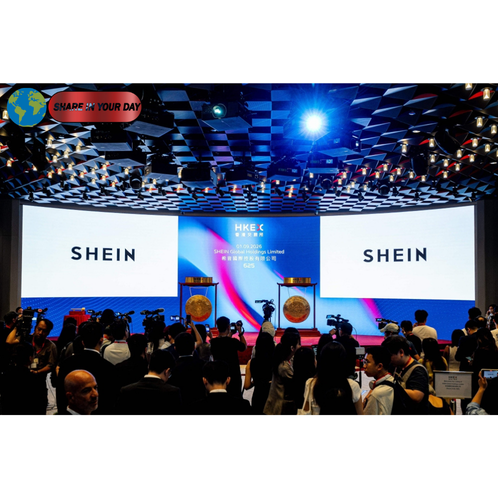
The listing marked a major milestone for Shein after years of failed attempts to go public in other major financial centers. However, rather than producing the strong first-day rally often associated with a highly anticipated initial public offering, the company’s shares struggled to generate significant enthusiasm.
The market reaction has placed renewed attention on the challenges facing the fast-fashion giant. Shein built its global reputation on ultra-low prices, a massive online product selection and a supply chain designed to respond quickly to consumer trends. Yet changes in tariffs and import rules, increasing regulatory scrutiny and growing competition are now testing the durability of that business model.
The Shein Hong Kong IPO therefore represents more than a corporate fundraising event. It has become an important test of investor confidence in one of the world’s best-known online fashion retailers.
According to Reuters’ coverage of the Shein debut, the company’s shares failed to produce the kind of first-day surge many investors had expected from such a high-profile listing.
1. Shein’s Long-Awaited IPO Finally Reaches the Market
The road to the Shein Hong Kong IPO was far from straightforward. The company spent years pursuing a public listing while facing political, regulatory and investor scrutiny.
Shein previously explored other major markets, including New York and London. Those efforts ultimately failed to produce a successful listing, making Hong Kong the destination for the company’s eventual market debut.
The successful completion of the IPO gives Shein access to public-market capital and establishes a market value that investors can assess in real time. However, reaching the stock market does not automatically solve the challenges that delayed the listing process in the first place.
Before the debut, Reuters reported that Shein planned to sell 280 million shares at a price range of HK$47.60 to HK$49.50, potentially raising up to approximately $1.8 billion. The planned offering valued the company at up to about $27 billion.
That represented a dramatic reduction from the company’s previous private-market valuation, which had approached $100 billion in 2022.
The difference illustrates how dramatically investor expectations have changed. High-growth technology and consumer companies can experience rapid increases in private-market valuations during favorable market conditions. However, public markets often impose a more demanding test because investors can immediately react to new risks, economic changes and doubts about future profitability.
2. The Shein Hong Kong IPO Faced a Much Lower Valuation
One of the biggest stories surrounding the Shein Hong Kong IPO is the sharp decline in the company’s valuation compared with its earlier private-market peak.
At its previous high point, Shein was valued at nearly $100 billion. Its Hong Kong listing, however, placed the company at a valuation of roughly $27 billion at the upper end of its planned range, according to Reuters.
That decline does not necessarily mean Shein has suddenly become a weak business. Instead, it reflects a combination of changing market conditions and increasing uncertainty around the company’s future growth.
Investors are now examining several critical questions:
- Can Shein maintain rapid sales growth?
- Will tariffs and import changes raise operating costs?
- Can the company preserve its ultra-low-price advantage?
- How much will regulatory compliance cost?
- Will competitors take market share?
- Can Shein successfully expand beyond its traditional business model?
The answers to those questions will help determine whether the Shein Hong Kong IPO eventually becomes a successful long-term public-market story or a warning about the limits of ultra-fast growth.
For investors, valuation matters because it shapes expectations. A company valued at $100 billion must justify enormous future growth. A lower valuation may create a more realistic starting point, but it also signals that the market sees meaningful risks.
3. Growth Concerns Are Becoming a Major Challenge
Shein became a global retail powerhouse by selling inexpensive clothing to consumers around the world. The company’s business model relied heavily on speed, digital marketing and a vast network of suppliers capable of producing new products quickly.
This approach helped the company reach shoppers across approximately 160 countries, according to Reuters reporting before the IPO.
However, the environment that supported Shein’s extraordinary growth is changing.
Tariff and duty changes in major markets, including the United States and Europe, have created new pressure on companies that rely heavily on cross-border e-commerce. For Shein, these changes are especially important because competitive pricing has been one of its strongest advantages.
If shipping products into key markets becomes more expensive, the company may face difficult choices. It could absorb higher costs and reduce margins, raise prices for consumers or find ways to improve operational efficiency.
None of those options is easy.
Higher prices could weaken the appeal of ultra-cheap fashion. Lower margins could affect profitability. Meanwhile, additional investments in logistics and compliance could increase the company’s overall cost structure.
This explains why investors have been closely watching Shein’s ability to adapt.
4. Regulatory Risks Continue to Shadow Shein
Another major issue surrounding the Shein Hong Kong IPO is regulatory scrutiny.
Reuters reported that Shein has faced environmental, social and governance concerns that have resulted in investigations and regulatory actions in several countries. The company has also faced criticism involving issues such as labor standards, environmental practices and business transparency.
The company has maintained that it operates with strong standards of corporate governance, transparency and accountability.
Nevertheless, regulatory pressure has become an important risk for investors.
Governments around the world are paying closer attention to fast fashion because of concerns about waste, environmental impact and consumer protection. At the same time, regulators are examining how global e-commerce companies market products, calculate discounts and manage cross-border sales.
For a publicly traded company, these issues can have a direct financial impact.
Regulatory investigations may result in fines or changes to business practices. New rules can increase compliance costs. Negative publicity can also affect consumer confidence and investor sentiment.
The Shein Hong Kong IPO therefore places the company under even greater public scrutiny. As a listed company, Shein’s market performance will now be closely connected to its ability to manage these risks.
5. A Muted Debut Sends a Message to Investors
The lack of a strong first-day rally was one of the clearest signals from the Shein Hong Kong IPO.
Highly anticipated IPOs sometimes experience a significant increase in their share price on the first day of trading. Such rallies can reflect strong demand and optimism about future growth.
Shein did not receive that kind of immediate market endorsement.
Reuters reported that the shares struggled during their Hong Kong debut as investors considered the impact of setbacks that had delayed the company’s listing and weakened some of its competitive advantages.
The market reaction suggests that investors are not simply focusing on Shein’s enormous global brand recognition.
Instead, they are asking whether the company’s past growth can continue under new economic and regulatory conditions.
That distinction is important.
A successful business does not automatically guarantee a successful stock investment. Public-market investors evaluate a company’s future earnings potential, competitive position, risks and valuation.
Shein must now convince investors that it can continue growing while facing higher costs and a more challenging global environment.
What the Shein Hong Kong IPO Means for the Fast-Fashion Industry
The implications of the Shein Hong Kong IPO extend beyond a single company.
The fast-fashion industry is undergoing significant change. Consumers continue to demand affordable products and rapidly changing styles, but governments and regulators are increasingly focused on the environmental and social consequences of the industry’s business model.
Companies must now balance speed and low prices with sustainability, compliance and transparency.
Shein’s public debut could become an important case study for other digital-first retailers.
If the company successfully adapts to the new environment, it could demonstrate that the ultra-fast-fashion model can evolve. However, if growth slows significantly or costs rise faster than expected, competitors and investors may reconsider the long-term economics of the industry.
The company’s ability to strengthen its supply chain, diversify markets and manage regulatory challenges will therefore be closely watched.
Why Hong Kong Became Shein’s IPO Destination
The decision to list in Hong Kong followed years of uncertainty surrounding Shein’s attempts to go public.
Hong Kong provides access to international investors while also serving as a major financial gateway for companies connected to China and the wider Asian economy.
For Shein, the listing offered a path to the public markets after earlier plans elsewhere encountered obstacles.
The move also highlights Hong Kong’s continuing importance as a fundraising center for major companies seeking access to global capital.
The success or failure of the Shein Hong Kong IPO could influence future listing decisions by other large consumer and technology companies with complex international business structures.
Investors will be watching not only Shein’s share price but also trading volumes, institutional ownership and the company’s ability to deliver on its future growth plans.
What Happens Next for Shein Shares?
The first day of trading is only the beginning of Shein’s life as a public company.
In the coming months, investors are likely to focus on several areas.
First, they will watch revenue growth in key markets. The United States and Europe remain crucial regions for the company’s global strategy.
Second, investors will examine how tariff and duty changes affect prices and profit margins.
Third, regulatory developments could have a major influence on market sentiment. New investigations, penalties or compliance requirements may affect investor confidence.
Fourth, Shein’s competitive position will remain under pressure. The global online retail market is crowded, and companies must continually innovate to keep consumers engaged.
Finally, the company will need to demonstrate that its lower public-market valuation represents an opportunity rather than a sign of permanent decline.
The Shein Hong Kong IPO has given investors a new way to evaluate those questions every day through the public market.
The Bottom Line
The Shein Hong Kong IPO marks the end of a long journey toward the public markets, but it also begins a far more demanding chapter for the global fast-fashion company.
Shein’s arrival on the Hong Kong Stock Exchange comes with enormous brand recognition and a global customer base. However, investors are now weighing those strengths against substantial risks.
A sharply lower valuation, changing tariff and import rules, regulatory scrutiny and questions about future growth have all shaped the company’s market debut.
The muted reaction from investors shows that Shein cannot rely solely on its past success.
Instead, the company must prove that it can evolve.
The next phase of the story will depend on whether Shein can protect its low-price advantage while adapting to stricter regulations and changing global trade conditions. If it succeeds, the Shein Hong Kong IPO could eventually become the foundation for a new period of growth.
If those challenges intensify, however, the company’s difficult market debut may prove to be an early warning of a much tougher future.
For now, Shein’s public-market journey has officially begun, and investors around the world will be watching closely.