Greece Jet Crash: 2 Pilots Killed at Air Show
A Greece jet crash at an annual air show north of Athens has killed two Greek Air Force pilots, authorities said, after a twin-seat F-4 Phantom fighter jet crashed during a low-altitude maneuver in front of thousands of spectators.
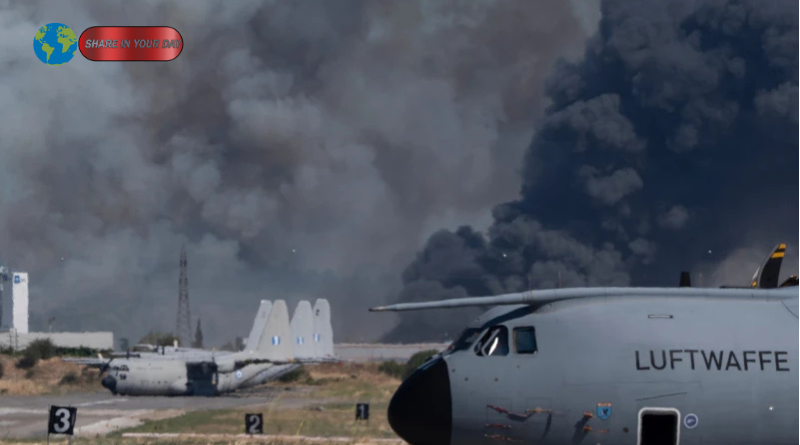
The aircraft went down Saturday at Tanagra Air Base, about 60 kilometers north of Athens, while taking part in Athens Flying Week. The crash produced a large fire and thick black smoke that could be seen rising above the airfield.
Although the accident happened in front of a large crowd, officials said there were no reported injuries among spectators. Emergency crews quickly moved to contain the fire while authorities ordered people in areas near the base to evacuate.
The tragedy has since prompted the cancellation of the remaining air-show events and three days of mourning by the Greek Air Force.
Greece Jet Crash Happens During Low-Altitude Maneuver
The Greece jet crash occurred as the F-4 Phantom was performing a display maneuver at relatively low altitude.
According to reports, the aircraft had been airborne for only a short time when it entered a low right-hand turn. Video footage from the event showed the jet descending before striking the ground and erupting into flames.
The aircraft was a twin-seat F-4 Phantom operated by the Hellenic Air Force. The jet was participating in Athens Flying Week, a major aviation event that attracts military and civilian aircraft teams as well as large numbers of aviation enthusiasts.
The exact cause of the crash has not yet been established.
Authorities are expected to examine the aircraft wreckage, flight data and available video footage as part of an investigation into what happened during the maneuver.
That process could take time. Investigators typically need to establish whether an accident resulted from a mechanical problem, pilot-related factors, environmental conditions, or a combination of circumstances.
Two Greek Air Force Pilots Killed
The most serious consequence of the accident was the loss of both crew members aboard the aircraft.
The Greek Air Force confirmed that the two pilots were killed in the crash. Their deaths have led to an official period of mourning within Greece’s military aviation community.
Greek Prime Minister Kyriakos Mitsotakis expressed his sorrow following the incident and recognized the risks faced by military aviators.
The tragedy has also drawn condolences from neighboring countries. Cyprus Defense Minister Vasilis Palmas expressed sympathy to the Greek government and the families of the pilots.
For the Greek Air Force, the crash represents a significant loss. Military pilots routinely conduct demanding training and demonstration flights in aircraft that require precise control, particularly during low-altitude displays.
Thousands of Spectators Witnessed the Crash
One of the most disturbing aspects of the Greece jet crash was that it happened while thousands of people were watching the air show.
Athens Flying Week attracts aviation fans who gather to watch military aircraft perform high-speed passes, turns and other demonstrations. The crash occurred during one of those displays, meaning many spectators immediately saw the aircraft disappear into the ground and a large column of smoke rise from the crash site.
Despite the frightening scene, officials said there were no reported injuries among people watching the event.
That outcome was particularly significant because an aircraft crashing at an air show can potentially create a much larger disaster if it reaches crowded spectator areas.
In this case, the aircraft came down away from the main crowd. Firefighters then worked to prevent the resulting blaze from spreading.
Emergency services deployed numerous aircraft and helicopters as part of the response. The fire was eventually contained, although the crash initially generated heavy smoke and complicated rescue operations.
Athens Flying Week Events Canceled
The crash immediately changed the schedule for Athens Flying Week.
Following the deaths of the two pilots, the remaining displays were canceled. Authorities also issued an evacuation order for an area close to Tanagra Air Base while emergency personnel dealt with the aftermath.
The decision reflected both the seriousness of the incident and the need to give emergency responders and investigators unrestricted access to the area.
Air shows depend heavily on strict safety procedures because aircraft operate at high speeds and, in some demonstrations, at extremely low altitudes.
When a serious accident occurs, organizers must not only consider the immediate emergency but also determine whether continuing the event would be appropriate.
In this case, officials chose to end the remaining activities.
What Is Known About the F-4 Phantom
The aircraft involved was an F-4 Phantom, a legendary fighter design originally developed in the United States.
The F-4 became one of the most recognizable military aircraft of the Cold War era. It was operated by numerous air forces around the world and served in a variety of roles, including air superiority, interception, ground attack and reconnaissance.
Greece has operated F-4 Phantom aircraft for decades, making the type an established part of the country’s military aviation history.
The Greek aircraft involved in the accident was a two-seat version.
While the F-4 is an older aircraft design, age alone does not establish the cause of an accident. Military aircraft can remain operational for many years when they receive extensive maintenance, upgrades and inspections.
Therefore, investigators will need to determine what specifically happened during Saturday’s flight before drawing conclusions about the aircraft.
Investigation Into the Greece Jet Crash
The investigation into the Greece jet crash is expected to focus on the moments immediately before the aircraft went down.
Officials will likely examine the aircraft’s maintenance history, flight-control systems, engine performance and other technical components.
Investigators can also analyze video recordings captured by spectators and broadcasters. Air-show crashes are often recorded from multiple angles because of the large number of cameras and smartphones at major aviation events.
Those recordings can provide valuable information about the aircraft’s flight path, attitude and behavior immediately before impact.
However, video alone cannot necessarily establish why an aircraft crashed.
Investigators must combine visual evidence with technical examinations and information from the aircraft and its operating history.
At this stage, authorities have not publicly identified a definitive cause.
That distinction is important because early speculation following an aviation accident can often be wrong. The official investigation should provide a more reliable explanation once sufficient evidence has been collected.
No Spectators Reported Injured
Despite the dramatic nature of the accident, one of the few positive developments was that the crowd was apparently spared from physical harm.
The Greece jet crash occurred in an area away from the main spectator concentration, and no injuries among the audience were reported.
The result could have been dramatically different if the aircraft had crashed into the viewing area.
Air-show organizers typically establish safety zones around display areas specifically to reduce the risk to spectators if an aircraft experiences an emergency.
The accident highlights why those separation zones and emergency procedures remain essential even at highly organized aviation events.
Greece Mourns the Two Pilots
The deaths have cast a shadow over what was intended to be a celebration of aviation.
The Greek Air Force declared three days of mourning following the crash, while national officials offered condolences to the pilots’ families and colleagues.
Military aviation demonstrations are designed to showcase the skill, discipline and capabilities of pilots and aircraft. Yet the risks involved can never be completely eliminated.
For the pilots’ families and fellow service members, the event has become a moment of mourning rather than celebration.
The investigation will now seek to determine precisely what happened and whether anything can be learned that could prevent a similar accident in the future.
What Happens Next?
The investigation will remain the key development following the Greece jet crash.
Authorities will examine the wreckage and reconstruct the aircraft’s final moments. Investigators will also review available recordings and operational information.
The findings could eventually clarify whether the crash was linked to a technical malfunction, an issue during the maneuver, human factors, or another cause.
Until that work is completed, officials are unlikely to make definitive statements about why the aircraft went down.
For now, the confirmed facts are stark: two Greek Air Force pilots died when an F-4 Phantom crashed during an Athens Flying Week demonstration at Tanagra Air Base, while thousands watched from the surrounding area. The crowd escaped injury, but the accident brought the air show to an immediate end.
The incident is also a reminder of the risks inherent in military aviation. Demonstration pilots perform highly demanding maneuvers under strict conditions, often with very little room for error.
As Greece mourns the two pilots, attention will turn to the investigation and the answers it may provide about one of the country’s most serious recent air-show accidents.