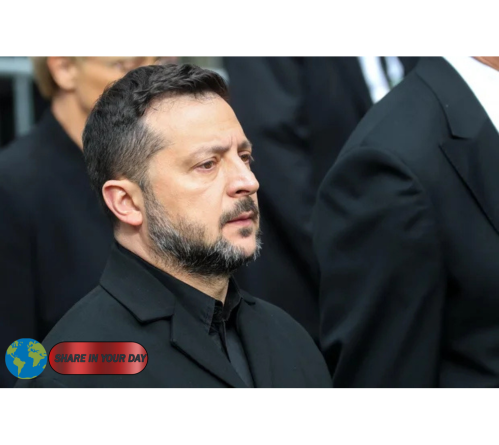
Zelenskyy Plane Drone Alert Raises Fresh Security Fears
A Zelenskyy plane drone incident has raised new questions about airspace security after Norway’s prime minister said the aircraft carrying Ukrainian President Volodymyr Zelenskyy was almost hit by a drone while preparing to leave Moldova for Norway.
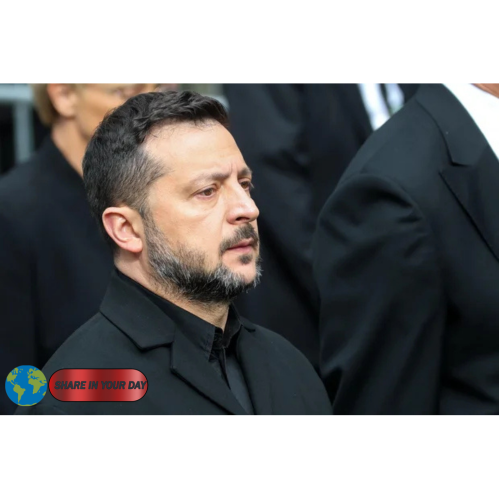
Norwegian Prime Minister Jonas Gahr Støre told Norway’s public broadcaster NRK that Zelenskyy’s flight was nearly struck during takeoff from Moldova. The statement came as the Ukrainian president was traveling to Oslo for the state funeral of Norway’s King Harald V.
The incident adds another layer of security concerns surrounding Zelenskyy’s international travel. Ukraine has faced years of Russian missile and drone attacks, while neighboring countries including Moldova and Romania have increasingly dealt with incidents involving military drones crossing or approaching their airspace.
However, details surrounding the reported near miss remain limited. Støre did not disclose his source or explain exactly how close the drone came to the aircraft. A source in the Ukrainian presidency also offered a more cautious account, saying the incident involved a drone alert in Moldova after a Russian drone entered Moldovan and Romanian airspace. The source described the suggestion that Zelenskyy was directly at risk as exaggerated.
Zelenskyy Plane Drone Alert Delayed Departure
The incident occurred Tuesday as Zelenskyy was preparing to travel from Moldova to Oslo.
According to Moldovan authorities, the country temporarily closed its airspace after a drone entered the region. The disruption affected multiple flights at the time, including Zelenskyy’s aircraft.
Reuters reported that two Russian drones entered Moldovan airspace. One eventually came down in northern Moldova, while another continued toward Romanian airspace. Moldovan authorities temporarily halted air traffic while the situation was assessed.
The Ukrainian president’s flight was eventually cleared to depart after officials determined that the immediate threat had passed.
The episode illustrates the difficulty of maintaining civilian aviation operations in a region increasingly affected by the war in Ukraine.
Although Moldova is not a member of NATO, it borders Ukraine and Romania and sits close to one of Europe’s most active conflict zones. Drone activity associated with the war has repeatedly created security concerns beyond Ukraine’s internationally recognized borders.
Norway’s Prime Minister Says Plane Was Nearly Hit
Støre’s comments brought international attention to the incident.
“His flight was almost hit by a drone when it was taking off from Moldova,” the Norwegian prime minister said, according to CBS News and other reports.
Støre added that this was part of the reality Zelenskyy faces because of the war.
However, he did not provide additional information about the alleged near collision. It remains unclear how close the drone came to the presidential aircraft, whether it was deliberately approaching the plane or whether the aircraft and drone simply occupied overlapping airspace.
That distinction is important.
A drone entering the same general area as a civilian aircraft does not necessarily mean that the aircraft was deliberately targeted. Without additional information about the drone’s flight path, altitude, distance from Zelenskyy’s aircraft and operator, the precise level of danger cannot be established.
A Ukrainian presidential source subsequently gave a more measured description, saying an alert was triggered when a Russian drone entered Moldovan and Romanian airspace. The source characterized the claim that Zelenskyy faced direct danger as exaggerated.
Moldova Temporarily Closed Its Airspace
Moldova’s response demonstrates the seriousness with which officials treated the drone activity.
According to Moldovan officials, airspace restrictions were imposed after a drone entered the country. The measures delayed several aircraft while authorities investigated the situation.
The drone later crashed in northern Moldova, with officials reporting an explosion and fires. AP reported that the drone came down in a sunflower field in the Riscani district, roughly 160 kilometers from Chișinău International Airport. No injuries were reported from the crash.
Moldovan investigators reportedly found fragments resembling those of a Geran-type drone, a model widely associated with Russian attacks in Ukraine.
The incident is particularly significant because Moldova has repeatedly found itself caught between the security consequences of Russia’s war against Ukraine and its own efforts to maintain neutrality and territorial security.
The country’s location makes it vulnerable to spillover from the conflict, particularly when drones operate close to its borders.
The Zelenskyy Plane Drone Incident Came During a Royal Funeral
Zelenskyy was traveling to Norway for the funeral of King Harald V.
Harald died on August 28 at the age of 89 after more than three decades on the Norwegian throne. His state funeral in Oslo brought together European royals, heads of state and political leaders from more than 20 countries.
The ceremony included a large procession through central Oslo, with thousands of Norwegians gathering along the streets to pay their respects.
Zelenskyy joined other international leaders during the funeral procession. The event also attracted Britain’s Prince William, Japan’s Crown Prince Akishino and monarchs from several European countries.
The presence of the Ukrainian president was particularly notable given the security circumstances surrounding his journey.
Zelenskyy has become one of the world’s most closely protected political leaders since Russia launched its full-scale invasion of Ukraine in February 2022. His overseas trips frequently involve significant security planning because of the ongoing conflict.
Zelenskyy Discussed European Air Defense in Norway
The trip was not limited to the funeral.
Before attending the ceremony, Zelenskyy met with Norwegian officials and defense industry representatives. Discussions included military assistance for Ukraine and efforts to strengthen European air defense.
Zelenskyy and Støre also discussed the European FREYJA anti-ballistic initiative, which aims to improve cooperation among European countries on protection against airborne threats.
The timing was striking.
While Zelenskyy was in Norway discussing the need for stronger defenses against missiles and drones, a drone incident had already disrupted his journey from Moldova.
Zelenskyy has repeatedly argued that European security cannot be separated from the war in Ukraine. The growing number of drone incidents near European borders has strengthened that argument.
Why Drone Incidents Are Becoming a European Security Concern
The reported Zelenskyy plane drone incident is part of a broader pattern.
Russia and Ukraine have used drones extensively throughout the war. Their relatively low cost, long range and ability to carry explosives have made unmanned aircraft an important part of modern warfare.
But drone operations can create risks far beyond the battlefield.
When drones cross into neighboring countries, governments must quickly determine whether they pose a threat to civilian populations, airports, military installations or aircraft.
Romania, a NATO member, has previously reported drone debris and incursions linked to fighting across the border in Ukraine. Moldova has also faced similar concerns despite not being a NATO member.
The latest incident demonstrates how difficult it can be to maintain a clear boundary between a war zone and surrounding civilian airspace.
For governments, even a drone that is not deliberately targeting an aircraft can create a potentially dangerous situation.
No Evidence the Aircraft Was Deliberately Targeted
Despite the dramatic headline, officials have not established that Zelenskyy’s aircraft was intentionally targeted.
That distinction should remain central when assessing the incident.
Støre said the plane was almost hit by a drone, but he did not explain how that conclusion was reached or identify the source of the information.
Meanwhile, the Ukrainian presidential source offered a different emphasis, describing the situation as a drone alert and arguing that the claim of direct danger had been overstated.
Moldovan authorities confirmed the wider drone incident and the temporary closure of the country’s airspace, providing independent evidence that there was a genuine aviation security disruption.
However, the available information does not establish that the drone was deliberately aimed at Zelenskyy’s aircraft.
That distinction is especially important because the consequences of misidentifying a drone threat could be significant. A suspected hostile drone near a presidential aircraft could trigger emergency procedures, military responses or additional restrictions on civilian aviation.
Security Concerns Follow Zelenskyy Beyond Ukraine
Zelenskyy’s travels have become an important part of Ukraine’s diplomacy.
The president regularly visits European capitals, the United States and other allied countries to secure military assistance, financial support and diplomatic backing.
Those journeys also highlight the extraordinary security challenges created by the war.
Unlike most political leaders, Zelenskyy travels while his country remains an active battlefield. Russian missile and drone attacks continue across Ukraine, while weapons and military activity increasingly affect areas near neighboring countries.
The reported drone incident in Moldova therefore carries significance beyond the president himself.
It demonstrates that the security environment surrounding Ukraine can affect international aviation and political travel in neighboring European countries.
What Happens Next?
More information will be needed before the full circumstances of the incident can be established.
Authorities would need to determine the drone’s exact route, altitude, distance from Zelenskyy’s aircraft and point of origin. Investigators may also seek to establish whether the drone entered Moldovan airspace intentionally or as part of a wider military operation.
For now, the confirmed elements are narrower than some headlines suggest.
A drone triggered an aviation alert in Moldova. Moldovan airspace was temporarily closed. A drone subsequently crashed in northern Moldova. And Norway’s prime minister said Zelenskyy’s aircraft was almost hit by a drone while preparing to take off.
The Ukrainian side, however, has disputed the characterization that Zelenskyy was in immediate danger.
That leaves an important question unanswered: exactly how close did the drone come to the presidential aircraft?
Until officials release more information, the answer remains unclear.
A Warning for European Airspace
The Zelenskyy plane drone incident nevertheless sends a powerful warning about the changing security environment in Europe.
Drones once viewed primarily as battlefield weapons are now affecting civilian aviation, border security and diplomatic travel.
For Moldova, the event underscores the vulnerability of its airspace to the wider conflict. For Romania and other neighboring NATO countries, it reinforces concerns about accidental or deliberate incursions. And for Zelenskyy, it is another reminder that the risks associated with Russia’s war follow him even when he leaves Ukraine.
The Ukrainian president ultimately reached Oslo and attended King Harald V’s funeral alongside international leaders and members of European royalty. He then continued his international travel, with Canada among his next destinations, according to Norwegian officials.
The incident may have lasted only moments, but its implications are much broader.
As drone warfare expands, European governments face an increasingly difficult challenge: protecting civilian airspace while distinguishing genuine attacks from accidental incursions and ensuring that political leaders can travel safely through regions exposed to the consequences of war.
For now, the Zelenskyy plane drone episode remains an unresolved security incident rather than confirmed evidence that the Ukrainian president’s aircraft was deliberately targeted.
But it is another striking example of how quickly the war in Ukraine can reach beyond the battlefield.