Houthi Rebels Seize Red Sea Island in Major Threat
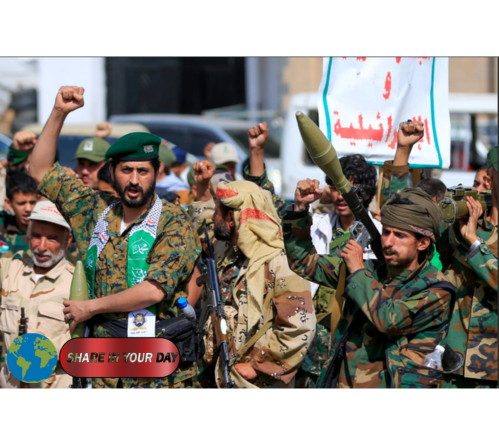
Houthi rebels have seized the strategic Mayun Island at the southern entrance to the Red Sea, raising fresh concerns about international shipping, Saudi oil exports and the wider security crisis surrounding the region.
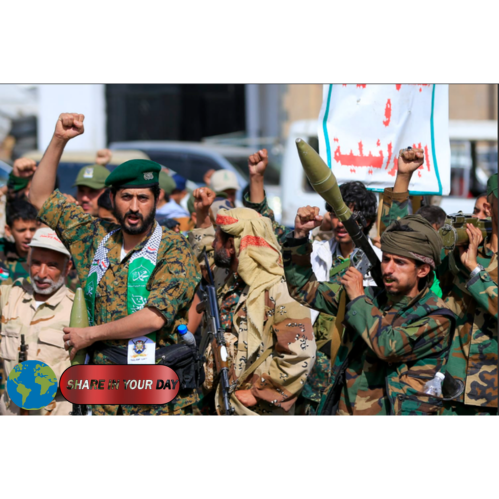
The capture of the island comes as tensions involving Yemen, Iran and Saudi Arabia continue to intensify. The development gives the Iran-backed Houthi movement a position near the Bab el-Mandeb Strait, one of the world’s most important maritime chokepoints.
At the same time, Saudi Arabia announced that it had shut down a major cross-country oil pipeline as a precaution following attacks. The combination of the Houthi advance and disruption to Saudi energy infrastructure has created another layer of uncertainty for global oil markets and commercial shipping.
The developments underscore how quickly the conflict in the Middle East can spread beyond traditional battlefields and affect international trade, energy supplies and transportation routes.
Houthi Rebels Capture Strategic Mayun Island
The capture of Mayun Island represents a significant development in Yemen’s long-running conflict.
Mayun, also known as Perim Island, sits near the Bab el-Mandeb Strait, the narrow waterway connecting the Red Sea with the Gulf of Aden. Its location gives it considerable strategic importance because ships traveling between the Mediterranean and the Indian Ocean commonly pass through the wider Red Sea route.
According to the Associated Press report, the takeover was confirmed by officials from Yemen’s internationally recognized government as well as a Houthi official.
The Houthis have said maritime navigation remains safe for companies except those linked to Saudi Arabia. However, the group’s growing control over territory near a critical shipping corridor is likely to increase concern among shipping companies, governments and energy traders.
The strategic importance of Mayun goes beyond Yemen itself.
The Bab el-Mandeb Strait is a key route for international commerce. Any sustained disruption could force shipping companies to consider longer alternative routes, increasing transportation times, fuel costs and insurance expenses.
Why the Bab el-Mandeb Strait Matters
The Bab el-Mandeb Strait is one of the most important maritime chokepoints in the world.
It connects the Red Sea to the Gulf of Aden and provides an essential link between European and Asian markets. Ships traveling between the Suez Canal and destinations in the Indian Ocean region rely on the broader route.
The waterway is especially important for energy shipments.
Saudi Arabia has increasingly relied on Red Sea routes as a way to reduce its exposure to disruption around the Strait of Hormuz. The two waterways therefore have become closely connected to the region’s energy security.
The seizure of Mayun Island creates the possibility of additional pressure on a route that was already facing serious security challenges.
Houthi attacks on commercial shipping since late 2023 have already caused many international carriers to avoid parts of the Red Sea. A further escalation could make the route even less attractive to major shipping companies.
That could have consequences well beyond Yemen.
Saudi Arabia Shuts Down Major Oil Pipeline
Saudi Arabia also announced the temporary shutdown of its East-West oil pipeline following attacks.
The pipeline has become particularly important during the disruption of shipping through the Strait of Hormuz because it provides Saudi Arabia with an alternative way to transport crude toward the Red Sea.
The pipeline stretches across Saudi Arabia and has historically provided the kingdom with a way to move oil toward its western coast without relying entirely on maritime traffic through the Persian Gulf.
Its importance has increased during the current regional crisis.
Saudi authorities described the shutdown as a precautionary measure after attacks. The government did not immediately identify the attackers in its announcement.
The decision highlights the vulnerability of energy infrastructure even when countries attempt to create alternative supply routes.
For Saudi Arabia, the Red Sea has served as an important outlet at a time when shipping through the Strait of Hormuz has faced major disruption.
The Houthi advance near the southern entrance of the Red Sea therefore creates an uncomfortable strategic problem for Riyadh.
Yemen Becomes a Larger Front in the Regional Conflict
The latest developments also show how Yemen is becoming increasingly connected to the broader conflict involving Iran and other regional powers.
The Houthis have maintained close ties with Iran for years, although Tehran has repeatedly denied directly arming the movement.
The group seized Yemen’s capital, Sanaa, in 2014, triggering a wider civil war. Saudi Arabia subsequently led a military coalition that intervened in an effort to restore Yemen’s internationally recognized government.
A fragile period of relative calm followed years of intense fighting.
However, recent military developments have raised concerns that the conflict could once again expand.
The Houthi capture of the Red Sea port city of Mokha and the subsequent seizure of Mayun Island represent major territorial developments. They also demonstrate the strategic importance of Yemen’s western coastline.
Control of this area provides the Houthis with greater leverage over maritime routes and could increase pressure on Saudi Arabia and other regional actors.
Shipping Companies Face New Uncertainty
The biggest international concern may be what the latest developments mean for commercial shipping.
The Red Sea has already become a difficult operating environment for major shipping companies. When vessels face the possibility of missile, drone or other attacks, operators have to balance the shorter Red Sea route against the additional risks.
Some companies have responded by diverting vessels around the Cape of Good Hope.
That alternative route can add significant distance to journeys between Asia and Europe. Longer voyages require more fuel and crew time and can also increase insurance and operating costs.
If the security situation deteriorates further around the Bab el-Mandeb Strait, more shipping companies could decide that the additional expense of rerouting is preferable to the risks of passing through the Red Sea.
That could create another shock for global supply chains.
Consumers may not immediately notice the effect of a single maritime incident. But repeated disruptions can gradually increase freight rates, delivery times and the cost of imported goods.
Oil Markets Remain Particularly Vulnerable
Energy markets are also closely watching the situation.
Saudi Arabia is one of the world’s largest oil producers, making any disruption involving its infrastructure important for global markets.
The East-West pipeline provides an alternative route for Saudi crude, particularly when shipping conditions in the Persian Gulf become difficult.
Closing the pipeline, even temporarily, highlights the extent to which the regional conflict is affecting the kingdom’s ability to move energy supplies.
The combination of threats around the Strait of Hormuz and growing risks around the Bab el-Mandeb creates a difficult situation for international energy markets.
Traders are already sensitive to any development that could reduce the availability of crude oil or make transportation more expensive.
A prolonged disruption in multiple maritime corridors could therefore place additional upward pressure on energy prices.
Higher oil prices can affect transportation, manufacturing and household expenses around the world.
The Houthi Threat Extends Beyond Shipping
The latest AP reporting also highlights another unusual dimension of the Yemen conflict: the use of artificial intelligence in weapons development.
Anthropic, the company behind the Claude artificial intelligence system, said it had blocked users in Houthi-controlled northern Yemen after identifying attempts to use its AI models in advanced weapons development.
The company said some users were attempting to work on sophisticated weapons systems, including precision and long-range missiles.
Anthropic said there was no evidence that the users successfully deployed such a weapon.
The development illustrates how armed groups can increasingly access commercially available technology and attempt to apply it to military purposes.
It also demonstrates that the Yemen conflict is evolving alongside broader technological changes in warfare.
For governments and technology companies, the case raises difficult questions about how artificial intelligence can be misused by organizations operating in conflict zones.
Iran’s Role Adds Another Layer of Risk
The Houthi advance is also being closely watched because of the group’s relationship with Iran.
Iran has supported the Houthis politically and is widely viewed as an important source of assistance, although Tehran denies supplying the group with weapons.
The relationship has become increasingly significant as tensions between Iran and regional and international opponents have intensified.
The Houthis have positioned themselves as an independent military movement, while their actions have repeatedly intersected with Iran’s broader regional strategy.
That makes developments in Yemen difficult to separate from events elsewhere in the Middle East.
If tensions continue to rise between Iran and its opponents, Yemen could become an increasingly important theater of the wider conflict.
What Happens Next?
The immediate question is whether the Houthi seizure of Mayun Island will lead to further military expansion.
The group now holds a strategically important position near one of the world’s major maritime chokepoints. That does not automatically mean that international shipping will stop, but it increases the level of uncertainty surrounding the route.
Saudi Arabia also faces difficult decisions.
The kingdom must protect its oil infrastructure while maintaining reliable export routes. Any prolonged disruption could undermine efforts to use the Red Sea as an alternative to the Strait of Hormuz.
International governments and shipping companies will therefore be watching the situation closely.
The most important indicators will include whether the Houthis attempt to expand their control along Yemen’s western coastline, whether attacks on Saudi infrastructure continue and whether commercial shipping faces additional incidents.
A New Test for Global Trade
The capture of Mayun Island comes at a particularly sensitive moment for the global economy.
The world depends on a relatively small number of maritime chokepoints to move fuel, food, manufactured goods and other products. When one of those routes becomes dangerous, the consequences can spread quickly through international supply chains.
The Bab el-Mandeb Strait is particularly important because of its connection to the Suez Canal and the Red Sea.
The latest Houthi advance does not mean global trade has been cut off. Ships have alternative routes, and governments have other options for protecting maritime traffic.
But alternatives are rarely as efficient as the original route.
Longer journeys mean higher costs. Higher shipping costs can eventually contribute to higher prices for businesses and consumers.
That is why the situation in Yemen is being closely monitored far beyond the Middle East.
Bottom Line
The Houthi rebels’ seizure of Mayun Island has introduced a potentially significant new risk to Red Sea shipping at a time when the region is already facing severe geopolitical tensions.
The island’s location near the Bab el-Mandeb Strait gives the Houthis a strategically important position, while Saudi Arabia’s decision to shut down its East-West oil pipeline demonstrates the growing pressure on regional energy infrastructure.
For global markets, the biggest concern is whether these developments remain limited or become part of a wider campaign against shipping and energy infrastructure.
If tensions continue to escalate, the consequences could reach far beyond Yemen, affecting oil prices, shipping costs, supply chains and international trade.
For now, Mayun Island has become another focal point in an increasingly complex Middle Eastern crisis — and a reminder of how quickly instability around a strategic maritime corridor can become a global economic concern.