Volkswagen Jobs Cut Plan Reaches 100,000 by 2030
The Volkswagen jobs cut plan has expanded into one of the biggest workforce restructurings in the global automotive industry, with the German automaker now targeting roughly 100,000 position reductions by the end of the decade.
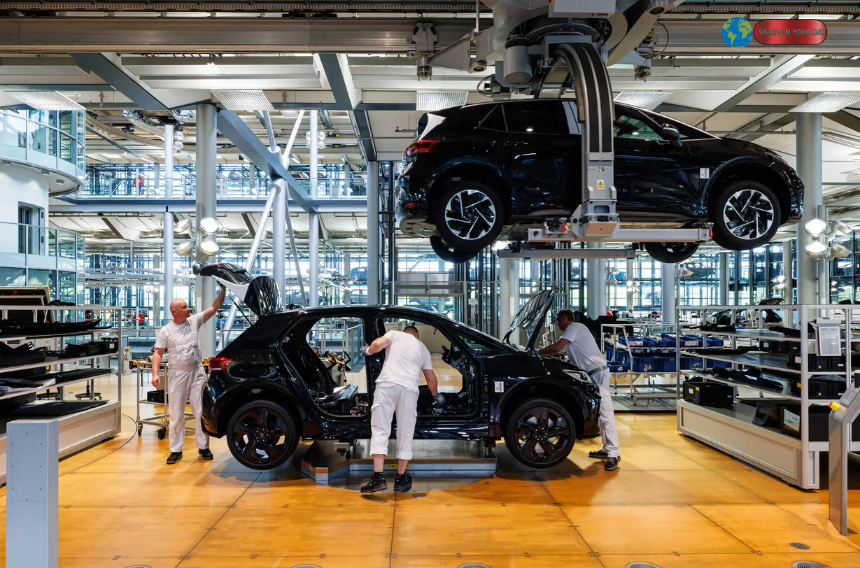
Volkswagen’s supervisory board unanimously approved its Future Plan 2030 earlier this week. The latest agreement adds another 50,000 planned reductions to cuts already announced, according to Reuters and other reports. RReuters+1
The restructuring comes as Volkswagen faces several major challenges at the same time.
The company is dealing with higher costs in Germany, weaker demand in China, increasingly aggressive competition from Chinese automakers and the impact of U.S. tariffs. At the same time, Volkswagen is attempting to make its business more competitive as the global automotive industry shifts toward electric vehicles, software and increasingly localized production. RReuters+1
For employees, the announcement represents a major change in the future of one of Germany’s most important industrial employers.
However, the 100,000 figure should not be interpreted as 100,000 immediate layoffs. Much of the workforce reduction is expected to happen gradually through measures such as early retirement, voluntary departures, natural attrition and other agreements with employee representatives.
Volkswagen Jobs Cut Numbers Double Under New Plan
Volkswagen had already agreed to substantial workforce reductions before the latest Future Plan 2030 was approved.
The newest agreement adds approximately 50,000 additional reductions by 2030. Combined with previously announced cuts, the company’s planned workforce reduction reaches around 100,000 positions. RReuters+1
That figure represents roughly 15% of Volkswagen Group’s workforce based on its employee count at the end of 2025, according to reporting on the restructuring. TThe Rio Times
The scale is significant because Volkswagen is not a small specialist manufacturer. The group includes major brands such as Volkswagen Passenger Cars, Audi, Porsche, Škoda, SEAT/CUPRA and other businesses.
The cuts therefore have implications far beyond a single factory or brand.
They could affect administrative operations, management, manufacturing, development and other areas as Volkswagen attempts to reduce its fixed-cost base and eliminate excess capacity.
Volkswagen has emphasized that the transformation is intended to create a stronger and more competitive company rather than simply reduce its workforce.
The company’s official Future Plan says its objective is to make the group more resilient, efficient and competitive while concentrating its model portfolio on the most attractive market segments. VVolkswagen Group+1
Why Is Volkswagen Cutting So Many Jobs?
Several forces are driving the restructuring.
One of the biggest problems is Volkswagen’s cost structure in Germany.
The company has large production facilities and a highly skilled workforce, but manufacturing vehicles in Germany has become increasingly expensive. Volkswagen is also facing excess production capacity at a time when demand is not strong enough to fully utilize its factories.
According to reporting on the Future Plan, Volkswagen’s supervisory board recognized that European production capacity exceeds demand by hundreds of thousands of vehicles. Eeto
That creates a difficult business equation.
If factories produce fewer vehicles, fixed costs are spread across a smaller number of cars. Volkswagen therefore needs to reduce expenses while simultaneously improving the profitability of the vehicles it sells.
The company is attempting to address that problem through a combination of workforce reductions, lower complexity, fewer models and changes to its production footprint.
China Competition Is Increasing Pressure
China is another major reason behind Volkswagen’s restructuring.
For decades, China was one of Volkswagen’s most important markets. The company established a powerful position there through joint ventures and a broad range of vehicles.
But the Chinese market has changed dramatically.
Domestic automakers have expanded rapidly, particularly in electric vehicles. Companies such as BYD and other Chinese manufacturers have increasingly competed on price, technology and software.
Volkswagen has struggled to maintain the same level of dominance as local competitors have become more sophisticated.
The pressure is particularly important because Chinese automakers are no longer competing only inside China.
Several Chinese manufacturers are expanding internationally, creating additional competitive pressure for established European brands.
Volkswagen therefore needs to become faster, more cost-efficient and more responsive to changes in customer demand.
The company has also indicated that it wants to develop products more specifically for different regions instead of relying on a single global approach.
Volkswagen Plans to Shrink Its Model Lineup
The restructuring is not limited to employees.
Volkswagen also plans to dramatically simplify its product portfolio.
The company’s official Future Plan says its model lineup could be streamlined by up to 50%, while offering complexity could be reduced by as much as 75%. VVolkswagen Group
That is a major strategic shift.
Automakers often use a large number of models, variants and configurations to appeal to different customer groups. However, every additional model and configuration can increase engineering, manufacturing, supply-chain and marketing costs.
Volkswagen now wants to concentrate resources on models and segments that can generate stronger returns.
The strategy could mean fewer vehicles overall but greater investment in the products that remain.
For consumers, that could eventually mean a more focused Volkswagen lineup.
For employees and suppliers, however, the transition could create additional pressure as production volumes and vehicle programs are reorganized.
Four German Plants Face an Uncertain Future
The most politically sensitive part of the restructuring involves four German production sites.
The future of plants in Emden, Hanover, Zwickau and Neckarsulm remains uncertain as Volkswagen works through its long-term production strategy. Reports indicate that production at these locations could be phased down after current commitments expire, with different timelines extending into the early-to-mid 2030s. RReuters+1
Importantly, this does not mean Volkswagen has announced the immediate closure of all four factories.
The latest agreement instead leaves their long-term production future unresolved.
That distinction is significant in Germany, where automotive plants are deeply connected to local economies.
A major factory supports not only direct employees but also suppliers, logistics companies, restaurants, retailers and other businesses in surrounding communities.
Any eventual decision to end vehicle production could therefore have an economic impact well beyond Volkswagen itself.
Unions Helped Shape the Volkswagen Restructuring
Volkswagen’s workforce structure makes major changes especially complicated.
Employee representatives and unions have historically played an important role in decisions affecting German production.
The latest Future Plan was approved unanimously by Volkswagen’s supervisory board, helping avoid a potentially damaging confrontation between management, labor representatives and other stakeholders. Reuters reported that the agreement prevented a major showdown over the company’s restructuring strategy. RReuters
The compromise also reflects the importance of Germany’s existing employment protections.
Volkswagen’s previous labor agreements have emphasized socially responsible workforce reductions rather than large-scale compulsory dismissals.
That means many of the planned job reductions are expected to occur through voluntary departures, retirement programs and natural attrition.
The process could therefore take years rather than months.
Volkswagen Wants a Much Higher Profit Margin
The workforce reduction is ultimately tied to Volkswagen’s financial ambitions.
The company is targeting a substantial improvement in profitability as part of its Future Plan 2030.
Volkswagen’s operating margin fell to 3.8% in the first half of 2026, according to Reuters, compared with 7.9% in 2022. RReuters
That decline highlights the challenge facing management.
Volkswagen remains one of the world’s largest automakers, but scale alone does not guarantee high profitability.
The company wants to lower fixed costs while directing investment toward areas where it believes returns will be stronger.
Its long-term strategy includes major spending on research, development and investment while simultaneously cutting costs.
That combination is important.
Volkswagen is not simply trying to shrink.
It is attempting to redirect resources.
Electric Vehicles Are Part of the Challenge
The transition to electric vehicles has also contributed to the industry’s disruption.
Volkswagen has invested heavily in EV technology, battery production and software. However, demand has not developed at the same pace across all markets.
The result has been a difficult balancing act.
Automakers must continue investing billions in next-generation technology while also maintaining profitable combustion-engine businesses during the transition.
Meanwhile, Chinese competitors have moved aggressively into EVs and have developed strong positions in battery technology, software and cost-efficient manufacturing.
Volkswagen therefore faces pressure from both directions.
It needs to accelerate its transition while also making the current business more profitable.
The Future Plan is intended to provide the financial flexibility needed for that transformation.
Volkswagen Is Still Hiring in Some Areas
Despite the enormous workforce reduction target, Volkswagen is not eliminating every type of job.
The company’s official job portal continues to list vacancies across different areas of the group. Current listings include positions in information technology, digitalization, software development, engineering and other specialized fields. VVolkswagen Group Jobs+2
That is an important detail.
The restructuring is not simply about reducing headcount across every department equally.
Volkswagen is also trying to change the type of workforce it needs.
Software, artificial intelligence, cybersecurity, digital services and electric-vehicle technology are becoming increasingly important to modern automakers.
The company therefore may eliminate positions in some traditional areas while continuing to recruit specialized employees in strategic fields.
In that sense, the Volkswagen jobs cut strategy is also a workforce transformation.
What Happens Next?
The Future Plan 2030 now gives Volkswagen management a framework for moving forward.
The difficult part is implementation.
Reducing a workforce of this scale involves negotiations, retirement programs, voluntary departures, production changes and decisions about individual factories.
The company must also ensure that cost-cutting does not undermine its ability to develop competitive vehicles.
That will be particularly important as Volkswagen faces pressure from Chinese competitors and changing consumer preferences.
Investors initially reacted positively to the agreement. Volkswagen shares rose following the announcement as markets viewed the restructuring as a decisive step toward improving profitability. RReuters
However, analysts have also stressed that execution will be crucial.
A restructuring plan can establish targets.
It cannot guarantee that customers will buy more cars.
Volkswagen still needs to deliver attractive products, improve software, control manufacturing costs and compete successfully in major markets.
A Major Turning Point for Volkswagen
The Volkswagen jobs cut plan represents much more than a reduction in employee numbers.
It is a fundamental attempt to reshape one of the world’s largest automotive groups.
By 2030, Volkswagen could have roughly 100,000 fewer positions than before the current restructuring cycle began. At the same time, the company plans to simplify its model range, reduce complexity, improve profitability and rethink its manufacturing footprint. RReuters+1
The biggest question is whether those changes will be enough.
Volkswagen has powerful brands, a global production network and decades of experience. But the automotive industry is changing faster than at almost any point in the company’s history.
Chinese EV manufacturers are expanding.
Trade barriers are changing supply chains.
Consumers are demanding better software and technology.
And traditional automakers are being forced to rethink how they design, manufacture and sell vehicles.
Volkswagen’s Future Plan 2030 is its answer to those challenges.
The plan will bring difficult years for many employees and communities, particularly in Germany. Yet management is betting that a smaller, simpler and more efficient Volkswagen will ultimately be better positioned to compete.
The restructuring has now received the board’s approval.
The next test will be whether Volkswagen can turn those ambitious targets into a sustainable turnaround.