US Open Late Nights Raise Fresh Fairness Questions
US Open late nights have become one of the biggest talking points of the 2026 tournament, with players being pushed into unusual sleeping schedules as matches regularly continue well past midnight.
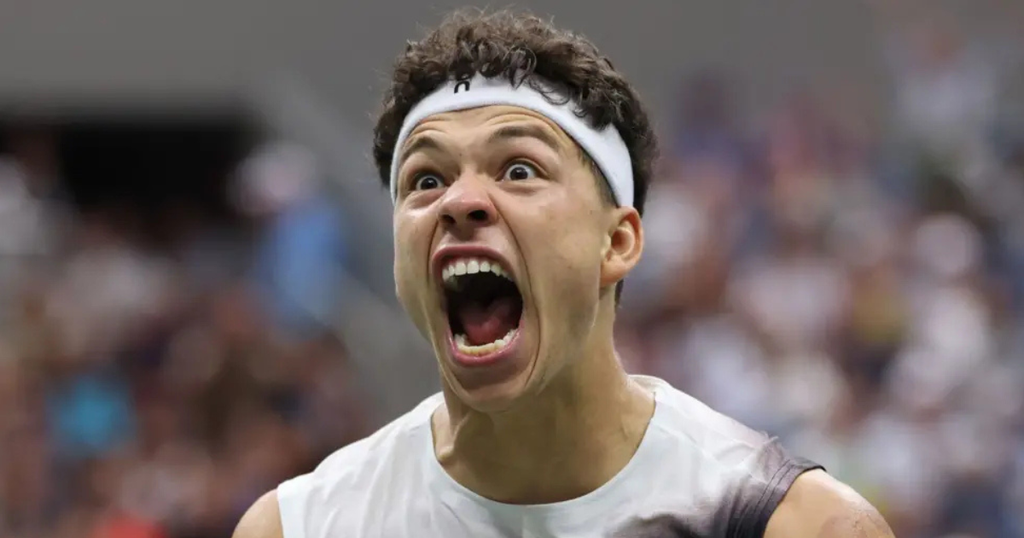
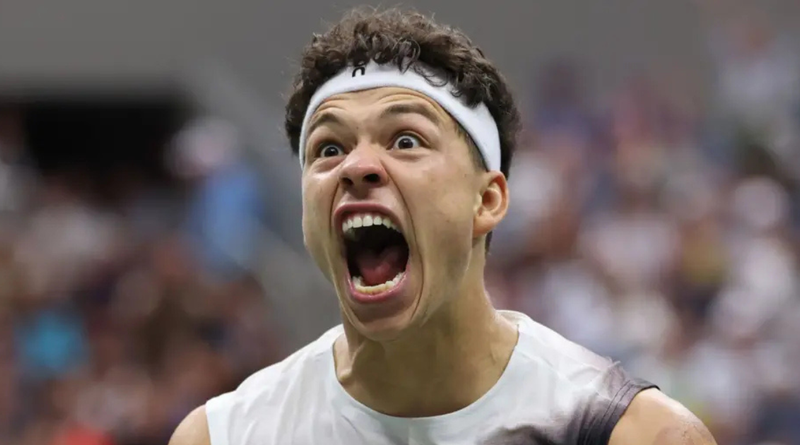
The issue has become particularly significant for men’s semifinalists Ben Shelton and Alexander Zverev. Both players have experienced extremely late finishes during their runs at Flushing Meadows, raising questions about whether the tournament’s scheduling system gives some competitors an advantage over others.
For Zverev, the problem has been persistent. The German has played three of his five matches beyond 1 a.m. and said he had gone to bed as late as 6:45 a.m. during the tournament. He compared the experience to playing the Australian Open in New York. YYahoo News
Shelton has faced an even more dramatic example.
The American’s quarter-final against defending champion Carlos Alcaraz finished at approximately 3:34 a.m. after a five-set battle. Shelton eventually prevailed in a deciding-set tie-break, securing his place in the US Open semifinals. YYahoo News+1
US Open Late Nights Put Recovery Under Pressure
The central concern surrounding US Open late nights is not simply that players are tired.
Elite tennis players depend on recovery between matches. Sleep, nutrition, hydration and physical treatment all become crucial when competitors are playing matches that can last three, four or even five hours.
When a match finishes in the early morning, the player cannot immediately return to a normal recovery schedule.
There is travel back to the hotel, post-match treatment, food, media obligations and the mental process of coming down from an intense competition.
That can push sleep deep into the morning.
Former Andy Murray strength and conditioning coach Matt Little told BBC Sport that the effects of one poor night’s sleep can continue into subsequent days. He argued that an opponent who plays earlier can benefit from having a full evening and a more conventional night’s sleep. YYahoo News
The issue becomes even more important during the final stages of a Grand Slam.
At that point, players are competing for a place in the final. Small differences in physical condition can have a major impact.
Ben Shelton Faces a Major Recovery Challenge
Shelton’s path to the semifinals has been one of the most demanding stories of the tournament.
The 23-year-old American defeated Alcaraz in a five-set quarter-final that ended in the early hours of Wednesday morning. The match finished at 3:33 a.m., according to the official US Open account, with Shelton winning 6-7 (5), 6-1, 6-3, 1-6, 7-6 (7). UUS Open+1
It was a physically and emotionally demanding performance.
Shelton had to recover from losing the opening set and withstand Alcaraz’s ability to force the match into a deciding tie-break.
The victory also carried major significance for the American.
It ended Alcaraz’s 18-match winning streak at Grand Slam level and gave Shelton a second US Open semifinal appearance. He had already reached the final four in New York in 2023. UUS Open
The schedule, however, means that the victory came with a cost.
Shelton was due to face fellow American Frances Tiafoe in the second men’s semifinal on Friday night. That gave him two days between matches, which should provide some recovery time.
Still, the question remains whether the effects of the 3:33 a.m. finish can be completely erased in such a short period.
Alexander Zverev Has Also Been Affected
Zverev’s situation is different but highlights the same scheduling problem.
The German has repeatedly been required to play late at night in New York. Three of his first five matches at the tournament finished after 1 a.m., according to BBC Sport. YYahoo News
Zverev said he had gone to bed as late as 6:45 a.m. during the tournament.
That kind of schedule can be difficult for any athlete.
It becomes particularly challenging because professional tennis requires players to maintain a routine. Training, meals, warm-ups, treatment and sleep all need to be coordinated around match times.
When a player repeatedly finishes at 1 or 2 a.m., that routine can become difficult to maintain.
Zverev’s semifinal against Karen Khachanov was scheduled for the afternoon, creating another adjustment.
Instead of preparing for another late-night match, the German suddenly had to switch toward a daytime schedule.
That change may appear minor from the outside, but professional athletes often rely on carefully controlled routines.
Is Late-Night Tennis Fair?
The question of fairness is complicated.
Late-night matches are part of the identity of the US Open. Arthur Ashe Stadium is one of tennis’s most famous venues, and evening sessions attract enormous crowds and television audiences.
New York is also a city associated with nightlife, making late finishes a familiar part of the tournament’s atmosphere.
But the entertainment value has to be balanced against athlete welfare.
A player who finishes at 3:30 a.m. may not simply wake up several hours later and return to normal.
The body needs time to recover.
That creates an uneven competitive environment when one semifinalist has played late at night while another has enjoyed an earlier finish.
The official US Open semifinal breakdown shows the difference in workloads among the remaining players. Zverev had spent 16 hours and 40 minutes on court through the semifinals, while Shelton had spent 15 hours and 41 minutes. Frances Tiafoe had played for 16 hours and three minutes, while Karen Khachanov had spent only 12 hours and 30 minutes on court. UUS Open
Those numbers do not tell the entire story.
The timing of those hours matters too.
Playing five hours during the afternoon is not necessarily the same recovery experience as finishing a five-hour match in the middle of the night.
Khachanov Benefits From a Different Schedule
Khachanov provides an interesting contrast.
The unseeded 30-year-old had not played beyond midnight during the tournament, according to BBC Sport. He also had more recovery time after his quarter-final against Alexander Blockx ended shortly before 7 p.m. local time. YYahoo News
That is a significant difference.
While Shelton and Zverev have had to adapt to unusually late schedules, Khachanov has been able to maintain a more conventional rhythm.
The Russian’s run has also been efficient.
According to the official US Open tournament breakdown, Khachanov entered the semifinal having spent only 12 hours and 30 minutes on court, considerably less than the other three semifinalists. UUS Open
He also arrived in New York after a difficult period, having entered the tournament on a four-match losing streak.
His turnaround has therefore been one of the tournament’s surprise stories.
Zverev and Khachanov Bring Different Challenges
The semifinal between Zverev and Khachanov also demonstrates how scheduling can intersect with form.
Zverev is the No. 1 seed and won the 2026 French Open earlier in the season. He has also previously reached Grand Slam finals, including at the US Open. UUS Open
Khachanov, meanwhile, entered the tournament outside the top 50 and was unseeded.
Yet the Russian has already defeated several highly regarded opponents and reached his third Grand Slam semifinal.
Zverev holds the career advantage between the two, with a 6-3 head-to-head record according to the official US Open preview. He had also won three of their previous four meetings since 2024. UUS Open
The difference in preparation could therefore become another factor to watch.
Tiafoe Also Has a Tough Recovery Story
Shelton’s opponent, Tiafoe, has not exactly enjoyed an easy route to the semifinal either.
The American came through a dramatic five-set quarter-final against fellow American Alex Michelsen.
Tiafoe recovered after losing the first two sets and then survived another major scare in the deciding set. He eventually won 5-7, 3-6, 7-5, 6-3, 7-6 (6). UUS Open
The match lasted deep into the evening, although it ended significantly earlier than Shelton’s quarter-final against Alcaraz.
Tiafoe’s tournament record in New York is also notable.
The 28-year-old has now reached three US Open semifinals in five years. All three of his Grand Slam semifinal appearances have come at Flushing Meadows, according to the official tournament preview. UUS Open
He also entered the US Open after reaching the Cincinnati final and had won 10 of his previous 11 matches. UUS Open
That means the semifinal is not simply a question of which player has slept better.
Both Americans have endured long matches and intense pressure.
Two Days Off May Help Shelton
One factor working in Shelton’s favor is the tournament schedule.
He had two days away from competitive action after the Alcaraz match.
That should provide an opportunity to restore energy levels, receive treatment and return to a more normal sleep pattern.
The official US Open preview also noted Shelton’s physical condition and his age as potential advantages. At 23, he has the recovery capacity that comes with youth, although no athlete can completely eliminate the effects of an extreme schedule. UUS Open
Shelton himself indicated that he expected to be fine after the two-day break.
But the real test would come once the match began.
The Broader Problem With Grand Slam Scheduling
The debate over US Open late nights is part of a larger conversation in professional tennis.
Grand Slam tournaments have increasingly faced criticism over matches finishing in the early morning.
The problem is particularly visible when a player is scheduled to compete again soon afterward.
A match that ends at 3 or 4 a.m. can have consequences extending beyond the next day.
Players may lose a normal sleep cycle, alter their nutrition schedule and experience increased fatigue.
The mental side can also matter.
Tennis is an individual sport. Players do not have teammates who can share the physical workload. Every serve, sprint and rally has to be performed by the person standing on court.
That makes recovery particularly important.
Can the US Open Reduce Late Finishes?
There is no simple solution.
Moving matches earlier could reduce the frequency of early-morning finishes. However, the tournament also has to consider spectators, broadcasters, ticket holders and the commercial value of evening sessions.
Another option would be to impose stricter scheduling limits so that matches cannot begin too late.
The sport has already experimented with scheduling changes at major tournaments, but finding the right balance remains difficult.
The objective should be to preserve the atmosphere that makes the US Open unique while avoiding situations in which players are routinely required to compete at biologically unusual hours.
US Open Late Nights Could Become a Bigger Issue
The current semifinal lineup has brought the scheduling debate into sharper focus.
Shelton is attempting to reach his first Grand Slam final after an extraordinary victory over Alcaraz.
Tiafoe is trying to make his first major final after reaching the US Open semifinals for the third time.
Zverev is looking to add another Grand Slam title after winning the French Open earlier in 2026.
Khachanov, meanwhile, is attempting to reach his first Grand Slam final.
Every player has a realistic chance of making history.
That is precisely why recovery and scheduling matter.
When the margins between elite players are so small, an extra night’s sleep can become more than a comfort. It can potentially influence performance.
A Historic US Open Ending Awaits
Regardless of the scheduling debate, the 2026 US Open has already produced a memorable men’s tournament.
The winner of Shelton and Tiafoe will guarantee an American presence in the final, continuing the country’s push to end a 23-year wait for a men’s Grand Slam champion. Andy Roddick was the last American man to win the US Open, doing so in 2003. UUS Open
The significance is even greater because Shelton and Tiafoe are both Black American players.
Before their semifinal, the winner was guaranteed to become the first Black American man to reach the US Open singles final since Arthur Ashe in 1972. UUS Open
That gives the match a significance far beyond the normal semifinal stakes.
Yet the physical question will remain.
Can Shelton recover from his 3:33 a.m. marathon?
Can Zverev adjust after repeatedly playing deep into the night?
And will Khachanov’s cleaner schedule give him an advantage?
Those questions show why US Open late nights are more than a scheduling curiosity.
They have become part of the competitive story of the tournament itself.
For fans, late-night tennis can be thrilling.
For players, however, the hours after midnight can come with a very different price.
As Grand Slam tennis continues to evolve, tournament organizers may have to find a better balance between spectacle and recovery. The 2026 US Open has provided another powerful example of why that conversation is unlikely to disappear anytime soon.
Suggested Internal Links
- 2026 US Open tennis results
- Ben Shelton latest news
- Frances Tiafoe latest results
- Alexander Zverev tennis news
- US Open semifinal schedule
- Tennis Grand Slam news
Suggested External Links
- Official US Open website
- BBC Sport tennis coverage
- ATP Tour
Image ALT Text: US Open late nights affect Ben Shelton and Alexander Zverev before 2026 semifinals
The underlying BBC report was published September 11, 2026, and the official US Open confirms the semifinal field and the players’ tournament workloads.