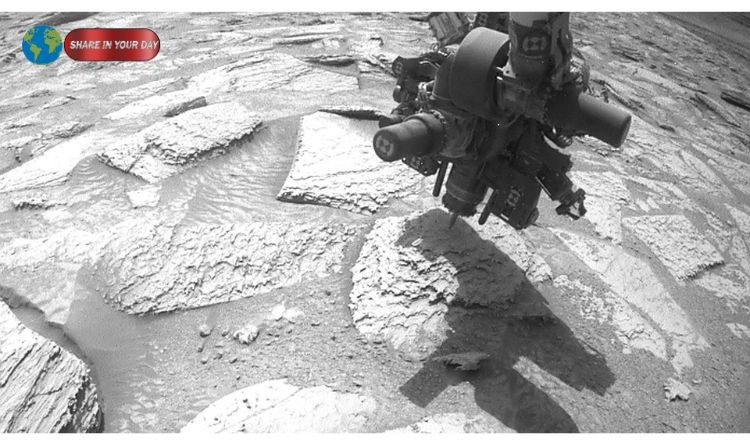
Mars Rock Surprise Revealed by Curiosity Rover
A stunning Mars rock surprise has left scientists rethinking what they know about the Red Planet. NASA’s Curiosity rover recently cracked open what appeared to be an ordinary rock—only to reveal something completely unexpected hidden inside.
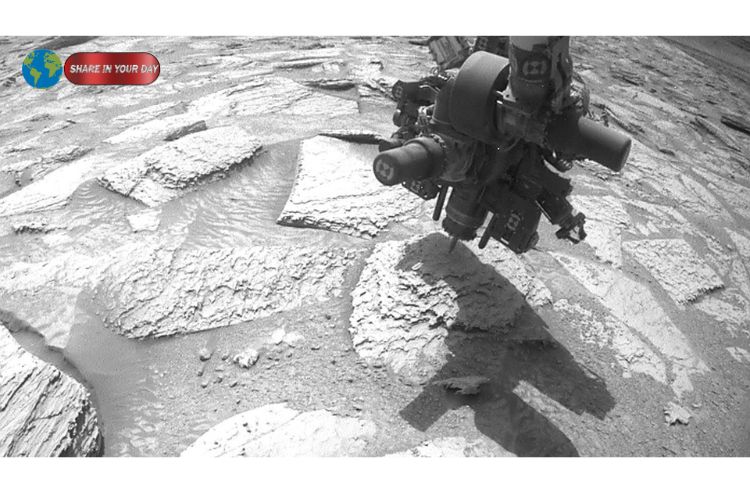
The discovery, described as both rare and puzzling, involved bright yellow crystals of pure sulfur. This finding is unlike anything previously confirmed on Mars and could reshape our understanding of the planet’s geological history.
An Accidental Discovery That Changed Everything
The Mars rock surprise did not come from a planned experiment. Instead, it happened by accident.
As Curiosity drove across the Martian surface, its heavy wheels rolled over a rock, cracking it open. Inside, scientists discovered crystalline structures that immediately stood out due to their vivid yellow color.
Further analysis revealed that these crystals were composed of elemental sulfur—meaning sulfur in its pure form. This is significant because, until now, sulfur on Mars had only been found combined with other elements, typically forming sulfates.
Why Pure Sulfur Is a Big Deal
The presence of pure sulfur is what makes this Mars rock surprise so important.
On Earth, elemental sulfur forms under very specific conditions, often involving volcanic activity or unique chemical processes. However, those same conditions are not clearly understood—or even expected—in the region where Curiosity made this discovery.
Scientists had previously identified sulfate-rich rocks in the area, which form when water evaporates and leaves behind mineral salts. But finding pure sulfur suggests that entirely different geological processes may have been at work.
What This Means for Mars’ Past
The implications of this Mars rock surprise extend far beyond a single rock.
Mars is believed to have once had liquid water, a thicker atmosphere, and potentially habitable conditions. Discoveries like this add new layers of complexity to that story.
The presence of sulfur—especially in pure form—could indicate:
- Chemical reactions previously unknown on Mars
- Environmental conditions different from current models
- A more dynamic geological history than expected
While sulfur is also an essential element for life on Earth, scientists emphasize that this discovery does not confirm life on Mars. However, it does suggest that the building blocks for life may have existed under the right conditions.
A Closer Look at Curiosity’s Mission
NASA’s Curiosity rover has been exploring Mars since 2012, focusing on Gale Crater, a region believed to have once hosted lakes and rivers.
Over the years, the rover has made several groundbreaking discoveries, including:
- Organic molecules in ancient rocks
- Evidence of past water activity
- Complex geological formations
This latest Mars rock surprise adds to a growing list of findings that suggest Mars was once far more Earth-like than it is today.
Scientists Left With New Questions
While the discovery is exciting, it has also raised many unanswered questions.
Researchers are now trying to determine:
- How the pure sulfur formed
- Whether similar rocks exist nearby
- What this means for Mars’ chemical evolution
Interestingly, the relationship between the sulfur crystals and surrounding sulfate minerals remains unclear. This mystery is now a key focus for ongoing research.
Could There Be More Hidden Surprises?
The accidental nature of this Mars rock surprise suggests there may be many more discoveries waiting beneath the surface.
Mars is covered with rocks that appear ordinary from the outside. However, as this discovery shows, their interiors may tell a very different story.
Scientists are now considering whether similar sulfur-rich rocks could be widespread in the region, particularly in ancient channels where water once flowed.
If confirmed, this could significantly change how researchers interpret Mars’ geological timeline.
The Role of Water in the Discovery
Water is a key factor in understanding the Mars rock surprise.
Many of Mars’ known minerals formed in the presence of water, and sulfate deposits are strong evidence of past evaporation processes. However, pure sulfur does not form as easily in such environments.
This contradiction suggests that Mars may have experienced multiple overlapping processes, including:
- Water-driven mineral formation
- Volcanic or chemical reactions
- Environmental shifts over billions of years
Understanding how these processes interacted will be crucial in solving the mystery.
A Step Closer to Understanding Mars
Each discovery made by Curiosity brings scientists closer to answering one of humanity’s biggest questions: Was Mars ever home to life?
While the Mars rock surprise does not provide a direct answer, it strengthens the case that Mars once had complex chemistry capable of supporting life.
Moreover, it highlights how much remains unknown about the planet.
Even after years of exploration, Mars continues to surprise researchers with unexpected findings that challenge existing theories.
Why This Discovery Matters Now
This discovery comes at a time when interest in Mars exploration is growing rapidly.
With future missions planned—including sample return missions and potential human exploration—understanding Mars’ geology has never been more important.
The Mars rock surprise serves as a reminder that even small, accidental discoveries can have major scientific implications.
It also underscores the importance of continued exploration, as each new finding builds on previous knowledge and opens the door to further breakthroughs.
Final Thoughts
The discovery of pure sulfur inside a Martian rock is more than just a scientific curiosity—it is a glimpse into a hidden world beneath Mars’ surface.
The Mars rock surprise challenges assumptions, raises new questions, and reinforces the idea that Mars is far more complex than once believed.
As Curiosity continues its journey, scientists remain hopeful that even more unexpected discoveries lie ahead—each bringing us closer to understanding the Red Planet and its mysterious past.