Qusra Settler Violence Raises Fresh Alarm in West Bank
The latest Qusra settler violence has renewed concerns about the deteriorating security situation in the occupied West Bank after masked Israeli settlers attacked a Palestinian home in the village of Qusra.
The incident, reported on August 29, involved settlers surrounding a house and throwing stones while Palestinian residents were inside. Witnesses said seven Palestinians became trapped in the home during the confrontation.
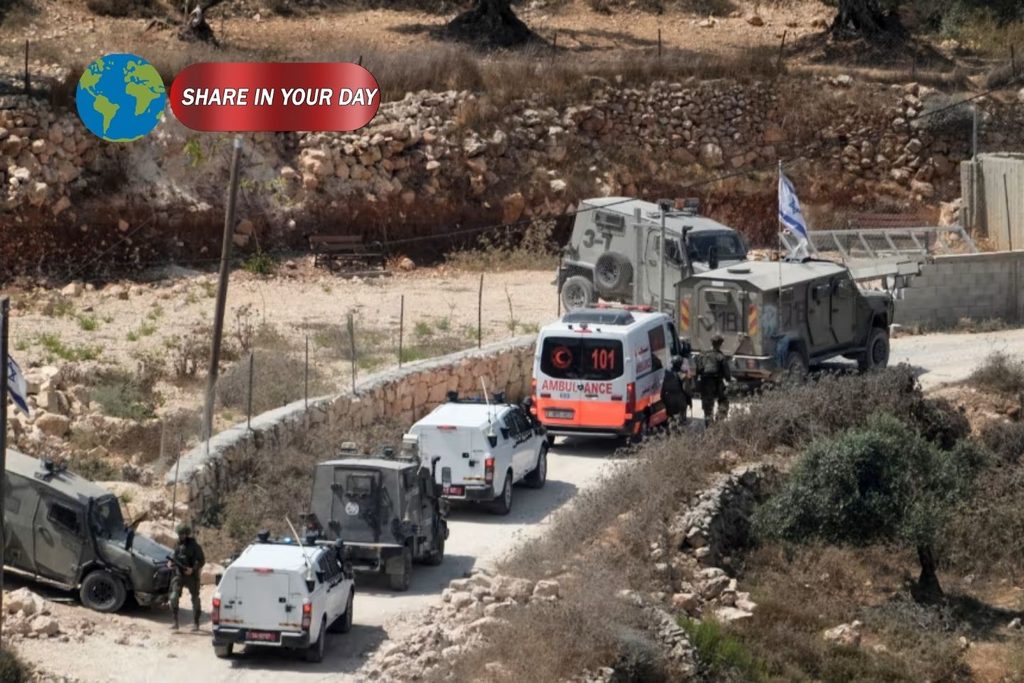
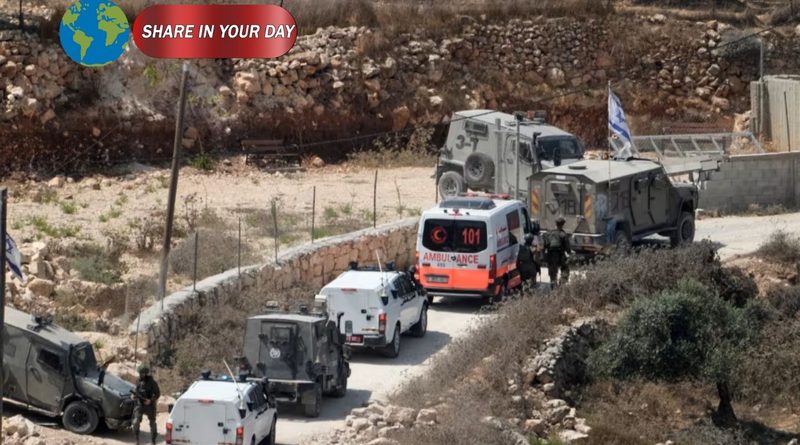
The confrontation came after weeks of heightened tensions around Qusra, a Palestinian village south of Nablus that has increasingly become a flashpoint in the wider conflict.
Israeli Prime Minister Benjamin Netanyahu condemned the latest violence, describing the perpetrators as a small group of extremists. However, residents and rights advocates continue to raise questions about whether Israeli security forces are doing enough to protect Palestinian communities from settler attacks.
The latest episode also comes amid reports of violence in other nearby Palestinian villages, underscoring the broader instability across the West Bank.
Qusra Settler Violence Targets Palestinian Home
According to witnesses cited by Reuters, masked settlers approached a Palestinian home in Qusra on Saturday and attacked the property.
The attackers reportedly threw stones at the house while several Palestinians were inside. One resident, Saddam Oday, said people inside became trapped as the confrontation intensified.
The homeowner, Luay Bayruti, also reported being physically abused by Israeli forces.
The Israeli military said its personnel were attempting to disperse what it described as rioters. However, the military did not immediately respond to specific allegations concerning the treatment of Palestinian residents.
The conflicting accounts highlight one of the central issues surrounding settler violence in the West Bank: Palestinians and rights groups frequently accuse security forces of failing to intervene effectively against settlers, while Israeli authorities say troops are deployed to maintain order and prevent clashes.
Netanyahu Condemns the Latest Violence
The incident prompted a response from Netanyahu, who condemned the actions of the settlers.
The Israeli prime minister characterized those responsible as a limited group of extremists whose actions undermine the broader Israeli settlement movement.
His comments came amid growing international attention to settler attacks across the West Bank.
Reuters reported that Netanyahu’s condemnation followed pressure from the United States to address the violence.
The statement is significant because Washington has increasingly expressed concern about violence involving Israeli settlers and Palestinian civilians.
However, criticism from Palestinian residents and international observers has focused not only on individual attackers but also on the broader security environment in which such incidents occur.
Why Qusra Has Become a Flashpoint
Qusra has experienced repeated confrontations involving Israeli settlers and Palestinian residents.
The village lies in the Nablus area of the occupied West Bank, where Palestinian communities live near Israeli settlements and outposts.
These geographical conditions can create frequent disputes over land, access roads, agricultural areas and property.
Tensions have increased substantially in recent years.
In Qusra, residents have reported repeated incidents involving attacks on homes and pressure on Palestinian families.
A CNN report from earlier in August described Palestinian families in Qusra being trapped in their homes as settlers reportedly surrounded properties, blocked roads and disrupted access to water and electricity.
The latest attack therefore did not occur in isolation.
Instead, it followed a pattern of escalating confrontations that has made Qusra one of the more closely watched communities in the northern West Bank.
A Wider Wave of Settler Violence
The situation in Qusra is part of a broader rise in settler violence across the occupied West Bank.
On the same weekend, masked settlers reportedly attacked an NBC News crew and a Palestinian woman in the nearby village of Jalud.
The journalists were reportedly interviewing a Palestinian family that had been displaced from its home when masked attackers approached them.
NBC correspondent Matt Bradley was among those injured, while other members of the crew and the Palestinian woman also required medical treatment.
The attack demonstrated that the violence is affecting not only Palestinian residents but also journalists attempting to document events on the ground.
Israeli security forces confirmed incidents in the area and said they had taken steps to separate the parties involved.
Nevertheless, the incidents have intensified scrutiny of how Israeli authorities respond to attacks carried out by settlers.
No Arrests Reported After Qusra Attack
One of the most controversial aspects of the Qusra incident has been the lack of reported arrests.
The Times of Israel reported that no arrests had been made despite the latest attack and the availability of identifying information concerning some suspects.
For Palestinian residents, the absence of arrests reinforces long-standing concerns about accountability.
Israeli authorities, meanwhile, have repeatedly argued that extremist violence by settlers should not be confused with the conduct of the wider settler population.
The issue has become increasingly politically sensitive.
International governments have called on Israel to investigate attacks and protect Palestinian civilians, while Israeli officials have sought to distinguish violent extremists from settlers who live peacefully in the West Bank.
US Pressure Adds Diplomatic Weight
The growing violence has also become an issue in relations between Israel and the United States.
On August 26, 45 Democratic senators sent a letter to Netanyahu urging stronger action against escalating settler violence.
The lawmakers called for investigations into attacks and expressed concern about violence involving Palestinian civilians and American citizens.
The pressure reflects a broader debate within Washington over Israeli policies in the West Bank.
While the US government remains a major supporter of Israel, criticism of settler violence has become increasingly visible among American lawmakers.
The situation is particularly sensitive because violence in the West Bank occurs alongside the continuing war and humanitarian crisis surrounding Gaza.
The Human Cost for Palestinian Families
For residents of Qusra, the political debate is secondary to immediate concerns about safety.
Families living in the village have described the psychological pressure created by repeated confrontations.
Being unable to leave a home, access farmland or move freely through nearby roads can have serious consequences for daily life.
The latest incident reportedly left seven Palestinians trapped inside a house while settlers surrounded the property.
Such incidents can also affect children and elderly residents, who may experience prolonged fear during confrontations.
The uncertainty is compounded when residents believe that attackers may return.
Israeli Security Forces Face Scrutiny
The role of Israeli security forces has become one of the most contentious elements of the Qusra situation.
In the latest confrontation, Palestinian residents accused Israeli forces of using tear gas against people inside the home and mistreating some residents.
The Israeli military said its personnel were responding to unrest and attempting to disperse rioters.
These competing accounts demonstrate the difficulty of establishing responsibility during rapidly developing confrontations.
However, the recurring nature of the incidents has prompted calls for stronger independent investigations.
Critics argue that protecting civilians requires authorities to intervene against attackers regardless of their identity.
Israeli officials have countered that security forces must manage clashes involving both settlers and Palestinians while preventing further escalation.
International Concern Continues to Grow
The Qusra incident has attracted international attention because it comes at a time when violence across the West Bank is already increasing.
The United Nations has documented significant numbers of settler attacks against Palestinians and has repeatedly warned about the impact on civilian communities.
The broader concern is that repeated attacks could encourage further displacement and deepen instability.
When residents lose confidence that their homes and farmland can be protected, some families may eventually decide that leaving is safer than remaining.
That possibility has generated concern among international organizations monitoring the region.
Settlements Remain at the Center of the Dispute
The issue of Israeli settlements remains one of the most difficult parts of the Israeli-Palestinian conflict.
Israel has established settlements throughout the West Bank, territory captured by Israel in the 1967 war.
Most of the international community considers the settlements illegal under international law, a position Israel disputes.
Settlement expansion has continued to be a major source of international disagreement.
For Palestinians, the presence and expansion of settlements can restrict access to land and fragment communities.
For many Israeli settlers, however, the West Bank is viewed as historically and religiously significant territory that should remain under Israeli control.
These competing claims have made territorial disputes particularly difficult to resolve.
Qusra Becomes a Symbol of a Larger Problem
The latest Qusra settler violence has come to symbolize broader concerns about the future of Palestinian communities in the West Bank.
Qusra is not the only village facing pressure.
Nearby communities have also reported attacks, property damage and confrontations involving settlers.
The recent assault on an NBC News crew in Jalud further demonstrated how quickly tensions can spread between neighboring communities.
The pattern has increased calls for stronger law enforcement and accountability.
For Palestinians, the priority is protection from violence.
For Israeli authorities, the challenge is preventing extremist groups from undermining security and creating further international criticism.
What Happens Next?
The immediate question is whether Israeli authorities will investigate the latest Qusra incident and identify those responsible.
A meaningful investigation could help address concerns about accountability.
However, another major challenge is preventing similar incidents from happening again.
That will require more than statements of condemnation.
It could involve increased security around vulnerable Palestinian communities, stronger enforcement against violent settlers and clearer rules for security forces responding to confrontations.
Without such measures, repeated attacks risk creating a cycle of violence that becomes increasingly difficult to control.
Regional Tensions Remain High
The Qusra confrontation comes at an especially sensitive moment in the Middle East.
The Gaza conflict continues to shape political relations across the region, while violence in the West Bank has created an additional source of instability.
The combination of military operations, settlement expansion, Palestinian displacement and settler violence has made the West Bank increasingly volatile.
International diplomats have warned that further escalation could make an already difficult political situation even more complicated.
The fear is that local confrontations could trigger broader unrest.
Final Verdict
The latest Qusra settler violence has once again placed the occupied West Bank at the center of international attention.
The attack on a Palestinian home, reports that residents were trapped inside and the continuing dispute over the role of Israeli security forces illustrate the deep tensions facing communities in the region.
Netanyahu’s condemnation shows that the Israeli government recognizes the political and security risks posed by extremist settler violence.
But condemnation alone may not resolve the underlying problem.
For Palestinian families in Qusra and surrounding villages, the key issue is whether they can live safely in their homes without facing repeated attacks.
For Israel, the challenge is demonstrating that violent extremists will face meaningful consequences.
And for the international community, the latest incident is another reminder that the conflict extends far beyond Gaza.
Until there is greater accountability and a credible mechanism to protect civilians, Qusra and other West Bank communities are likely to remain vulnerable to further violence.