Nepal Floods: 5 Shocking Facts as Bodies Are Buried
The Nepal floods have developed into one of the deadliest disasters in the Himalayan region this year, with hundreds of people confirmed dead and thousands still missing after catastrophic flooding and mudslides struck Nepal and Tibet.
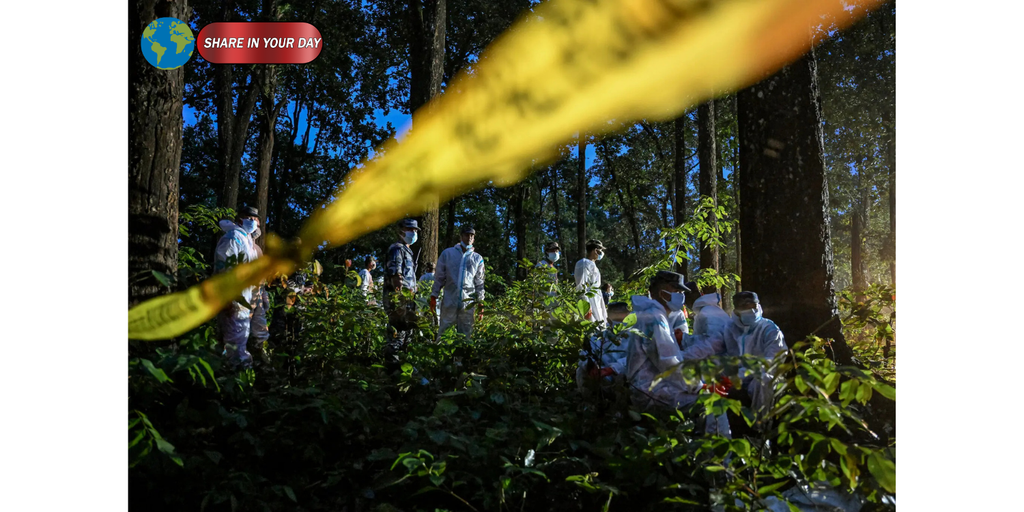
Authorities in Nepal have begun temporarily burying unidentified victims as morgues and hospitals struggle to handle the growing number of recovered bodies. The decision has triggered distress and criticism because traditional Hindu funeral practices generally involve cremation rather than burial. Officials, however, say the graves are temporary and that identifying information and DNA samples are being preserved so families can eventually recover the remains.
The disaster struck mountain valleys and river communities after a powerful flood event swept enormous quantities of water, ice, rocks and mud through parts of the Himalayan region. Rescue teams are still searching for missing people while difficult weather, damaged roads and unstable terrain continue to complicate operations.
Nepal Floods Leave Hundreds Dead and Thousands Missing
The scale of the disaster has continued to grow as rescuers recover more bodies.
By Sunday, authorities and international reports placed the combined death toll in Nepal and Tibet at around 800, while more than 3,000 people remained missing across the affected areas. Exact figures have varied between reports because rescue teams continue to recover victims and different authorities are reporting separate totals.
In Nepal alone, disaster authorities reported hundreds of deaths and more than 2,500 missing people. The number of missing includes local residents as well as foreign nationals and workers who were in some of the hardest-hit areas when the floods struck.
The uncertainty surrounding the missing-person figures makes the final death toll difficult to predict.
Some people may have escaped to safety without being registered. Others may remain trapped beneath debris, while some victims could have been carried long distances downstream.
That uncertainty is adding to the anguish of families waiting for information.
Mass Burials Begin as Morgues Become Overwhelmed
One of the most distressing consequences of the Nepal floods has been the enormous number of bodies recovered from rivers, mud and debris.
In Chitwan district, authorities began temporarily burying unidentified victims after forensic and morgue facilities became overwhelmed. Reuters reported that 96 unidentified victims were buried on Saturday, with more burials expected as recovery operations continue.
The Associated Press reported that authorities were dealing with roughly 250 recovered bodies requiring temporary burial because of limited forensic capacity, difficult weather conditions and the condition of some remains.
Many bodies had spent days in water or mud.
As decomposition progresses, identification becomes increasingly difficult. This has placed enormous pressure on police, medical workers and forensic specialists trying to match remains with missing-person reports.
Authorities have said that temporary burial does not mean the victims have been permanently separated from their families.
DNA samples and identifying information are being collected where possible. Burial locations are also being documented so that remains can potentially be recovered later for identification and appropriate religious rites.
Why the Burials Have Caused Controversy
The temporary graves have created an additional emotional and cultural crisis.
Nepal has a predominantly Hindu population, and cremation is the customary funeral practice for many Hindus. Families and some public figures have therefore questioned whether unidentified victims should be buried before relatives have had a chance to identify them.
The criticism reflects a painful dilemma.
On one side are families desperate to find their relatives and perform traditional funeral ceremonies.
On the other is a disaster-management system facing hundreds of bodies, limited refrigeration and forensic facilities, high temperatures and rapidly deteriorating remains.
Officials have defended the temporary burials as a practical emergency measure rather than a permanent decision.
The authorities’ priority is to preserve the ability to identify victims later while preventing further deterioration of the bodies.
The Search for Missing People Continues
Despite the burials, search and rescue operations remain active.
Emergency teams are working through areas covered by mud and debris, while helicopters and other resources are being used to reach locations that remain difficult to access.
Some of the worst-hit communities are isolated by destroyed roads and damaged infrastructure.
The Guardian reported that some affected areas remained accessible only by military helicopter, illustrating how difficult the terrain has become for rescue teams.
Search teams face another major challenge: the rivers have carried debris and bodies far from where the victims originally lived.
That makes it difficult to determine where missing people may have been taken.
Families have gathered at identification centers and hospitals, hoping to recognize photographs or receive information about relatives.
The emotional pressure is immense.
For many families, not knowing whether a loved one is alive or dead is creating an agonizing wait that could continue for days or weeks.
Nepal Floods Also Affect Foreign Nationals
The disaster has affected travelers, workers and foreign nationals as well as Nepalese citizens.
Reports indicate that hundreds of foreign nationals have been listed as missing across Nepal and Tibet. The figures have changed as governments update their own lists and people are located.
The international dimension has complicated the identification process.
Families in different countries are waiting for information from embassies, while authorities must coordinate names, photographs, fingerprints and DNA samples across borders.
International forensic assistance has also been requested.
India has provided forensic expertise, while Nepal and China are coordinating aspects of the identification effort.
The cooperation is particularly important because some victims may be difficult to identify using traditional methods.
DNA testing can provide a more reliable way to establish identity when remains are severely damaged or decomposed.
What Caused the Catastrophic Flooding?
The disaster has been associated with a major flood event in the Himalayan region involving a combination of water, ice, rock and mud.
Early reports focused heavily on the possibility of a glacier-related event. The resulting flood moved rapidly through valleys and river systems, sweeping away infrastructure and communities.
The terrain amplified the damage.
Mountain valleys can concentrate enormous volumes of water and debris into relatively narrow channels. Once a powerful flow begins moving downstream, buildings, bridges, vehicles and other infrastructure can be destroyed within minutes.
The disaster also demonstrates the vulnerability of communities living near Himalayan rivers.
Climate change has become an important part of discussions about the growing risks associated with glaciers, unstable slopes and extreme weather in the region. Reuters reported that the Red Cross estimated more than 90,000 people were likely affected by the disaster.
Scientists and disaster authorities will likely study the event closely to understand exactly how the flood developed and whether similar risks can be better detected in the future.
Rescue Efforts Face Dangerous Conditions
Rescue workers are operating in extremely difficult conditions.
Floodwaters have receded in some areas, but they have left behind thick mud, destroyed roads and unstable slopes.
Fresh landslides can create additional dangers for rescuers.
In some places, infrastructure has been so badly damaged that conventional ground transportation is impossible. Helicopters have therefore become essential for reaching isolated communities and transporting people and supplies.
Hospitals are also under enormous pressure.
Facilities are treating injured survivors while simultaneously dealing with recovered bodies and families searching for missing relatives.
The shortage of morgue capacity has become one of the most visible signs of the disaster’s scale.
Officials have reportedly requested more than 1,000 freezer units to improve the storage of recovered remains.
That request illustrates how emergency infrastructure has been stretched far beyond normal capacity.
Families Face a Second Disaster
For families, the Nepal floods are not simply a natural disaster.
They are also a crisis of uncertainty.
A person whose home has been destroyed can begin rebuilding. A community can eventually repair roads and bridges.
But families with missing relatives cannot easily begin the grieving process without knowing what happened.
Identification centers have therefore become some of the most emotionally difficult locations in the aftermath.
People search photographs and lists of names, hoping for any information.
Some eventually receive confirmation that a relative survived.
Others are forced to confront the possibility that a loved one is among the unidentified victims being recovered from the rivers.
This makes the forensic identification process critically important.
Even when remains cannot be identified immediately, preserving DNA samples and burial records can give families a chance of receiving answers later.
Nepal Needs More Than Immediate Rescue
The immediate priority is saving lives and recovering missing people.
But the long-term challenge will be reconstruction.
Communities will need homes, roads, bridges, communications infrastructure and medical services.
Families who have lost their income sources will need financial assistance.
The government will also need to assess whether communities located near vulnerable rivers and mountain slopes require stronger early-warning systems or changes in infrastructure planning.
The scale of the disaster suggests that recovery could take years.
International assistance may therefore become increasingly important as Nepal moves from emergency rescue operations toward reconstruction.
What Happens Next?
The coming days will be crucial.
Search teams are expected to continue looking for survivors and recovering bodies from rivers and debris.
Authorities will also continue collecting DNA samples and other information from unidentified victims.
Meanwhile, officials must balance cultural concerns with the practical realities of disaster management.
The number of missing people remains particularly important.
If thousands remain unaccounted for, the eventual death toll could rise substantially.
However, some missing people may still be found alive, meaning the final figures cannot yet be determined.
Weather conditions will also influence rescue operations.
Further rain, landslides or river surges could make already difficult conditions even more dangerous.
A Disaster Still Unfolding
The Nepal floods have already left a devastating human toll, but the full scale of the tragedy is not yet known.
Hundreds have died. Thousands remain missing. Hospitals and morgues are overwhelmed, while rescue workers continue searching through destroyed communities and river valleys.
The temporary mass burials in Chitwan have become a powerful symbol of the crisis.
They show both the enormous number of victims and the difficult decisions authorities must make when emergency systems are pushed beyond their limits.
For families, however, the priority remains simple: finding their missing relatives and learning what happened to them.
As rescue and identification efforts continue, Nepal faces a long and painful road toward recovery.
The final number of victims may take weeks or longer to establish.
For now, the focus remains on finding survivors, identifying the dead and helping thousands of people whose lives have been changed by one of the Himalayan region’s most devastating disasters in recent memory.