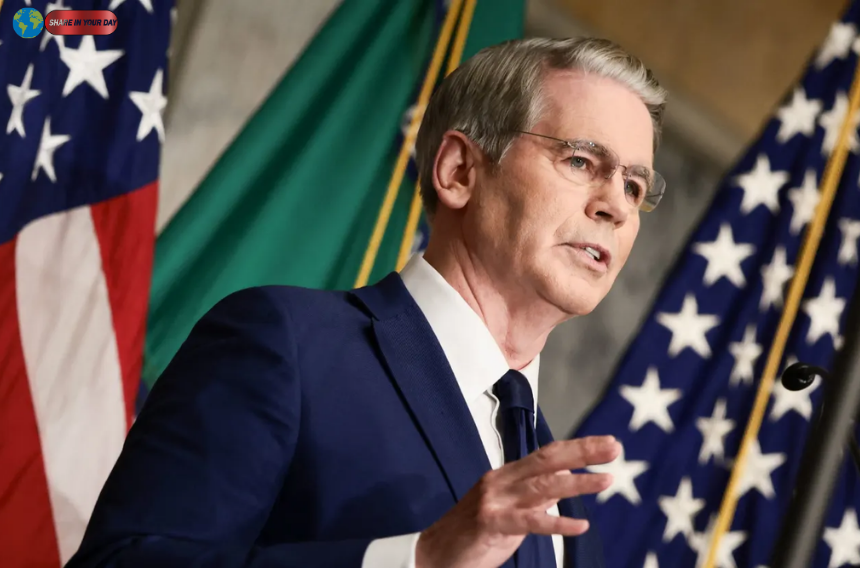
Iran Sanctions: Bessent Warns Banks of New Crackdown
The United States is preparing to expand its campaign of Iran sanctions, with Treasury Secretary Scott Bessent warning that another bank could soon face penalties for facilitating transactions connected to Tehran.
Bessent said the administration intends to intensify financial pressure on Iran as Washington attempts to restrict the country’s access to international banking networks and the U.S. dollar system. The warning comes as the Trump administration seeks broader international cooperation in its economic campaign against Iran.
The Treasury secretary’s comments signal that banks and financial institutions outside Iran could increasingly find themselves caught between maintaining business relationships with Tehran and preserving access to the U.S.-dominated global financial system.
The latest development also raises questions about how far Washington is prepared to go with secondary sanctions and whether major economies, particularly China, will cooperate with the campaign.
Iran Sanctions Could Target Another Bank
Bessent said the United States plans to sanction another unidentified bank as part of its effort to prevent Iranian transactions from moving through the international financial system.
The announcement follows a series of measures designed to pressure institutions that Washington believes are helping Iran maintain access to global commerce.
According to the Associated Press, Bessent said the administration is preparing additional action against financial institutions as the United States seeks to increase economic pressure on Tehran.
The strategy is significant because banks play a critical role in international trade.
Even when a country is already subject to extensive sanctions, financial institutions in other jurisdictions can provide channels for payments, trade financing and currency transfers. Washington’s goal is therefore not simply to target Iranian banks but also to make international institutions reconsider whether dealing with Iran is worth the potential consequences.
That creates a much broader sanctions network.
Scott Bessent Signals Weekly Pressure
Bessent has indicated that the latest measures are unlikely to be a one-time action.
Reuters reported that the Treasury secretary expects the United States to impose new secondary sanctions on a weekly basis, initially focusing on banks and other institutions involved in transactions connected to Iran.
That would represent a substantial escalation in the administration’s financial campaign.
Rather than announcing occasional sanctions against individual entities, Washington could create a continuing cycle of designations aimed at institutions that facilitate Iranian trade.
For financial companies, the message is straightforward.
A bank that continues handling Iranian-related transactions could face the possibility of losing access to parts of the U.S. financial system.
That risk can be more consequential than the immediate loss of Iranian business.
What Are Secondary Sanctions?
Secondary sanctions are designed to influence entities that are not directly under U.S. jurisdiction.
The United States can impose restrictions on foreign companies or financial institutions that engage in certain transactions with sanctioned parties. One of the most powerful tools available to Washington is restricting an institution’s access to the U.S. financial system.
This is particularly important because the dollar remains central to international trade and finance.
A foreign bank may not be based in the United States, but access to dollar transactions and U.S. correspondent banking relationships can still be essential to its operations.
That gives Washington considerable leverage.
Under the strategy described by Bessent, foreign institutions could therefore face a choice: continue facilitating transactions involving Iran or risk losing access to important parts of the international dollar-based financial system.
Banque Misr Already Faces Pressure
The warning comes shortly after the United States moved against branches of Egypt’s Banque Misr in the United Arab Emirates.
The Treasury action was linked to alleged financial dealings involving Iran. Reuters reported that the UAE and Egyptian central banks said they were coordinating over the issue after the U.S. Treasury announcement.
The episode illustrates how the sanctions campaign can extend beyond Iran’s borders.
Banque Misr is an Egyptian institution, while the affected branches operate in the UAE. Yet the bank became part of Washington’s pressure campaign because of transactions associated with Iran.
That creates a powerful deterrent for other financial institutions.
Banks in the Middle East and elsewhere may now have to review their Iranian-related business more aggressively to determine whether transactions could expose them to U.S. penalties.
Why Banks Are a Major Target
Banks are particularly important to the sanctions strategy because economic activity depends on financial infrastructure.
Oil companies can produce crude. Traders can arrange shipments. Businesses can negotiate contracts.
But transactions ultimately require payment mechanisms.
By targeting financial institutions, Washington can attempt to disrupt multiple layers of Iran’s economy simultaneously.
This includes payments for oil, shipping services, imports and other commercial activity.
The strategy is therefore broader than simply freezing Iranian assets.
It aims to make international companies think twice before participating in transactions involving Iran.
That could increase the cost of doing business with Tehran even when a transaction is not directly prohibited under every country’s domestic laws.
Iran’s Oil Trade Is Central to the Strategy
Iran’s oil exports are a major focus of the broader economic pressure campaign.
Oil revenue provides Tehran with access to foreign currency and helps support government finances. Restricting the financial channels used to sell and receive payment for Iranian oil could therefore have significant economic consequences.
Bessent has emphasized the need to pressure companies and financial institutions connected to Iranian oil transactions.
Reuters reported that the administration intends to push G20 finance officials toward cutting economic ties with Iran, while warning that institutions facilitating Iranian transactions could face severe consequences.
The effectiveness of that strategy, however, depends heavily on international cooperation.
Iran has spent years developing mechanisms to work around sanctions, including alternative trading arrangements and networks designed to reduce dependence on Western financial infrastructure.
China Presents the Biggest Challenge
One of the biggest questions surrounding the new Iran sanctions campaign is China.
China is a major buyer of Iranian oil and maintains significant economic relationships with Tehran.
Washington has previously faced difficulties convincing Beijing to follow U.S. sanctions policy when Chinese economic interests are involved.
Bessent has signaled that the United States wants China and other countries to participate in the broader pressure campaign.
The question is whether Washington is prepared to sanction major Chinese financial institutions if they continue supporting Iranian transactions.
That would represent a much more consequential confrontation.
Reuters reported that Bessent plans to use the G20 meeting to urge finance ministers and central bank governors to sever economic ties with Iran or face the possibility of similar sanctions.
Such a demand could produce significant diplomatic tensions.
The G20 Becomes an Important Test
Bessent’s comments came ahead of a meeting of G20 finance leaders in Asheville, North Carolina.
The gathering gives Washington an opportunity to press allies and other major economies to support its Iran strategy.
However, the G20 includes countries with very different relationships with Iran and very different views of U.S. sanctions policy.
Some governments may be willing to reduce certain transactions with Tehran.
Others may be reluctant to accept U.S. secondary sanctions as a basis for determining their own foreign economic policy.
That makes the diplomatic component of the campaign almost as important as the sanctions themselves.
A Broader Economic Pressure Campaign
The new Iran sanctions are part of a wider Trump administration effort to increase economic pressure on Tehran.
Bessent has described the campaign in increasingly aggressive terms, arguing that financial pressure could isolate Iran without requiring a return to large-scale military operations.
The administration’s broader approach combines sanctions, pressure on oil revenues and efforts to restrict Iran’s international financial connections.
The objective is to make it increasingly difficult for Tehran to access the resources needed to sustain its government, military capabilities and international trade.
Whether that strategy produces the desired political outcome remains uncertain.
The Dollar Gives Washington Significant Power
The U.S. dollar remains one of Washington’s strongest economic tools.
Many international transactions ultimately touch the dollar-based financial system, even when the businesses involved are located outside the United States.
That means sanctions targeting dollar access can have effects well beyond American borders.
For an international bank, losing access to U.S. correspondent banking networks can potentially be far more damaging than losing individual Iranian clients.
This is why secondary sanctions have become such a powerful instrument of U.S. foreign policy.
They effectively export some of the consequences of American sanctions to foreign institutions.
Banks Face a Difficult Calculation
Financial institutions now face a complicated calculation.
Iran represents a potentially valuable market for some companies and banks, particularly in regions with established commercial relationships with Tehran.
But the risk of U.S. sanctions can change the economics dramatically.
A bank could decide that Iranian business is not worth the potential consequences of losing access to the dollar system.
That is precisely the type of behavior Washington wants to encourage.
The goal is not necessarily to sanction every institution involved with Iran.
Instead, the threat of sanctions can encourage banks to voluntarily reduce their exposure.
Iran Could Seek Alternative Financial Channels
Iran is unlikely to simply accept the new pressure without attempting to adapt.
The country has operated under U.S. sanctions for years and has developed alternative mechanisms for conducting international trade.
Those mechanisms can include non-dollar currencies, intermediaries, informal payment networks and complex corporate structures.
However, each additional layer can make international commerce more expensive and complicated.
That is why the effectiveness of the sanctions strategy may depend not on completely stopping Iranian trade but on increasing the cost and difficulty of conducting it.
The Risk of Global Economic Disruption
The aggressive use of secondary sanctions also creates risks for the broader global economy.
If Washington targets major foreign banks or financial institutions, the consequences could extend beyond Iran.
International companies could face higher compliance costs. Banks could become more cautious about cross-border transactions. Oil markets could also react if sanctions significantly reduce Iranian exports.
These effects become particularly important when energy markets are already sensitive to geopolitical developments.
The Strait of Hormuz is a critical global energy corridor, and heightened tensions involving Iran can quickly affect oil prices and shipping costs.
Sanctions and Military Pressure Are Increasingly Connected
The latest financial measures are also unfolding against the backdrop of renewed military tensions between the United States and Iran.
The Financial Times reported that U.S. and Iranian forces exchanged fire on August 30, marking a significant escalation after a period of relative calm.
That context makes the new sanctions especially important.
Washington appears to be using economic pressure as another tool for influencing Tehran while attempting to limit the need for broader military escalation.
Bessent has argued that maximum economic pressure could reduce the likelihood of renewed large-scale military operations.
The administration therefore sees financial pressure as both an economic weapon and a potential alternative to further military action.
What Happens Next?
The immediate focus will be on identifying the next financial institution targeted by the United States.
Bessent has suggested that more sanctions could follow regularly, meaning banks around the world may face growing pressure to examine their Iranian business.
The reaction of China will also be closely watched.
If Beijing continues purchasing Iranian oil and supporting commercial relationships with Tehran, Washington could eventually face a decision over whether to impose sanctions on major Chinese institutions.
That would raise the stakes considerably.
Meanwhile, European and Middle Eastern governments will have to determine how closely they want to align with the U.S. campaign.
Iran Sanctions Mark a New Financial Offensive
The latest developments show that the Trump administration is expanding the definition of economic pressure on Iran.
The strategy is no longer focused exclusively on Iranian entities.
Foreign banks, oil traders, shipping companies and other businesses that facilitate transactions with Tehran could increasingly become targets.
Bessent’s warning that another bank may soon be sanctioned is therefore more than an isolated announcement. It is a signal to the international financial system that Washington intends to make Iranian transactions increasingly difficult and costly.
The campaign’s success will ultimately depend on whether the United States can persuade enough countries and financial institutions to participate.
If banks decide that access to the U.S. dollar system is more valuable than Iranian business, Washington could significantly restrict Tehran’s international financial options.
But if major economies such as China continue to maintain commercial ties with Iran, the campaign could face serious limits.
For now, the direction is clear: Iran sanctions are entering a more aggressive phase, with banks increasingly at the center of Washington’s strategy.
The next round of sanctions could reveal just how far the Trump administration is prepared to go — and how willing the global financial system is to follow.