Iran Oil Tanker Strikes: 3 Ships Hit in Escalation
Iran oil tanker strikes have pushed the confrontation between Washington and Tehran into another dangerous phase after U.S. forces attacked three Iranian crude oil carriers on September 5, according to the U.S. military. The strikes followed what the United States said were ballistic-missile attacks by Iran’s Islamic Revolutionary Guard Corps (IRGC) against two U.S. Navy warships operating in regional waters. AAP News+1
The episode marks a significant escalation because the targets were not simply military installations. The United States struck vessels connected to Iran’s oil-export network, potentially putting additional pressure on one of Tehran’s most important sources of revenue.
U.S. Central Command said two of the tankers were permanently disabled while a third, which was unladen, was completely destroyed. The American military also said the U.S. warships successfully avoided the Iranian missile attacks and that no American personnel were injured. SSeatrade Maritime News+1
Iran Oil Tanker Strikes Follow Missile Attacks
The sequence of events began with Iran, according to the U.S. military.
CENTCOM said IRGC forces launched ballistic missiles toward a U.S. aircraft carrier and a guided-missile destroyer. The American vessels reportedly evaded multiple attacks.
No U.S. personnel were harmed in the incident, according to the military’s account. The United States then responded by targeting three Iranian crude oil carriers. EEnergy News Beat
The response was described by Adm. Brad Cooper, the commander of U.S. Central Command, as a warning to Iran’s Revolutionary Guard.
CENTCOM said the strikes were intended to impose an economic cost after the attempted attacks on American warships. The command also warned that the United States could take further action against Iran’s exposed oil fleet if attacks on U.S. forces continue. CChuck Hill’s CG Blog
The development represents a shift beyond the traditional pattern of military retaliation. By targeting commercial-looking oil infrastructure tied to an alleged sanctions-evasion network, Washington is combining military pressure with economic pressure.
Three Iranian Tankers Were Targeted
The three vessels identified by CENTCOM were M/T Downy, M/T Stark 1 and M/T Kylo, also known as the Noxen.
According to the U.S. military, Downy was permanently disabled off the coast of Kharg Island. Stark 1 was also permanently disabled near Jask.
The third tanker, Kylo, was an unladen vessel operating in the Gulf of Oman. CENTCOM said American forces struck it in multiple critical locations after its crew was directed to abandon the ship. GGulf News+1
The distinction between the vessels is important.
Two tankers were described as permanently disabled, rather than completely destroyed. The third was described as completely destroyed.
That distinction also matters when assessing the potential environmental and energy consequences. An empty tanker presents a different immediate spill risk from a fully loaded crude carrier.
Maritime industry reporting identified Downy and Stark 1 as Iranian-flagged vessels associated with the National Iranian Tanker Company. SSeatrade Maritime News
Why Kharg Island Matters
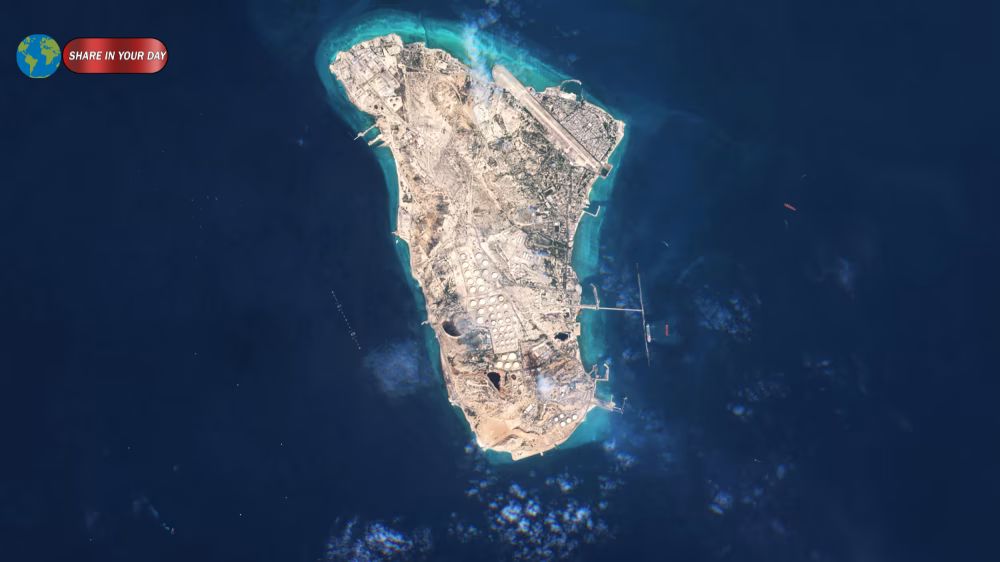
One of the attacks occurred near Kharg Island, a crucial Iranian oil-export hub.
Kharg is strategically important because Iran relies heavily on the island for moving crude oil onto international markets. Any military action in or around the area therefore carries consequences beyond the immediate battlefield.
Iranian media had earlier reported explosions near the island, although initial reports did not immediately establish the cause. Reuters reporting cited by Business Recorder said explosions were heard near Kharg while Iranian media circulated reports of a tanker being targeted. BBusiness Recorder
The subsequent U.S. announcement provided a clearer account of the American operation.
The strike near Kharg also highlights the increasingly direct relationship between the military conflict and Iran’s ability to export energy.
If attacks continue around major export terminals, shipping routes and tankers, the consequences could extend to international oil markets.
The Shadow Fleet Is Now a Bigger Target
Washington says the tankers were part of a broader network that helps finance Iran’s Revolutionary Guard and its regional partners.
CENTCOM described the vessels as part of a multibillion-dollar “shadow network.” The term generally refers to networks of vessels, companies and financial arrangements used to move sanctioned commodities while attempting to reduce the visibility of those transactions. EEIN Presswire
For Iran, oil exports remain essential.
International sanctions have made conventional oil trading more difficult, encouraging Tehran and its trading partners to rely on alternative shipping and financial arrangements.
That makes tankers themselves increasingly important strategic assets.
The latest strikes therefore carry a message beyond the three individual ships. They indicate that Washington may view parts of Iran’s oil transportation system as legitimate targets within its broader campaign against the IRGC.
That could create a much wider risk for maritime operators in the region.
Iran Says It Will Respond
Iran has rejected the U.S. justification for the attacks.
Iranian officials described the strikes as an act of aggression and warned of consequences if Washington continues targeting Iranian shipping. Iranian state media also reported that Tehran had targeted American vessels and oil tankers in response, although those claims were not immediately independently confirmed. AAP News
The competing claims underline the difficulty of verifying events in a rapidly developing military confrontation.
Both governments have strong incentives to control the narrative surrounding the attacks.
For Washington, the emphasis is on self-defense and deterrence. For Tehran, the strikes can be portrayed as an attack on Iranian sovereignty and economic infrastructure.
That difference in interpretation could make further escalation more likely.
Strait of Hormuz Adds to the Risk
The latest Iran oil tanker strikes also come as tensions around the Strait of Hormuz remain extremely high.
The waterway is one of the world’s most important energy chokepoints. Large volumes of oil and other energy products normally pass through the Persian Gulf and the Strait of Hormuz before reaching global markets.
The current conflict has already disrupted normal shipping patterns.
AP reported that overall traffic through the strait has remained low, while the United States has helped guide some vessels through the waterway. Iran has also sought to exert greater control over shipping in the area. AAP News
That means every new attack involving an oil tanker has consequences that can extend well beyond Iran and the United States.
A prolonged disruption could increase shipping costs, insurance premiums and energy prices.
Oil Markets Are Watching Closely
The oil market had already been reacting to the broader U.S.-Iran conflict before the latest tanker strikes.
Reuters reporting cited by Business Recorder showed Brent crude trading around $95 per barrel on September 5, with prices on track for a weekly gain of more than 6%. West Texas Intermediate crude was also higher for the week. BBusiness Recorder
The latest strikes could add another layer of uncertainty.
Markets will be watching several questions closely:
- Will Iran retaliate against additional U.S. military targets?
- Will more Iranian tankers be attacked?
- Will commercial shipping through Hormuz decline further?
- Could other regional countries become involved?
- Will insurance costs rise for vessels operating near the Gulf?
- Could Iran attempt to restrict oil exports from other countries?
The answers could determine whether the latest military exchange remains a limited confrontation or becomes part of a much broader disruption to global energy supplies.
What the Strikes Mean for the U.S.-Iran Conflict
The significance of the Iran oil tanker strikes goes beyond three damaged or destroyed vessels.
The episode demonstrates how the conflict is increasingly combining military and economic warfare.
Iran can threaten American forces and shipping. The United States, meanwhile, has demonstrated its willingness to attack Iranian oil assets that it says support the IRGC.
That creates a potentially dangerous cycle.
An Iranian attack can produce an American response. The American response can then trigger another Iranian retaliation.
Each round raises the stakes.
The situation is particularly sensitive because the confrontation is occurring near one of the world’s most important energy corridors.
Diplomacy Faces Another Challenge
The tanker attacks also come at a difficult moment for diplomacy.
The broader conflict has already disrupted efforts to address the long-running dispute surrounding Iran’s nuclear program. AP reported that negotiations have collapsed while Western governments have continued to pursue diplomatic and economic pressure against Tehran. AAP News
At the same time, Iran’s leadership has shown little indication that it intends to surrender its leverage easily.
The Strait of Hormuz remains one of Tehran’s most important strategic tools.
Washington, by contrast, appears increasingly willing to combine military force with financial sanctions and pressure on Iran’s oil-export infrastructure.
That combination could make future negotiations even more difficult.
What Happens Next?
The immediate question is whether Iran responds militarily.
Iranian officials have already warned that continued attacks on Iranian shipping could produce a stronger response. The United States, meanwhile, has made clear that attacks on American forces could result in additional strikes. AAP News+1
That creates a narrow space for de-escalation.
A further attack on a U.S. warship could trigger another American response. A new strike against Iranian oil infrastructure could encourage Tehran to retaliate against shipping or U.S. positions.
Meanwhile, oil traders and shipping companies will be watching the Strait of Hormuz for signs of additional disruption.
The three tanker strikes could ultimately prove to be an isolated military exchange. But they could also become a turning point in a conflict that increasingly links battlefield operations to global energy security.
For now, the most important development is the message from Washington: Iranian oil transportation networks may no longer be treated as separate from the military confrontation.
That raises the stakes for Iran’s economy, regional shipping and the global oil market.
Key Facts at a Glance
| Detail | What is known |
|---|---|
| Date | September 5, 2026 |
| U.S. action | Three Iranian crude oil carriers struck |
| Iranian action cited by U.S. | Ballistic missiles launched toward two U.S. Navy warships |
| U.S. casualties in the reported attack | None reported |
| Tankers identified | M/T Downy, M/T Stark 1, M/T Kylo |
| Locations | Near Kharg Island, near Jask and in the Gulf of Oman |
| U.S. justification | Retaliation and disruption of an alleged IRGC-linked oil network |
| Major concern | Further escalation and disruption to energy shipping |
S
Seatrade Maritime News+2
Sources and External Links
For publication, credible external references can include:
- NBC News — Original report
- Associated Press — U.S. strikes Iranian oil tankers
- SeaTrade Maritime — Tanker strike coverage
Internal Link Note
Because you have not provided the target website/domain, I have not invented internal URLs. For WordPress, replace these with relevant pages from your own site, such as:
/iran-news//middle-east-news//oil-prices//geopolitics/
SEO note: Yoast and Rank Math can only be definitively confirmed as green inside the actual WordPress editor because their scoring also depends on your site’s settings, internal-link structure, image metadata, and plugin configuration. The draft above is structured to satisfy the requested on-page criteria, but no honest writer can guarantee a specific plugin’s green score without seeing that installation.
The article is based on the NBC report and cross-checked against AP, maritime reporting, and the U.S. military’s published account; where claims remain disputed, they are attributed rather than presented as independently verified facts. AAP News+2A