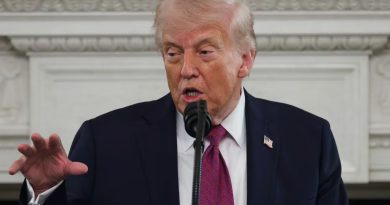
Trump Inflation Warning Raises Fresh Economic Risks
President Donald Trump’s latest Trump inflation warning has intensified debate over the direction of the U.S. economy after the president blamed what he called “stupidity” for inflation and threatened to halt trade with countries that run trade surpluses with the United States unless interest rates fall.
The remarks came after the release of a surprisingly strong August jobs report. The U.S. economy added 162,000 jobs during the month, substantially above expectations and enough to strengthen concerns that the Federal Reserve may have less room to cut interest rates.

Trump, however, has argued that high interest rates put the United States at a competitive disadvantage. He has repeatedly called for lower borrowing costs and criticized the Federal Reserve when monetary policy has remained tighter than he would prefer.
His latest comments take that pressure a step further by connecting interest rates directly to U.S. trade policy.
Trump Inflation Warning Comes After Strong Jobs Data
The timing of Trump’s comments was significant.
The August employment report showed the U.S. labor market performing better than many economists expected. According to the Associated Press, employers added 162,000 jobs, nearly three times the consensus forecast.
A stronger labor market can create a complicated situation for the Federal Reserve.
On one hand, strong employment is generally positive for consumers and businesses. More people working means more household income and potentially stronger consumer spending.
On the other hand, a resilient labor market can make it harder for inflation to fall quickly if demand remains strong.
That tension has become increasingly important for the Fed.
Inflation has remained above the central bank’s 2% target, while higher energy costs associated with the war involving Iran have added another source of price pressure. Fortune previously reported that inflation remained above 3% and that Wall Street expected the Federal Reserve to consider another rate increase before the end of 2026.
The latest jobs data therefore created an uncomfortable combination for the White House: strong employment but continued pressure on prices and interest rates.
Trump Blames “Stupidity” for Inflation
Trump’s explanation for the inflation problem differs sharply from the traditional approach taken by central bankers.
In his comments, the president argued that “stupidity causes inflation,” while continuing to criticize the effects of high interest rates and trade imbalances.
The statement reflects Trump’s broader argument that U.S. economic policy should prioritize cheaper borrowing, stronger domestic production and a more favorable trade balance.
However, inflation is influenced by a wide range of factors.
Energy prices, wages, supply constraints, fiscal policy, consumer demand, housing costs and import prices can all affect the inflation rate. Tariffs can also influence prices because businesses may pass some or all of the additional import costs to consumers.
That creates a particularly complicated environment for Trump’s economic agenda.
The administration has aggressively pursued tariffs while simultaneously pushing for lower interest rates.
Those policies can work in opposite directions.
Trump Threatens to Stop Trade With Some Countries
Perhaps the most striking element of Trump’s latest remarks was his threat to stop trading with countries that maintain trade surpluses with the United States if interest rates remain too high.
Reuters reported that Trump said he would cease trade with nations where the U.S. runs a trade deficit unless the Federal Reserve cuts interest rates.
Trump has long argued that trade deficits represent a major economic problem for the United States.
His administration has therefore used tariffs and other trade measures to pressure foreign governments and encourage changes in international trade relationships.
But linking trade restrictions to monetary policy would represent another escalation.
The Federal Reserve is institutionally independent from the White House. Its interest-rate decisions are supposed to be based on economic conditions, including inflation and employment, rather than presidential preferences.
That separation is one of the central features of the U.S. financial system.
Why Trump’s Interest-Rate Demand Matters
The Federal Reserve faces a difficult decision as it prepares for its next policy meeting.
The strong August jobs report has increased market expectations that rates could remain higher for longer or even rise. Reuters reported that the employment data prompted increased speculation about a possible rate increase.
Trump wants the opposite.
The president has repeatedly argued that the United States needs lower rates to reduce borrowing costs and improve its competitive position against other countries.
Lower rates could make mortgages, business loans and other forms of credit cheaper.
However, cutting rates while inflation remains elevated could create another problem: stronger demand may make it harder to bring prices under control.
The Fed therefore faces a balancing act between economic growth and price stability.
Tariffs Are Already Part of the Inflation Debate
The Trump administration’s tariff strategy adds another layer of uncertainty.
Tariffs increase the cost of imported goods by imposing taxes on products entering the United States. Depending on the product and market conditions, those costs can be absorbed by importers, manufacturers, retailers or consumers.
The Yale Budget Lab has tracked the economic effects of Trump’s tariff policies and estimated that the import-weighted average effective tariff rate had reached 11.1% as of early April 2026.
That makes tariffs an important part of the inflation discussion.
If companies face higher import costs, they may raise prices.
If consumers face higher prices, inflation can remain elevated.
And if inflation remains elevated, the Federal Reserve may have less flexibility to cut interest rates.
This creates a policy loop that could complicate Trump’s objective of achieving both lower prices and cheaper borrowing.
Retaliation Could Make the Trade War More Complicated
Another risk is retaliation from America’s trading partners.
When the United States imposes tariffs, affected countries can respond with their own tariffs or other trade restrictions. Such measures can reduce demand for U.S. exports and make American products more expensive overseas.
Trump has previously used the threat of tariffs as a negotiating tool.
But a broader confrontation could have consequences beyond individual industries.
Companies that depend on global supply chains may face higher costs, while exporters could lose access to important foreign markets.
A prolonged trade dispute can also make business planning more difficult.
Companies may delay investments because they cannot predict what tariff rates will be in the coming months.
That uncertainty can weigh on hiring, capital spending and long-term economic growth.
The U.S. Economy Faces a Difficult Combination
The latest developments highlight an unusual combination of economic pressures.
The labor market is stronger than expected, but inflation remains above the Federal Reserve’s target.
Interest rates are high, but government borrowing costs remain substantial.
Tariffs are intended to protect American industries, but they can also raise costs for businesses and consumers.
And the White House wants lower interest rates at the same time that stronger economic data may give the Fed reasons to remain cautious.
The situation becomes even more complicated because the U.S. national debt has surpassed $40 trillion.
Fortune previously reported that rising Treasury yields and growing federal borrowing have increased the government’s interest burden significantly.
Higher interest rates therefore affect not only households and companies but also the federal budget.
Why the Federal Reserve Is Under Pressure
Trump’s criticism of the Fed is not new.
The president has repeatedly argued that rates should be lower and has expressed frustration with monetary policy that he believes makes the United States less competitive.
But central-bank independence remains a key principle.
If investors believe interest-rate decisions are being influenced directly by political pressure, financial markets could react negatively.
Investors may demand higher yields to compensate for greater uncertainty.
That could increase borrowing costs rather than reduce them.
It could also weaken confidence in U.S. economic institutions.
For that reason, Trump’s latest threat involving trade and interest rates is being watched closely by economists and financial markets.
Strong Jobs Could Create a New Problem for Trump
The August jobs report presents another political complication.
Trump has spent much of his presidency promising an economic boom.
Yet a strong employment report can make the Fed less likely to cut rates quickly if policymakers believe the economy remains strong enough to tolerate tighter monetary policy.
The president therefore faces an unusual political situation.
A weak jobs report could raise concerns about recession and unemployment.
A strong jobs report can increase the possibility of higher interest rates.
The latest data landed firmly in the second category.
According to AP, the administration has promoted tariffs, artificial intelligence investment and tax cuts as part of its long-term economic strategy, while critics argue that those measures may not be enough to resolve the country’s fiscal challenges.
What Happens Next?
The next major test will be the Federal Reserve’s September policy meeting.
Investors will closely monitor upcoming inflation data, employment indicators and comments from Fed officials.
If inflation remains stubbornly high, the central bank may have little reason to deliver the aggressive rate cuts Trump wants.
If inflation falls rapidly while the labor market weakens, policymakers could have greater room to reduce borrowing costs.
That outcome would be much closer to the White House’s preferred scenario.
The trade side will also remain important.
If Trump follows through on his threat to restrict trade with countries running surpluses against the United States, international markets could face another period of uncertainty.
Foreign governments could retaliate, American exporters could face new barriers and businesses could be forced to adjust supply chains again.
Trump’s Economic Strategy Faces a Crucial Test
The latest Trump inflation warning illustrates the central challenge facing the president’s economic agenda.
Trump wants lower inflation, lower interest rates, stronger manufacturing and smaller trade deficits.
Achieving all four goals simultaneously is difficult.
Tariffs may encourage domestic production but can increase import costs.
Lower interest rates can support growth but may make inflation harder to control.
Strong employment is good news for American workers but can reduce the pressure on the Fed to cut rates.
And aggressive trade measures can produce retaliation from countries that depend on access to the U.S. market.
The result is an economy caught between competing policy objectives.
For now, the strongest signal is that the Federal Reserve remains focused on inflation and employment rather than presidential demands. The August jobs report has made that challenge even more complicated.
Trump’s latest comments demonstrate that the debate over inflation, interest rates and trade is entering another potentially volatile phase.
Whether his strategy produces the economic boom he has promised—or instead creates another round of inflation and trade uncertainty—will depend heavily on what happens next with prices, interest rates and America’s relationships with its trading partners.
For investors, businesses and consumers, the coming months could provide some of the clearest evidence yet of whether Trump’s economic strategy can deliver lower prices without sacrificing growth.