
Iranian President Pezeshkian Pushes Back Against Trump While Leaving Door Open to Talks
Iranian President Masoud Pezeshkian delivered a forceful response to Donald Trump at the United Nations on Wednesday, accusing the United States of using intimidation and military pressure while insisting that Tehran remains prepared to pursue diplomacy.
Speaking before the UN General Assembly in New York, Pezeshkian rejected Trump’s threats against Iran but stopped short of closing the door on negotiations. He said Iran was prepared for dialogue, diplomacy and negotiations, provided they were not conducted under threats or the use of force.
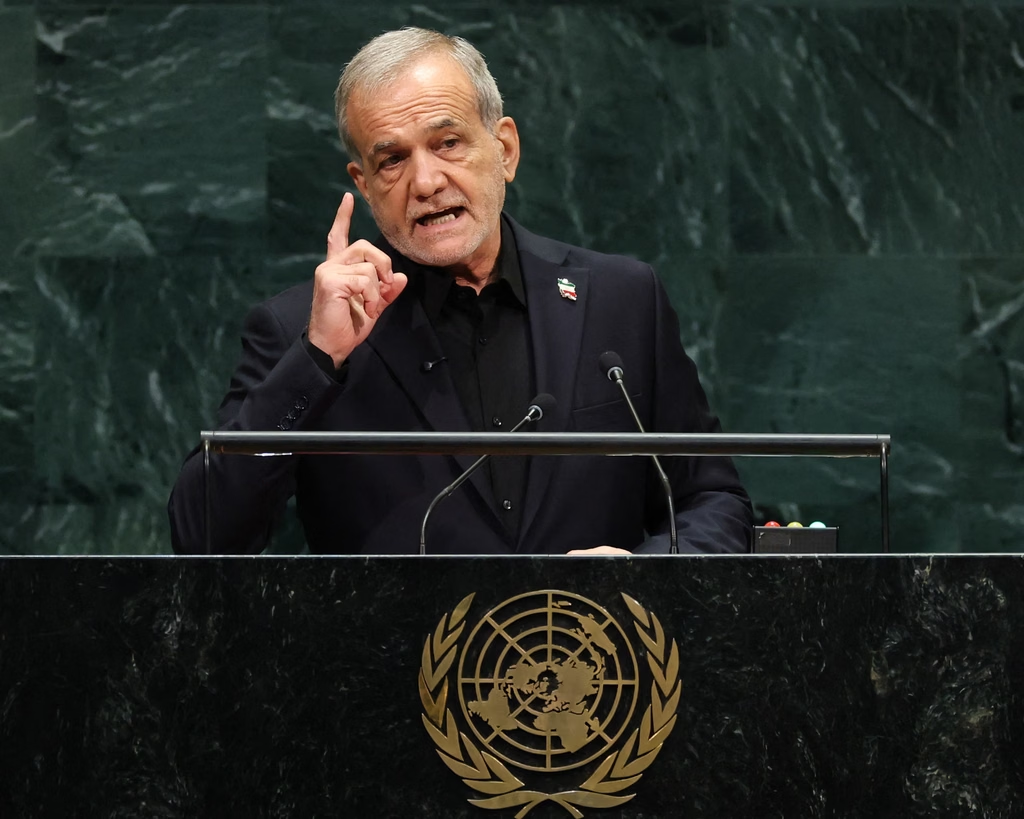
The speech came one day after Trump addressed the same gathering and warned that he faced a choice over whether to reach an agreement with Iran or take further action against the country. Trump also said American and Iranian representatives had been holding discussions and suggested that another meeting could take place soon.
Pezeshkian’s remarks reflected the difficult balance facing Tehran. Iran is attempting to demonstrate that military pressure has not forced it to surrender, while economic sanctions, restrictions on its oil exports and pressure around the Strait of Hormuz have created significant challenges for the government.
Pezeshkian Rejects Trump’s Pressure
Pezeshkian directly addressed Trump during his speech, arguing that increased pressure would not force Iran to abandon its position.
The Iranian president portrayed the conflict as one in which Tehran had been subjected to military attacks while maintaining that it had not sought to initiate a war. He accused the United States and Israel of violating international law and described the campaign against Iran as an act of terrorism.
At one point, Pezeshkian displayed photographs of people killed during the conflict, including children who died in a school strike in Minab. The incident has become a powerful symbol in Iran of the human cost of the war. The United States has rejected allegations that its actions constituted war crimes.
The Iranian leader also accused Washington of applying different standards to Iran and Israel, arguing that Tehran faces sanctions while Israel avoids comparable punishment for military actions.
His remarks were clearly intended for an international audience, but they also carried a domestic message. Pezeshkian needed to demonstrate that any potential negotiations with Washington would not amount to Iran surrendering under pressure.
Door Remains Open to Negotiations
Despite his confrontational language, Pezeshkian did not reject diplomacy.
Instead, he emphasized that Iran remained willing to negotiate as long as the United States abandoned what Tehran considers coercive tactics. That position is significant because Iranian and American officials have already resumed indirect diplomatic contacts.
On Tuesday, Iranian Foreign Minister Abbas Araghchi held roughly three hours of talks with US special envoy Steve Witkoff and Jared Kushner on the sidelines of the UN General Assembly. Qatar helped facilitate the discussions.
The talks were described positively by the American side. Trump said further discussions could occur, while Witkoff characterized the meeting as encouraging and constructive. Iranian officials confirmed that contact had taken place but stressed that Tehran’s conditions remained on the table.
Iranian Foreign Ministry spokesman Esmail Baghaei said the discussions were used to communicate Tehran’s demands, including an end to the war, an end to American military pressure, the lifting of the naval blockade and the release of Iranian assets.
That distinction is important. While diplomatic communication has resumed, there is no indication that the two sides have reached an agreement on the fundamental issues dividing them.
Strait of Hormuz at the Center of the Dispute
The Strait of Hormuz remains one of the most important issues in any potential settlement.
The strategic waterway connects the Persian Gulf with the Gulf of Oman and is critical to global energy shipments. Disruption in the strait has contributed to volatility in oil markets and increased pressure on governments and businesses around the world.
Iran has linked the reopening of the waterway to progress on negotiations. Iranian officials have indicated that shipping could resume within seven days if Tehran’s conditions are met.
However, the proposed arrangements involve difficult questions about control and navigation.
Iran wants a future system that protects its security interests and gives Tehran a significant role in managing the waterway. The United States and Gulf countries have different interests, making an agreement over shipping routes and security guarantees particularly complicated.
The dispute is further complicated by instability around the Bab al-Mandab Strait, another major maritime route connecting the Red Sea with the Indian Ocean.
Nuclear Program Remains Another Key Issue
Pezeshkian also addressed Iran’s nuclear ambitions, saying Tehran wants to maintain a peaceful civilian nuclear program while rejecting the development of nuclear weapons.
That position reflects one of the central disagreements between Iran and Western governments.
Iran has consistently argued that it has the right to peaceful nuclear technology. The United States and its allies, however, have expressed concerns about the possibility that Iran’s nuclear capabilities could eventually support the development of a weapon.
Any long-term diplomatic agreement would therefore likely have to address both Iran’s nuclear activities and international demands for verification and restrictions.
Pressure Builds on Both Sides
The diplomatic activity at the UN comes as both governments face significant pressure.
Iran is dealing with sanctions, restrictions on oil exports and difficulties maintaining international economic connections. The American naval blockade has added to the pressure by making it harder for Iran to move energy products and generate foreign currency.
Washington, meanwhile, faces concerns about the economic consequences of prolonged disruption in energy markets. Oil prices have responded to developments surrounding the Strait of Hormuz, increasing the importance of any diplomatic progress.
The war is also affecting regional governments, particularly those located around the Persian Gulf and the Red Sea.
A Difficult Path Toward a Settlement
Pezeshkian’s UN speech highlighted the contradictions at the heart of the current US-Iran relationship.
Tehran continues to reject American military pressure and insists that it will not surrender. At the same time, Iranian officials are participating in diplomatic contacts that could eventually lead to negotiations.
Washington is sending similarly mixed signals. Trump has used strong threats against Iran while also saying that discussions are continuing and that an eventual settlement remains possible. Reuters reported that Trump said Tuesday he believed the two countries would eventually reach a deal.
For now, neither side appears ready to abandon its central demands.
Pezeshkian’s appearance at the UN nevertheless demonstrated that diplomacy remains part of the conversation, even as the conflict continues. His message was that Iran is willing to negotiate, but not under what Tehran regards as coercion.
Whether that opening can develop into meaningful negotiations will depend on the unresolved questions surrounding the war, sanctions, the Strait of Hormuz and Iran’s nuclear program. For the moment, the diplomatic channel remains open, but the gap between Washington and Tehran remains substantial.