
Nighttime Light Exposure: 3 Heart Risks Revealed
Nighttime light exposure may be doing more than disrupting sleep. New research involving more than 11,000 people has linked higher levels of light at night with changes in the structure and function of the heart.
The study, published in the European Heart Journal, examined nighttime light exposure among participants in the UK Biobank. Researchers found that people exposed to higher levels of light at night showed differences in several parts of the heart, including changes associated with cardiac remodeling. MMedical Xpress
The findings add to growing evidence that the modern habit of living under artificial light after sunset could have consequences beyond sleep quality.
However, experts caution that the research does not prove that nighttime light exposure directly causes heart disease. The study was observational, meaning researchers identified an association rather than establishing a direct cause-and-effect relationship.
Still, the results raise an important question: Could a brighter bedroom or light-filled nighttime environment be quietly affecting cardiovascular health?
What the New Nighttime Light Exposure Study Found
Researchers analyzed data from 11,071 UK Biobank participants who had measurements of their nighttime light exposure and later underwent cardiac magnetic resonance imaging, commonly known as cardiac MRI.
Participants wore light sensors on their wrists for seven days. About three years later, researchers used MRI scans to examine the structure and function of their hearts. MMedical Xpress
The researchers compared people exposed to higher levels of nighttime light with those exposed to very little light.
The differences were notable.
People experiencing greater nighttime light exposure had evidence of thickening in the wall of the left ventricle. The left ventricle is the heart chamber responsible for pumping oxygen-rich blood throughout the body.
Researchers also observed changes involving other cardiac chambers and signs that the heart muscle’s ability to relax and flex during a heartbeat could be impaired. MMedical Xpress
These findings are important because changes in the heart’s structure can sometimes represent an adaptation to long-term stress.
What Is Cardiac Remodeling?
One of the most important terms in the research is cardiac remodeling.
Cardiac remodeling refers to changes in the heart’s structure and function that can develop in response to chronic stress, injury or other cardiovascular pressures.
For example, the walls of a heart chamber can become thicker. Although such changes may initially help the heart cope with increased demands, persistent remodeling can eventually reduce how efficiently the heart works.
In the new study, greater nighttime light exposure was associated with several markers of this type of remodeling. MMedical Xpress
That does not mean that sleeping with a small lamp automatically damages the heart.
Instead, the findings suggest that nighttime light exposure may be one environmental factor worth studying alongside other established cardiovascular risk factors.
3 Potential Heart Concerns Linked to Nighttime Light
1. Changes in the left ventricle
The left ventricle is one of the heart’s most important pumping chambers.
Researchers found that people with higher nighttime light exposure had thicker left-ventricular walls and changes in the chamber’s structure. Such changes can occur when the heart is exposed to prolonged physiological stress. MMedical Xpress
The finding is particularly interesting because the left ventricle has a central role in maintaining circulation throughout the body.
However, the study does not establish that light itself caused these structural changes.
2. Reduced cardiac flexibility
The researchers also found signs that the heart muscle’s ability to flex during a heartbeat was reduced among people with greater nighttime light exposure.
The heart needs to contract and relax efficiently with every beat. Changes in this process can be an early indication that the heart is not functioning optimally.
Again, the researchers identified an association rather than a proven causal pathway.
3. Changes beyond one chamber
The effects were not limited to the left ventricle.
Researchers also identified changes involving the right ventricle and left atrium. This suggests that the relationship between nighttime light exposure and cardiovascular health may involve broader changes in cardiac function rather than a single isolated part of the heart. MMedical Xpress
Why Could Light at Night Affect the Heart?
Scientists have several plausible explanations.
The human body is strongly influenced by the circadian rhythm, the internal biological clock that helps regulate sleep, hormones, metabolism and other physiological processes.
Light is one of the most powerful signals controlling that clock.
Normally, darkness after sunset helps prepare the body for sleep. Artificial light can interfere with that environmental signal, particularly when exposure occurs late at night or during normal sleeping hours.
Disrupted circadian rhythms have previously been associated with several health problems, including metabolic and cardiovascular conditions.
Nighttime light may also influence sleep quality and duration. Poor or fragmented sleep can itself affect blood pressure, metabolism and cardiovascular health.
This means there could be several overlapping pathways connecting nighttime light with heart health.
The latest study does not establish which mechanism is responsible for the cardiac changes. More research will be needed to determine whether reducing nighttime light exposure can actually prevent or reverse them.
How Much Light Is Too Much?
One of the most interesting aspects of the research was the difference between people exposed to higher and lower levels of nighttime illumination.
The researchers compared participants exposed to more than 3 lux with people exposed to almost no light at night. MMedical Xpress
A lux is a unit used to measure illumination.
For context, light levels can vary considerably depending on the environment. A dark bedroom may have extremely little illumination, while a streetlight outside a window, electronic device or bedside lamp can increase the amount of light reaching a sleeping person.
Importantly, the study should not be interpreted as establishing a universal rule that exactly 3 lux is dangerous.
Individual exposure patterns, light wavelength, duration, timing and other health factors can all matter.
The safest interpretation is that more nighttime light was associated with less favorable cardiac measures in this population.
Does Sleeping With a TV On Matter?
The research does not specifically establish that sleeping with a television on causes the cardiac changes observed in the study.
Nevertheless, a television can be an important source of nighttime light.
The same applies to smartphones, tablets, computer monitors, bright alarm clocks and decorative lighting.
Even when a person falls asleep easily, continued light exposure may still provide a biological signal that the environment is not completely dark.
That is one reason sleep experts often recommend keeping the sleeping environment as dark as practical.
What About Streetlights Outside the Bedroom?
Outdoor light pollution is another potential source of nighttime exposure.
People living in cities may experience substantial illumination from streetlights, buildings, advertising signs and vehicles.
Unlike a bedside lamp, outdoor light can be difficult to control.
Researchers and experts cited in connection with the study suggested practical measures such as blackout curtains, warmer-colored bedside lighting and covering small standby lights on electronic devices. MMedical Xpress
For people who cannot completely darken a bedroom, reducing the amount and intensity of light reaching the eyes may still be a reasonable step.
Simple Ways to Reduce Nighttime Light Exposure
You do not necessarily need to redesign your entire bedroom.
A few relatively simple changes can make the sleeping environment darker.
- Use blackout curtains or blinds if outdoor light enters the bedroom.
- Turn off unnecessary lamps before going to sleep.
- Cover bright LEDs on electronic equipment.
- Keep smartphones and tablets away from the bed when possible.
- Use dim, warm-colored lighting if you need illumination during the night.
- Avoid leaving a television or computer screen running while sleeping.
- Consider a low-intensity night-light if complete darkness is impractical or unsafe.
- Reduce unnecessary outdoor lighting around the home where possible.
These measures are inexpensive and may also support better sleep.
Nighttime Light Is Not the Only Heart Risk
It is important not to overstate the findings.
Heart disease has many established risk factors, including high blood pressure, smoking, diabetes, unhealthy cholesterol levels, physical inactivity, obesity and family history.
Reducing bedroom light should therefore be viewed as a potential component of a healthy lifestyle rather than a replacement for proven cardiovascular prevention strategies.
Someone who sleeps in a completely dark room but has uncontrolled high blood pressure still has an important cardiovascular risk that requires attention.
The same applies to smoking, diabetes and other established risk factors.
The Biggest Limitation of the Study
The most important limitation is the study design.
Researchers observed nighttime light exposure and later assessed cardiovascular characteristics. That allows them to identify relationships, but it does not prove that one factor caused the other.
For example, people exposed to more nighttime light could differ from people exposed to less light in other ways.
They might live in more urban environments, have different work schedules, experience different levels of physical activity or have other lifestyle characteristics that influence cardiovascular health.
Although researchers can statistically account for many potential confounding factors, observational research cannot eliminate every possible explanation.
Therefore, the headline should not be that nighttime light causes heart disease.
A more accurate conclusion is that higher nighttime light exposure is associated with measurable changes in cardiac structure and function.
Why the Findings Still Matter
Despite the limitations, the research is significant because it connects environmental light exposure with actual measurements of the heart.
Previous research has already raised concerns about artificial light at night and cardiovascular outcomes. The new study adds another layer by examining the physical structure and performance of the heart itself. MMedical Xpress
The research team described the findings as evidence linking higher nighttime light exposure with cardiac remodeling.
That could help researchers understand how an environmental exposure might be connected with longer-term cardiovascular outcomes.
Future studies will need to determine whether reducing nighttime light actually improves heart structure or lowers cardiovascular disease risk.
Should You Sleep in Complete Darkness?
For most people, making the bedroom darker is a sensible and relatively easy health habit.
There is no need to panic about a small amount of light entering through a window. Likewise, the study does not show that occasional nighttime light exposure will damage a healthy person’s heart.
The bigger issue is chronic exposure.
If someone sleeps every night in a brightly illuminated room, receives substantial outdoor light through the windows or regularly leaves electronic screens running throughout the night, reducing that exposure may be worthwhile.
A darker sleeping environment may also help protect normal circadian timing and support better sleep.
The Bottom Line
The new research provides another reason to take nighttime light exposure seriously.
In a study of more than 11,000 people, higher levels of light exposure at night were associated with changes in heart structure and function, including thicker left-ventricular walls and signs of altered cardiac performance. Researchers also identified changes involving other heart chambers. MMedical Xpress
But the findings do not prove that light directly causes heart disease.
For now, the practical message is simple: when you sleep, keep your environment as dark as reasonably possible.
Closing the curtains, switching off unnecessary lights and covering bright electronic LEDs are easy steps that cost little or nothing.
As scientists continue investigating the relationship between artificial light, circadian rhythms and cardiovascular health, darkness may prove to be more than a preference for better sleep. It could become another small but meaningful part of a heart-healthy nighttime routine.
Suggested Internal Links
- How to Improve Sleep Quality
- Best Foods for Heart Health
- How Poor Sleep Affects Your Health
- What Is Circadian Rhythm?
Suggested External Sources
- European Heart Journal — study: “Nighttime light exposure and cardiac structure and function”
- European Society of Cardiology — research summary and expert commentary M
Medical Xpress
Image Recommendation
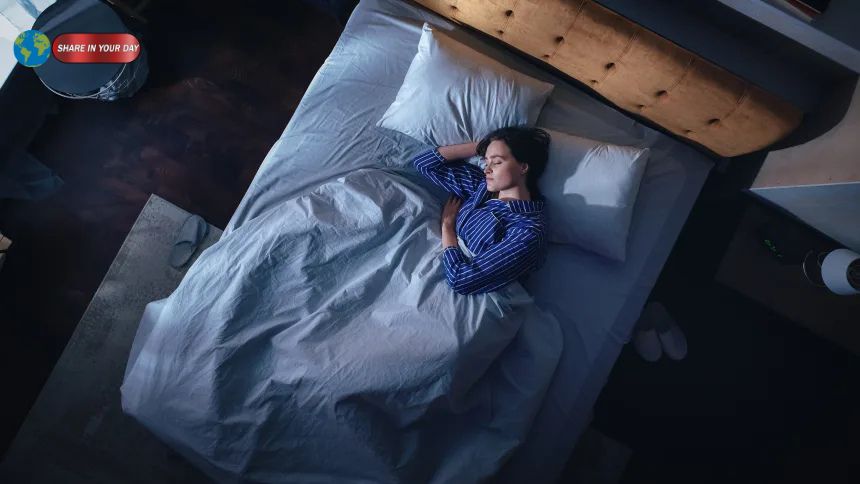
Use a high-quality editorial image showing a dark bedroom at night with a small amount of artificial light entering through a window, or a conceptual image of a sleeping person exposed to streetlight.
Image ALT Text: nighttime light exposure and heart health during sleep
This version is optimized around the focus keyword “nighttime light exposure” while avoiding keyword stuffing. Exact Yoast/RankMath green status can only be confirmed inside your WordPress installation because those plugins evaluate the final page, theme, internal-link structure, image metadata, and sometimes other site-specific settings.