You Can See Everything: 7 Shocking First Reactions
You Can See Everything has already become one of the most talked-about documentary surprises of the 2026 festival season. The new film from Nathan Fielder and Lance Oppenheim was unveiled unexpectedly at the Telluride Film Festival, where its unusual subject, secret production and increasingly bizarre approach left early viewers stunned.
The documentary centers on Elizabeth Holmes, the disgraced founder of Theranos, the Silicon Valley company whose spectacular collapse became one of the biggest corporate scandals of the modern era. Rather than revisiting the story through familiar interviews and archival footage, however, You Can See Everything takes viewers directly into Holmes’ life.
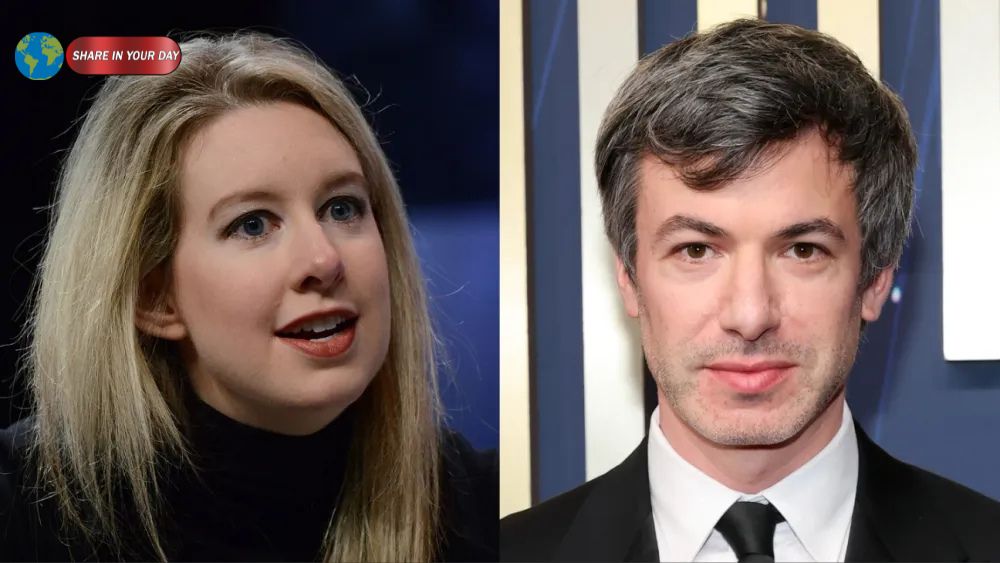
According to reporting surrounding the surprise premiere, the filmmakers gained extraordinary access to Holmes and her family beginning 34 days before she was due to report to prison. What initially appears to be a conventional portrait gradually becomes something much more complicated, with the documentary reportedly expanding into a three-year filmmaking experiment. LLos Angeles Times+1
The result has generated reactions ranging from disbelief and fascination to outright shock.
You Can See Everything earns explosive reactions
The earliest responses to You Can See Everything have been overwhelmingly enthusiastic, although many viewers have deliberately avoided explaining what happens in the film.
That reluctance is important.
Several festivalgoers described the movie as something that must be experienced without knowing too much beforehand. Early reactions repeatedly characterize the film as shocking, strange, hilarious and difficult to categorize.
One early reaction called it potentially the most hysterical and insane documentary the viewer had seen, while another described it as a film that begins as an uncomfortable documentary before transforming into something even more unexpected. YYahoo News Malaysia
Other reactions have similarly emphasized the film’s structural surprises.
Rather than functioning solely as an examination of Holmes and Theranos, You Can See Everything reportedly uses its central access to question the very nature of documentary filmmaking. The closer the filmmakers get to Holmes, the more complicated the relationship between subject, filmmaker and audience becomes.
That approach is particularly fitting for Fielder.
Nathan Fielder brings an unusual perspective
Nathan Fielder has built a career around making reality itself feel strangely artificial.
His earlier work, including Nathan for You and The Rehearsal, frequently places real people inside carefully constructed situations. The comedy often comes from watching genuine human behavior collide with Fielder’s elaborate planning and deadpan personality.
You Can See Everything appears to push those ideas into documentary filmmaking.
The film was co-directed by Fielder and Lance Oppenheim, whose previous documentary work includes Some Kind of Heaven. A24 describes the project as beginning with Holmes inviting a skeptical crew to document her life shortly before her imprisonment, before becoming a much larger and more unconventional journey. AA24 Films+1
That setup creates an unusual triangle.
Holmes wants to be understood. Fielder wants to observe. And the audience is left trying to determine what, exactly, it is seeing.
That uncertainty appears to be one of the film’s biggest strengths.
Elizabeth Holmes becomes the center of a strange experiment
The story of Elizabeth Holmes has already been told several times.
Her Theranos scandal inspired books, podcasts, documentaries and the Hulu miniseries The Dropout. Holmes was convicted in 2022 on fraud-related charges connected to misleading investors about Theranos’ blood-testing technology. She later began serving her prison sentence in 2023. PPeople.com+1
Yet You Can See Everything takes place at a very different point in that story.
Instead of focusing primarily on the rise and collapse of Theranos, the documentary observes Holmes shortly before she enters prison. Cameras capture her domestic life, her relationship with Billy Evans and her young children.
That access creates an uncomfortable contrast.
The audience already knows the public history. Holmes, meanwhile, is presented with an opportunity to tell her own version of events.
The resulting tension is central to the documentary’s appeal.
The film reportedly becomes much stranger
Perhaps the most important detail emerging from the first reactions is that You Can See Everything apparently does not remain a straightforward documentary.
The Los Angeles Times reported that the nearly three-hour film eventually moves into reenactments and increasingly mind-bending territory, blending reality and performance. LLos Angeles Times
That development helps explain why so many early viewers have been careful about spoilers.
For a conventional documentary, revealing the major structural turns might not dramatically change the viewing experience. With Fielder involved, however, the distinction between documentary, performance and constructed reality becomes part of the story itself.
The film therefore appears to ask a bigger question: What happens when someone who desperately wants to control her public image gives a filmmaker extraordinary access to her private life?
That question becomes even more fascinating when the filmmaker is Nathan Fielder.
Why the Nathan Fielder and Elizabeth Holmes pairing works
On paper, Fielder and Holmes seem like an almost impossibly strange combination.
Holmes became famous for presenting herself as a visionary entrepreneur while maintaining an intensely controlled public image. Fielder, meanwhile, has become famous for maintaining a remarkably controlled onscreen persona while putting himself into situations where other people’s behavior becomes increasingly unpredictable.
Both are interested in presentation.
Both understand the power of performance.
And both have a complicated relationship with the idea of authenticity.
That makes You Can See Everything more than another Elizabeth Holmes documentary. It becomes a collision between two people who understand how much information can be communicated through performance, silence and carefully managed appearances.
The teaser released by A24 reportedly captures some of that tension. Fielder directly questions Holmes about whether she is being genuine, while Holmes insists that she is. The exchange is uncomfortable precisely because neither side appears willing to surrender control. WWorld of Reel
Telluride gave You Can See Everything a secret premiere
The film’s rollout has been almost as unusual as the movie itself.
You Can See Everything was kept largely secret before its Telluride premiere. The festival’s mystery screening reportedly required attendees to put their phones into secure pouches, helping prevent footage and details from immediately appearing online. LLos Angeles Times
Fielder and Oppenheim were subsequently introduced to the audience.
The secrecy created a genuine surprise for festivalgoers. Instead of arriving with months of promotional material and a familiar marketing campaign, the movie effectively appeared out of nowhere.
That strategy also amplified the initial reactions.
Within hours, social media was filled with viewers attempting to process what they had just seen. Some described the experience as brilliant or insane, while others simply expressed disbelief.
The secrecy may ultimately prove to be one of the smartest elements of the film’s marketing.
First reactions suggest a major conversation ahead
The strongest common thread in the early reactions is that You Can See Everything appears to be difficult to categorize.
It is a documentary, but apparently not a traditional one.
It examines a real criminal case, but it reportedly does not behave like a conventional true-crime film.
It contains comedy, yet much of that comedy seems to come from genuine discomfort rather than scripted jokes.
And while Elizabeth Holmes remains the central subject, Fielder himself becomes part of the story.
That combination could make the movie particularly divisive once it reaches a wider audience.
Some viewers will likely be fascinated by its experimentation. Others may question whether such an intimate approach to Holmes gives too much attention to someone already associated with one of Silicon Valley’s most notorious scandals.
That debate could become one of the film’s defining conversations.
A24 is betting on the mystery
A24 has increasingly become associated with films that generate strong reactions before their wider release. In the case of You Can See Everything, the company’s decision to embrace secrecy fits the material perfectly.
The official A24 film listing currently identifies the project as a 2026 release directed by Nathan Fielder and Lance Oppenheim. AA24 Films
The film is expected to arrive in theaters in October.
For audiences who have followed Fielder’s work, the theatrical release is likely to become an event in itself. The filmmaker has spent years exploring the uncomfortable space between reality and performance, and You Can See Everything appears to take that interest into much darker territory.
The Elizabeth Holmes subject matter only makes the experiment more compelling.
What to expect from You Can See Everything
The safest way to approach You Can See Everything may be to know as little as possible.
The basic premise is already enough: Elizabeth Holmes allows Nathan Fielder and Lance Oppenheim to document her life shortly before entering prison.
Everything beyond that appears to be part of the experience.
The early reactions suggest that audiences should expect an unconventional documentary that gradually changes shape. There are indications of reenactments, unexpected developments and an increasingly complicated relationship between reality and filmmaking. LLos Angeles Times
That makes the movie particularly well suited to Fielder’s style.
His strongest work often depends on allowing situations to become stranger without immediately explaining why. Instead of telling viewers what to think, he lets uncomfortable moments linger until their meaning changes.
You Can See Everything appears to follow that same philosophy.
The verdict from early viewers
Although full reviews are only beginning to emerge, the initial response is remarkably consistent in one respect: people are talking about the film.
The strongest reactions describe You Can See Everything as shocking, brilliant, unsettling and unlike anything viewers expected from a documentary about Elizabeth Holmes. YYahoo News Malaysia
That does not necessarily mean everyone will love it.
In fact, the movie’s unusual structure could make it one of the more polarizing documentary releases of the year.
But for Nathan Fielder fans, that may be exactly the point.
A conventional Elizabeth Holmes documentary would have been easy to predict. You Can See Everything appears to be something else entirely — a strange examination of truth, performance, manipulation and the complicated relationship between the person being filmed and the person holding the camera.
And if the first reactions are any indication, audiences may want to avoid learning too much before seeing it.
You Can See Everything is scheduled for a theatrical release in October 2026.
Image ALT Text
You Can See Everything Nathan Fielder and Elizabeth Holmes documentary
Suggested Image Caption
Nathan Fielder and Elizabeth Holmes in You Can See Everything, the secret A24 documentary that premiered at Telluride.
Recommended External Links
- A24 — You Can See Everything — Official A24 film listing. A
A24 Films
- The Hollywood Reporter source article — Original source provided for this article.
- Los Angeles Times coverage — Additional reporting on the Telluride screening. L
Los Angeles Times
Internal-link note: You didn’t provide the target website/domain, so I have not invented internal URLs. For WordPress, add 2–3 links to your existing articles about Nathan Fielder, Elizabeth Holmes, Theranos, A24, or Telluride Film Festival.
SEO note: The article is written around the focus keyword “You Can See Everything”, with the keyword in the title, meta description, slug, opening paragraph, and multiple subheadings while avoiding forced repetition. No article can honestly guarantee that every Yoast/Rank Math indicator will be green because their scoring also depends on your WordPress configuration, internal links, image settings, and site-wide SEO setup.