
Sony XM4C Headphones: 5 Shocking Upgrades Revealed
Sony XM4C headphones are bringing one of Sony’s most beloved wireless headphone designs back to the market, six years after the original WH-1000XM4 made its debut.
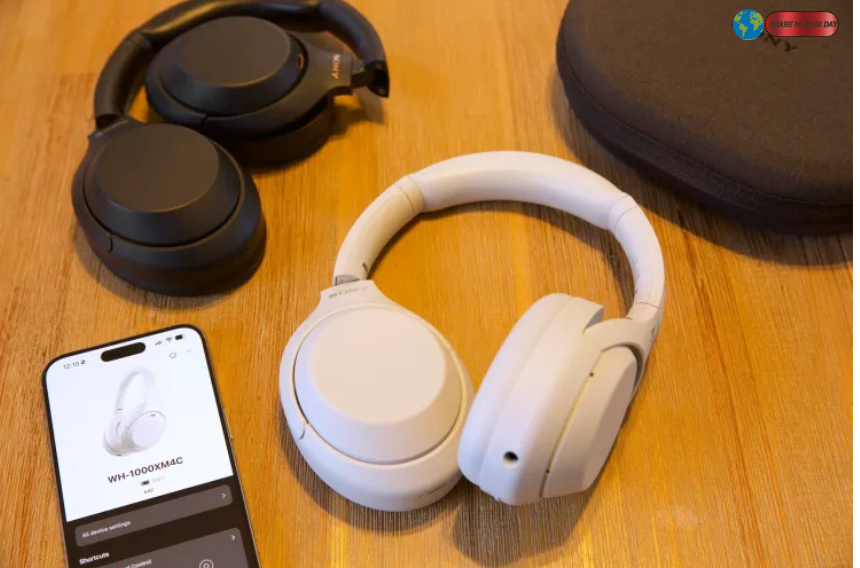
Sony has revived the familiar foldable design with the new WH-1000XM4C, a refreshed version of its classic noise-canceling headphones. The new model keeps much of the hardware and design that made the original XM4 popular while adding several modern features, including Bluetooth 6, a 10-band equalizer and a dedicated gaming preset. The Verge+1
The price is another major part of the story.
Sony lists the XM4C at $299.99, positioning it below the current WH-1000XM6, while the older XM5 is currently listed by Sony at a substantially lower promotional price of $199.99. Sony Electronics
That creates an unusual situation for shoppers.
The XM4C is technically a newer product, but it is built around a design that dates back to 2020. Meanwhile, Sony’s newer XM5 and XM6 headphones offer more advanced hardware.
So why bring the XM4 back?
For Sony, the answer appears to be a combination of nostalgia, compactness and continued demand for a design that many headphone users never wanted the company to abandon.
Sony XM4C Headphones Bring Back a Fan-Favorite Design
The biggest change is actually something that has not changed very much.
The Sony XM4C headphones retain the compact, folding design associated with the original WH-1000XM4. That means the earcups can fold inward, making the headphones easier to store and transport. The Verge+1
Sony moved away from this particularly compact approach with the WH-1000XM5.
The XM5 introduced a redesigned structure and more streamlined appearance, but it did not fold in the same way as the XM4. Sony later moved toward a more compact approach again with the XM6, although the newer flagship is still not identical to the XM4’s folding design.
That makes the XM4C interesting for travelers.
Headphones that fold into a smaller package can be easier to place in a backpack, carry-on bag or laptop case.
Sony is also introducing a lavender color option for the XM4C, alongside more traditional finishes. The Verge
The overall design, however, is unmistakably XM4.
For people who loved the original model’s appearance and portability, that could be one of the biggest reasons to consider the new version.
1. Bluetooth 6 Is Coming to the XM4C
One of the most notable technical upgrades is Bluetooth 6.
The original WH-1000XM4 used an older Bluetooth generation. The new XM4C updates wireless connectivity to Bluetooth 6, bringing the six-year-old design more in line with modern wireless hardware. The Verge
Bluetooth upgrades do not automatically mean dramatically better sound.
The actual listening experience still depends on codecs, source devices, tuning, drivers and Sony’s processing technology.
Nevertheless, having a newer Bluetooth standard gives the XM4C a more modern foundation.
It also makes the product less obviously dated compared with the original XM4.
For consumers buying a headphone that could remain in use for several years, newer wireless connectivity can be an attractive feature.
However, shoppers should not assume Bluetooth 6 alone makes the XM4C superior to Sony’s newer flagship headphones.
The XM6 remains Sony’s more advanced premium model and uses newer internal processing and a more extensive microphone system. The Verge+1
2. Sony Adds a 10-Band EQ
Another important upgrade is the equalizer.
The original XM4 offered a five-band EQ through Sony’s headphone software. The new XM4C expands that to a 10-band EQ, giving listeners considerably more control over the sound. The Verge
This matters because different listeners have very different preferences.
Some people prefer a strong bass response.
Others want clearer vocals or a brighter treble range.
With more EQ bands, users can make more precise adjustments rather than relying primarily on Sony’s default tuning.
Sony has also included a gaming EQ preset.
That addition reflects how the headphone market has expanded beyond music listening.
Many consumers now use wireless headphones for gaming, video calls, movies and general computer use. A dedicated gaming-oriented sound profile can therefore make the XM4C more versatile.
Sony says the XM4C’s sound profile has also been updated to bring it more in line with its newer headphone models. The Verge
The result is a curious combination.
The hardware design is deliberately old-school, while the software experience is being brought forward.
3. The Battery Is Actually Worse
Not every change is an upgrade.
One of the strangest aspects of the Sony XM4C headphones is that their advertised battery life is slightly lower than the original XM4.
Sony rates the XM4C for up to 27 hours of playback with noise cancellation enabled. The original XM4 was rated for up to 30 hours with ANC turned on. The Verge+1
A three-hour difference is unlikely to be a deal-breaker for most people.
Twenty-seven hours is still enough for multiple days of ordinary listening and comfortably covers many long-haul flights.
But it is unusual to see a refreshed version of a product launch with lower headline battery life than its predecessor.
Consumers typically expect a new model to improve on older specifications.
The XM4C’s battery specification therefore reinforces the idea that Sony is not attempting to completely redesign the product.
Instead, the company appears to be preserving the core XM4 experience while making selected updates.
That strategy could appeal to existing XM4 owners who like the original design but want newer connectivity and software features.
4. The Price Makes the XM4C Complicated
The Sony XM4C headphones are priced at $299.99 in the United States. Sony’s official store currently lists the model for that price and offers it for preorder. Sony Electronics
On its own, $299.99 is not an unusual price for premium noise-canceling headphones.
The problem is the competition inside Sony’s own lineup.
Sony currently lists the WH-1000XM6 at $399.99, while the WH-1000XM5 is listed at $199.99 in a substantial promotional discount. Sony Electronics+1
That creates three very different propositions.
The XM5 offers a newer design at a significantly lower sale price.
The XM4C offers the classic compact design for $299.99.
The XM6 represents the current flagship and costs more.
This means the XM4C is not necessarily designed to be Sony’s best-value headphone.
Instead, its selling point is differentiation.
The foldable XM4 design is the key.
For consumers who specifically want that design, the $299.99 price may make sense.
For shoppers who simply want the best Sony headphones for their money, the decision becomes more complicated.
5. The XM4C Still Uses Older ANC Hardware
The noise-cancellation hardware also reveals how much of the original XM4 remains underneath the updated exterior.
The XM4C continues to use Sony’s QN1 noise-canceling processor and four microphones for ANC. The Verge
That technology was highly competitive when the original XM4 launched.
But headphone technology has advanced considerably since then.
The XM5 retained the QN1 processor but expanded its microphone system to eight microphones. The newer XM6 goes further, with 12 microphones and Sony’s newer QN3 processor. The Verge
This is an important consideration for buyers.
The XM4C may still deliver excellent noise cancellation, but it should not be assumed to match the latest XM6 simply because both are premium Sony products.
Sony’s decision to retain the older architecture appears deliberate.
The company is effectively combining a proven platform with modern connectivity and software improvements rather than rebuilding the headphones from the ground up.
Why Is Sony Bringing Back the XM4?
That is perhaps the most interesting question surrounding the launch.
The original XM4 became one of Sony’s most successful premium wireless headphones.
It earned a strong reputation for sound quality, noise cancellation, comfort and portability. The design also remained popular even after Sony introduced the XM5.
Eventually, however, the original XM4 became harder to find as inventory disappeared.
Sony now appears to be testing whether there is still demand for that older form factor.
The answer may be yes.
Headphone buyers do not always prioritize the newest technology.
Some consumers care more about comfort.
Others want portability.
For frequent travelers, a headphone that folds compactly can be more useful than a technically superior model that takes up more space.
Sony may therefore be betting that the XM4’s physical design has become a feature in its own right.
Sony XM4C vs. XM5
The comparison with the WH-1000XM5 will probably be the most important one for shoppers.
The XM5 has a newer physical design and remains an excellent premium headphone. But it does not fold as compactly as the XM4C. The Verge
Sony is currently listing the XM5 at $199.99, although that price is a promotional reduction from its $399.99 list price. Sony Electronics
That $100 difference is substantial.
If the XM5 remains at that sale price, consumers who prioritize value may have a compelling reason to choose it.
But if compact folding is important, the XM4C becomes more attractive.
The choice therefore comes down to priorities.
Choose the XM4C if you want:
- A compact folding design
- A familiar XM4-style form factor
- Bluetooth 6
- A 10-band EQ
- A gaming EQ preset
- Updated sound tuning
- A lower price than the XM6
Choose the XM5 if you want:
- A newer-generation design
- A potentially better value at its current sale price
- Sony’s previous flagship platform
Choose the XM6 if you want:
- Sony’s newest flagship technology
- More advanced ANC hardware
- The latest generation of Sony’s premium headphone platform
Sony XM4C vs. XM6
The comparison with the XM6 is more straightforward.
The XM6 is Sony’s current high-end option, with newer processing and a more sophisticated microphone system. It is listed at $399.99 by Sony. Sony Electronics
The XM4C is $100 cheaper.
That price difference may be enough to attract consumers who do not need the latest features.
The XM4C also has one physical advantage: its particularly compact folding design.
For frequent travelers, that difference could matter more than a specification sheet.
However, consumers who care primarily about maximum noise-cancellation performance and the newest technology should look closely at the XM6 before buying.
A Strange but Potentially Smart Product Strategy
At first glance, Sony’s decision looks unusual.
Why relaunch a six-year-old design when the company already has two newer generations?
The answer could be that the headphone market has matured.
Major manufacturers no longer need to redesign everything every two years.
Instead, companies can maintain successful platforms while offering products at different price points and with different physical characteristics.
Sony already has a broad headphone lineup.
The XM6 occupies the flagship position.
The XM5 can serve consumers looking for a discounted premium model.
The XM4C provides something neither offers in exactly the same way: the classic compact XM4 form factor.
That makes the XM4C less of a conventional successor and more of a second-generation revival.
Sony itself describes the product as a reimagined version of a fan favorite, emphasizing the familiar design, sound and noise cancellation while adding new customization options. Sony Electronics
Sony Is Also Updating Its Cheaper Headphones
The XM4C was not the only headphone announcement.
Sony also introduced updated versions of its more affordable WH-CH730N and WH-CH530 headphones.
Both receive the 10-band EQ and gaming EQ preset. Sony also says the CH730N can deliver up to 50 hours of battery life with ANC, while the CH530 can reach up to 55 hours without ANC. The Verge
The CH530 starts at $69.99, while the CH730N is listed at $179.99. Sony Electronics
Sony is also adding a safe-volume mode to the software, allowing users to limit maximum headphone volume.
That feature could be particularly useful for parents who want to reduce the risk of excessive volume exposure.
The Verdict: Is the XM4C Worth It?
The Sony XM4C headphones are an unusual product.
They are neither a completely new flagship nor a simple reissue.
Sony has taken a well-known design and added several modern features while keeping much of the original hardware architecture intact.
The biggest attraction is the compact folding design.
Bluetooth 6 and the 10-band EQ are welcome improvements, while the gaming preset adds flexibility. The updated sound profile should also make the headphones feel more current. The Verge
But the product has obvious limitations.
Battery life has fallen from 30 hours to 27 hours with ANC. The QN1 processor and four-microphone ANC system are also older than the technology found in Sony’s latest flagship. The Verge
And the $299.99 price is difficult to evaluate without considering Sony’s other headphones.
The XM5 is currently listed for $199.99, while the XM6 costs $399.99. Sony Electronics+1
For fans of the original XM4 design, however, the calculation is different.
The XM4C offers something the newer models do not replicate perfectly.
It brings back the compact, familiar headphone that helped establish Sony as one of the dominant names in premium noise cancellation.
For travelers, commuters and longtime XM4 fans, that could be enough.
Final Takeaway
The return of the Sony XM4C headphones is one of the more unexpected headphone launches of 2026.
Sony is not trying to pretend that the XM4 never aged.
Instead, it has taken a proven design and selectively modernized it.
The result is a headphone that combines an old-school folding form factor with Bluetooth 6, improved sound customization and a 10-band EQ.
At $299.99, the XM4C occupies an unusual position in Sony’s lineup.
It is more expensive than the heavily discounted XM5 but cheaper than the flagship XM6. Sony Electronics+2
That means the XM4C’s success will likely depend less on raw specifications and more on whether consumers still value the original XM4’s compact design.
For people who do, Sony’s unexpected comeback may be exactly what they have been waiting for.