Amy Dangerfield and the Far-Right Internet Movement That Turned Against Her
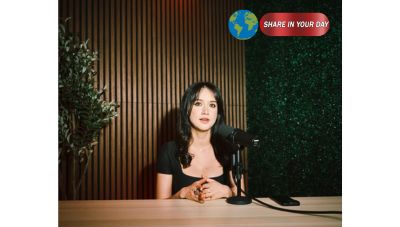
Amy Dangerfield spent years building an online identity around the far-right internet movement she believed could give her a voice, an audience and a place in a political community dominated largely by men.
The Australian-born content creator moved to the United States in 2017 and gradually built a following by promoting strongly anti-feminist views and appearing on right-wing and manosphere programs. She eventually became associated with Nick Fuentes and his online following, commonly known as the “groypers.”
But that relationship changed dramatically this year after Dangerfield organized an independent political event in Ohio.
What she intended as an effort to expand the movement into offline political activism quickly became a source of conflict. Supporters of Fuentes accused her of attempting to challenge his leadership, while online attacks against Dangerfield escalated into threats, harassment and humiliating manipulated images.
Her experience has since become an example of the risks faced by women who build careers inside online political movements where loyalty and ideological conformity can determine whether a creator remains accepted.
From Conservative Influencer to Groypette
Dangerfield’s political transformation developed over several years.
According to The Washington Post, she became increasingly interested in online arguments about gender, relationships and traditional social roles. She appeared on programs associated with the manosphere, including the podcast “Fresh & Fit,” where women frequently appeared alongside male influencers to debate relationships and gender politics.
Dangerfield presented herself as someone who had rejected mainstream feminism and embraced what she described as a more traditional understanding of women’s roles.
Her online profile grew, eventually giving her a substantial audience on YouTube and opportunities to work in right-wing media.
In 2023, she encountered Fuentes more directly. She watched his broadcasts and eventually appeared alongside him on a political podcast. The experience deepened her involvement with his online community.
Her wedding became an especially visible expression of that connection. She wore an “America First” hat associated with Fuentes’s movement with her wedding dress, an image that circulated widely online.
Building a Career in the Movement
Dangerfield’s involvement was not limited to political commentary.
In 2024, she worked for Valuetainment, a conservative media company, while continuing to produce her own content. Her videos increasingly focused on gender roles, femininity and criticism of feminism.
The online environment provided both attention and economic opportunities.
For creators operating in the far-right media ecosystem, however, visibility can be unpredictable. A large audience can provide income and influence, but the same online communities can rapidly turn against personalities who are viewed as disloyal.
That tension became central to Dangerfield’s experience.
She and her husband, Daniel DeBrincat, eventually decided to organize their own political gathering.
The America First United Conference
The couple organized the America First United conference in Ohio during the spring, hoping to bring together political influencers and fringe candidates while expanding Dangerfield’s independent platform.
The event reportedly cost about $25,000, much of which DeBrincat placed on his credit card. They also had difficulty finding sponsors, ultimately receiving support from a small artificial-intelligence company.
Technical problems during the event added to the difficulties. According to the Post’s reporting, problems with the livestream made portions of the conference difficult to watch.
The larger problem, however, came from within the online movement itself.
Fuentes’s followers began portraying the conference as an attempt to undermine him. Fuentes subsequently suggested to his Telegram audience that a broader effort was underway to challenge his position.
Dangerfield said she was shocked by the reaction.
Online Attacks Intensify
The dispute quickly moved beyond political disagreement.
Anonymous social-media accounts circulated altered photographs and cartoons depicting Dangerfield and her husband being attacked. Other posts accused her of participating in a conspiracy against Fuentes.
She and her husband sought legal assistance and contacted police over the harassment. Dangerfield also obtained a protection-against-stalking order against one individual, according to the Post.
The harassment included allegations that Dangerfield said were false, along with rape threats and artificially generated sexual images.
The attacks were especially striking because they came from a political community she had spent years defending.
Dangerfield had previously accepted derogatory treatment from members of the movement as part of the culture surrounding female influencers. But she said the escalation following the Ohio conference was different.
The accusations increasingly targeted her personally and questioned her loyalty to the movement.
A Broader Pattern
Researchers who study extremist and far-right movements say Dangerfield’s experience reflects a broader pattern.
Sociologist Kathleen Blee, who has researched far-right organizations, told The Washington Post that women can gain unusual status inside predominantly male movements by helping attract followers and soften the group’s public image.
That position, however, can be unstable.
Lauren Southern, a former far-right influencer who later rejected her previous political views, told the Post that women entering these movements can initially receive attention and influence but may eventually face intense hostility.
Dangerfield’s story illustrates that contradiction.
She had built part of her public identity around criticizing feminism and promoting traditional gender roles. Yet when the online community turned against her, gender became one of the central weapons used against her.
The Cost of Online Political Loyalty
The conflict surrounding Dangerfield remains a dispute within the far-right online ecosystem, but it also highlights a broader feature of internet politics.
Influencers can build audiences rapidly without traditional institutions standing between creators and their followers. That can create opportunities for people who might otherwise struggle to gain political influence.
It can also make those same creators vulnerable to sudden campaigns of harassment.
Dangerfield’s attempt to establish an independent political event demonstrated how quickly online loyalty can become a test of personal allegiance.
The experience left her confronting a community she had spent years helping promote — and questioning what she had helped build.
For her, the episode was not simply a disagreement over a political conference. It exposed the difficult balance between maintaining loyalty to an online movement and attempting to create an independent identity within it.
As political movements increasingly develop through social media, Dangerfield’s experience shows how influence built online can be both powerful and fragile.