Ceer EVs Mark a Major New Chapter for Saudi Arabia
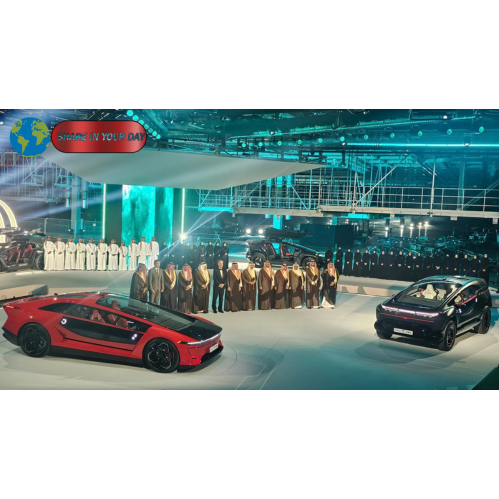
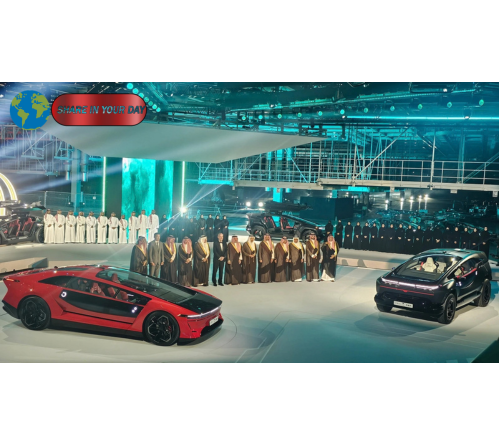
Ceer EVs have officially entered the spotlight as Saudi Arabia’s first homegrown electric vehicle brand unveiled its first two production-bound models, marking a major step in the Kingdom’s effort to establish itself as a serious automotive manufacturing hub.
The new vehicles, known as EXOBOT, were revealed at the Ceer Manufacturing Complex in King Abdullah Economic City. The lineup begins with an electric sedan and an electric SUV, giving the Saudi brand two flagship models as it prepares for commercial sales.
The unveiling represents more than the arrival of two new cars. It is also part of Saudi Arabia’s broader economic diversification strategy, which seeks to develop industries beyond oil and create new manufacturing, technology and investment opportunities.
Ceer was launched in 2022 as a joint venture between Saudi Arabia’s Public Investment Fund and Taiwan’s Foxconn. The company aims to build a portfolio of seven vehicles over the next five years, potentially expanding well beyond the premium electric models revealed this week.
Ceer EVs Introduce the EXOBOT Sedan and SUV
The first Ceer EVs are positioned as premium vehicles with an unusually futuristic design.
The EXOBOT range will initially be offered in sedan and SUV body styles. According to Ceer, both models are designed and engineered in Saudi Arabia and will be manufactured at the company’s facility in King Abdullah Economic City.
The styling is one of the most distinctive elements of the vehicles. The models feature dramatic proportions, large glass areas and upward-opening gullwing-style doors. Ceer has also removed conventional pillars between the front and rear doors, relying on high-strength structural materials to maintain rigidity.
That approach gives EXOBOT a design language that is noticeably different from traditional sedans and SUVs.
Rather than entering the market with a conservative first-generation vehicle, Ceer is using its flagship models to establish a recognizable identity.
The company describes EXOBOT as the foundation of its electric performance range. It is intended to combine high performance, advanced technology and a design influenced by Saudi Arabia’s landscape and culture.
Ceer EVs Offer Up to 850 Horsepower
Performance is another major selling point for the launch models.
Ceer’s EXOBOT First Edition uses a fully electric tri-motor powertrain producing 850 horsepower and 1,000 Nm of torque. The system provides all-wheel drive and gives the vehicles performance figures that place them firmly in premium-performance territory.
The sedan is claimed to accelerate from 0 to 100 km/h in just 2.6 seconds, while the SUV completes the same sprint in 2.9 seconds.
Those numbers are particularly striking because the vehicles are being introduced by a brand that did not exist just a few years ago.
The First Edition models use a 112 kWh battery, with Ceer estimating a range of up to 670 km for the sedan and 560 km for the SUV under the company’s stated testing standard.
The vehicles also use an 800-volt electrical architecture, allowing the company to advertise a 10% to 80% charging time of approximately 30 minutes.
These figures are aimed at showing that the first Saudi EV brand is not simply developing basic transportation. Ceer wants EXOBOT to compete in a technology-focused premium segment where acceleration, range and charging speed are central to the buying decision.
A Premium First Edition Leads the Ceer EVs Range
Ceer is launching EXOBOT with a limited First Edition designed to establish the brand at the top end of the market.
The First Edition is available in two exterior colors, Harrat Grey and White Musk. It also features a black exterior package, red brake calipers, Nappa leather and special interior finishes. Each vehicle receives a unique numbered plaque linked to its vehicle identification number.
The company is also offering a second version known as EXOBOT PLUS, indicating that the initial range is expected to expand beyond the limited launch configuration.
For buyers, the First Edition strategy could help Ceer establish an aspirational image before it moves into broader market segments.
That strategy is important because building an automotive brand involves more than manufacturing vehicles. A new automaker must establish trust, service infrastructure, parts availability and customer support while competing against companies that have spent decades building their reputations.
Ceer appears to be addressing that challenge through what it calls its Companion Package.
The First Edition package includes a six-year or 200,000-km vehicle warranty, scheduled maintenance for six years and six years of roadside assistance. The battery warranty is listed at eight years or 200,000 km.
Saudi Arabia Builds a Larger Automotive Strategy
The significance of Ceer EVs extends well beyond the vehicles themselves.
Saudi Arabia has made industrial diversification a central part of Vision 2030.
Ceer has also been building a local supplier network. Earlier this year, the company announced 16 agreements worth more than SAR 3.7 billion, or roughly $987 million, aimed at expanding domestic supply and localizing parts of EV manufacturing.
That localization effort is significant because an automotive industry cannot be built around vehicle assembly alone.
A sustainable automotive ecosystem requires suppliers for components, electronics, batteries, interiors, body structures and other systems. It also requires engineering talent, logistics infrastructure and after-sales services.
Ceer EVs Aim Beyond the Saudi Market
Ceer has described itself as a brand with regional and eventually international aspirations. Reuters reported that the company plans to begin expanding into regional markets from 2028, while its longer-term strategy extends through 2034.
The company plans to introduce five additional models by 2030, taking its intended portfolio to seven vehicles.
Those future vehicles are expected to include midsize and compact models and different propulsion options. That suggests Ceer’s long-term strategy may extend beyond premium battery-electric vehicles to address a much wider range of customers.
This flexibility could prove important.
The global EV market is becoming increasingly competitive. Established automakers from Europe, Japan, South Korea and the United States are competing with rapidly expanding Chinese manufacturers.
For Ceer, competing globally will therefore require more than government backing. The vehicles will need to offer compelling pricing, quality, reliability, technology and service.
Global EV Competition Creates a Tough Test
The arrival of Ceer EVs comes at a time when the global electric vehicle market is undergoing significant change.
EV adoption continues to expand in several major markets, while automakers are increasingly competing on battery technology, software, charging speed and vehicle efficiency.
At the same time, competition is intensifying.
Chinese manufacturers have expanded aggressively into international markets, putting pressure on established brands with competitive pricing and rapid product development. Reuters recently reported that Chinese automakers are gaining market share in several international markets, creating challenges for traditional manufacturers.
That makes Ceer’s global ambitions particularly demanding.
The company will have to differentiate itself from both established luxury brands and newer EV manufacturers. Its Saudi identity may become one part of that differentiation, while its design and technology will need to provide another.
The company’s partnerships could also be important.
Ceer has worked with international suppliers and technology partners as it develops its vehicles and manufacturing operations.
Economic Impact Could Extend Beyond Cars
Saudi officials see Ceer as an important contributor to the Kingdom’s broader industrial transformation.
Those targets show why the project has attracted significant attention from Saudi policymakers.
The goal is not simply to sell electric cars to Saudi consumers.
Instead, Ceer is intended to stimulate investment across a larger supply chain while developing national engineering and manufacturing capabilities. The automotive sector can also create demand for logistics, software, industrial automation, maintenance and other supporting industries.
That makes the success of Ceer strategically important to Saudi Arabia’s diversification plans.
What Comes Next for Ceer EVs?
The immediate priority will be moving from a high-profile unveiling to full-scale production and customer deliveries.
The company has already established its manufacturing base and revealed the first vehicles. The next major test will be whether it can consistently produce vehicles at scale while maintaining quality and meeting delivery expectations.
Pricing will also be crucial.
Premium electric vehicles compete in a market where consumers can choose from numerous international brands. Ceer will need to determine how aggressively it wants to price EXOBOT while protecting the premium positioning it is building.
After-sales service will be equally important.
Saudi consumers will want confidence that spare parts, software updates, maintenance and battery support will remain available for years. As Ceer expands into other markets, the company will also need to develop regional service networks.
These issues may ultimately determine whether the brand can move from an ambitious Saudi industrial project into a sustainable international automaker.
A Bold Start for Saudi Arabia’s Automotive Future
The unveiling of Ceer EVs marks a significant moment for Saudi Arabia’s automotive ambitions.
The EXOBOT sedan and SUV are designed to make a strong first impression, combining dramatic styling with high-performance electric powertrains, large battery capacity and fast charging.
More importantly, the launch demonstrates that Saudi Arabia is attempting to build a complete automotive ecosystem rather than simply import electric vehicles.
Ceer now has a manufacturing facility, international partnerships, a growing domestic supply network and an ambitious product roadmap. The company plans seven models and wants to expand beyond Saudi Arabia into wider regional and global markets.
The challenge will be execution.
The global EV industry is already crowded, and consumers have more choices than ever. Ceer must prove that a new Saudi automaker can compete on quality, technology, reliability and value while establishing a service network capable of supporting customers over the long term.
If it succeeds, the impact could extend well beyond the two vehicles unveiled this week.
Ceer EVs could become an important symbol of Saudi Arabia’s attempt to transform itself from an oil-dependent economy into a diversified industrial power — with the automotive sector at the center of that ambition.