Cygnus Cargo Arrival Revealed: A Major Boost for ISS Operations
The Cygnus cargo arrival marks another critical milestone in ongoing efforts to sustain and expand operations aboard the International Space Station (ISS). The uncrewed spacecraft, developed by Northrop Grumman, successfully reached the orbiting laboratory carrying thousands of kilograms of supplies, scientific experiments, and essential equipment.
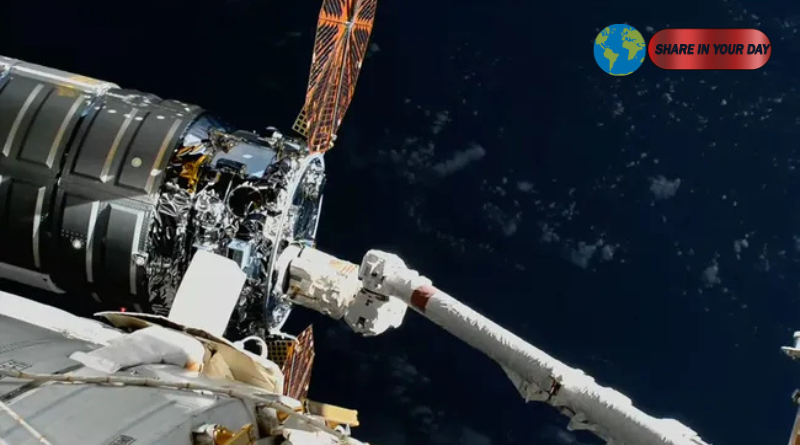
This latest mission—known as NG-24—demonstrates not only the reliability of commercial space partnerships but also the growing capabilities of modern cargo spacecraft. As space agencies and private companies continue to collaborate, missions like this are shaping the future of human space exploration.
What Is the Cygnus Cargo Spacecraft?
The Cygnus spacecraft is a robotic cargo vehicle specifically designed to deliver supplies to the ISS. Unlike reusable capsules, Cygnus is disposable—it burns up in Earth’s atmosphere after completing its mission, often carrying waste from the station.
The newest version, Cygnus XL, represents a significant upgrade. It offers increased cargo capacity, allowing it to transport approximately 11,000 pounds (about 5,000 kilograms) of materials to orbit.
This expanded capacity makes it one of the most capable cargo vehicles currently servicing the ISS, alongside systems from SpaceX and international partners.
Mission NG-24: Launch and Journey to Space
The NG-24 mission launched on April 11, 2026, aboard a SpaceX Falcon 9 rocket from Cape Canaveral, Florida. After a smooth liftoff, the spacecraft began its journey to rendezvous with the ISS in low Earth orbit.
Within days, Cygnus approached the station, where astronauts used the Canadarm2 robotic arm to capture and attach the spacecraft to the Unity module.
This precise operation highlights the coordination required between ground teams and astronauts in orbit, ensuring a safe and successful docking.
What’s Inside the Cygnus Cargo Delivery?
The Cygnus cargo arrival brought a wide range of critical supplies to astronauts aboard the ISS. These include:
1. Scientific Experiments
A significant portion of the cargo consists of research materials. These experiments cover areas such as biology, physics, and materials science.
One notable experiment involves tiny worms (Caenorhabditis elegans), which scientists use to study how microgravity affects living organisms. Insights from such studies could help address health challenges faced by astronauts on long-duration missions.
2. Crew Supplies
Astronauts rely on regular resupply missions for food, clothing, and personal items. Cygnus ensures that crew members have everything they need to live and work in space.
3. Station Hardware and Equipment
The spacecraft also delivers spare parts and tools required to maintain the ISS’s complex systems. These components are essential for keeping the station operational.
4. Technology Demonstrations
New technologies are often tested in space before being used in future missions. Cygnus missions provide a platform for these demonstrations.
Why the Cygnus Cargo Arrival Matters
The importance of the Cygnus cargo arrival goes far beyond simple delivery logistics. It plays a key role in multiple areas:
Supporting Long-Term Human Presence in Space
Without regular resupply missions, continuous human habitation aboard the ISS would not be possible. Cygnus ensures that astronauts can remain in orbit for extended periods.
Advancing Scientific Research
The ISS serves as a unique laboratory where scientists can conduct experiments in microgravity. Each cargo mission expands the station’s research capabilities.
Strengthening Commercial Space Partnerships
NASA’s reliance on private companies like Northrop Grumman and SpaceX demonstrates a shift toward commercial space operations. This model reduces costs and increases efficiency.
Cygnus XL: A New Generation of Cargo Spacecraft
The Cygnus XL variant represents a major evolution in cargo delivery systems. Compared to earlier versions, it offers:
- Increased payload capacity
- Larger pressurized cargo volume
- Improved mission flexibility
This upgrade allows NASA to send more supplies in fewer missions, optimizing logistics and reducing operational complexity.
The NG-24 mission is only the second flight of this enhanced spacecraft, signaling a new era in ISS resupply operations.
The Role of Canadarm2 in Docking
One of the most fascinating aspects of the Cygnus cargo arrival is the docking process. Unlike some spacecraft that dock autonomously, Cygnus is captured using the Canadarm2 robotic arm.
Astronauts aboard the ISS operate this robotic system to grab the spacecraft and attach it to the station. This method provides greater control and flexibility during docking procedures.
The successful capture of Cygnus highlights the importance of advanced robotics in modern space operations.
What Happens After Delivery?
After completing its delivery, Cygnus remains attached to the ISS for several months. During this time, astronauts unload cargo and fill the spacecraft with waste materials.
Eventually, Cygnus is released from the station and directed back toward Earth. Upon reentry, it burns up in the atmosphere, safely disposing of the waste.
This dual-purpose function—delivery and disposal—makes Cygnus an essential component of ISS logistics.
How Cygnus Compares to Other Cargo Spacecraft
Several spacecraft currently support ISS resupply missions:
- SpaceX Dragon
- Russian Progress
- Japan’s HTV vehicles
Each system has unique capabilities. For example, Dragon can return cargo to Earth, while Cygnus specializes in high-capacity delivery and waste disposal.
Together, these spacecraft form a robust and redundant supply network for the ISS.
The Future of ISS Resupply Missions
The success of the Cygnus cargo arrival underscores the growing importance of commercial spaceflight. As NASA prepares for future missions to the Moon and Mars, cargo systems like Cygnus will play a vital role.
Upcoming missions are expected to include even more advanced spacecraft, capable of supporting deep-space exploration.
Additionally, lessons learned from ISS resupply operations will inform the development of logistics systems for lunar bases and Mars missions.
Challenges and Innovations in Space Logistics
Delivering cargo to space is far from simple. Engineers must overcome numerous challenges, including:
- Precise orbital mechanics
- Extreme temperature variations
- Radiation exposure
- Communication delays
Despite these obstacles, continuous innovation has made missions like Cygnus increasingly reliable.
The introduction of Cygnus XL is a testament to this progress, offering improved performance and efficiency.
A Milestone for Modern Space Exploration
The Cygnus cargo arrival is more than just a routine mission—it represents a critical step forward in humanity’s journey into space.
By delivering essential supplies and enabling groundbreaking research, Cygnus helps maintain the ISS as a hub of innovation and discovery.
As technology continues to advance, missions like NG-24 will pave the way for even more ambitious endeavors beyond Earth orbit.
Conclusion
The successful Cygnus cargo arrival at the ISS highlights the importance of reliable, high-capacity resupply missions in modern space exploration. From delivering vital supplies to supporting cutting-edge research, Cygnus plays a central role in sustaining human presence in space.
With the introduction of the Cygnus XL spacecraft, the future of space logistics looks more capable than ever. As NASA and its partners continue to push boundaries, missions like this bring us one step closer to exploring deeper into the cosmos.