Hezbollah Lebanon Talks Revealed: 5 Shocking Divides
BEIRUT — The latest developments surrounding Hezbollah Lebanon talks have triggered a political storm, with sharp warnings that Lebanon is heading toward deeper internal division as rare negotiations with Israel unfold.
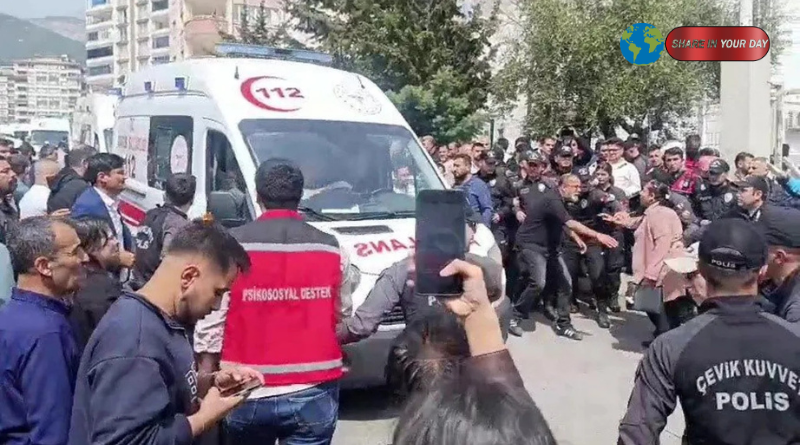
According to reporting by the BBC, Lebanon and Israel have held their first direct diplomatic talks in decades—an unprecedented move that could reshape the region. Yet instead of unity, the talks have exposed fundamental disagreements within Lebanon, particularly with Hezbollah strongly opposing any engagement with Israel.
Historic Talks Mark a Turning Point
The Hezbollah Lebanon talks emerged after a high-level diplomatic meeting in Washington, facilitated by the United States. This marked the first direct engagement between Lebanese and Israeli officials since the early 1990s, signaling a potentially historic shift.
Lebanese officials framed the talks as a necessary step toward ending violence, restoring stability, and securing international support. Meanwhile, Israel has pushed for a long-term agreement that includes dismantling Hezbollah’s military capabilities.
However, despite the diplomatic breakthrough, expectations remain cautious. No ceasefire has been agreed upon, and both sides continue military operations.
Hezbollah Rejects Talks Completely
Hezbollah has taken a firm and uncompromising stance against the negotiations.
The group insists that any talks with Israel are illegitimate and do not represent the will of the Lebanese people. It has also warned that such moves risk undermining national unity and weakening Lebanon’s resistance strategy.
A senior Hezbollah official stated the group would not recognize or abide by any agreement resulting from these talks, highlighting just how deep the divide runs.
This position reflects Hezbollah’s long-standing ideology: that armed resistance—not diplomacy—is the only viable path in dealing with Israel.
A Deepening Political Rift Inside Lebanon
The Hezbollah Lebanon talks have intensified an already fragile political situation within Lebanon.
On one side, the government is attempting to assert state authority and reduce the influence of non-state armed groups. In early 2026, it even declared Hezbollah’s military activities illegal—an unprecedented move aimed at consolidating control.
On the other side, Hezbollah remains a powerful political and military force with significant public support, particularly among certain communities.
This clash between state authority and armed resistance has created a dangerous internal divide—one that could escalate if tensions continue to rise.
War Context: Violence Fuels the Divide
The controversy surrounding Hezbollah Lebanon talks cannot be separated from the ongoing war.
The conflict escalated in March 2026 after Hezbollah launched attacks on Israel amid a broader regional confrontation involving Iran and the United States. Israel responded with a large-scale military campaign across Lebanon.
One of the deadliest moments came on April 8, when Israeli airstrikes killed at least 357 people in a single day, marking one of the most intense attacks of the war.
Since then, thousands have been killed, and over a million people have been displaced, creating a severe humanitarian crisis.
Amid such devastation, the push for diplomacy has gained urgency—but also resistance.
5 Key Impacts of the Hezbollah Lebanon Talks
1. Political Fragmentation Intensifies
The talks have exposed deep divisions between Lebanon’s government and Hezbollah, weakening national cohesion at a critical moment.
2. Sovereignty Debate Reignites
At the heart of the issue is a fundamental question: who controls Lebanon’s military decisions—the state or Hezbollah?
3. Diplomatic Opportunity Emerges
Supporters argue the talks offer a rare chance for peace after decades of conflict between Lebanon and Israel.
4. Risk of Internal Conflict
Without consensus, any agreement could trigger internal instability—or even clashes between factions.
5. Regional Stakes Rise
The talks are closely linked to broader tensions involving Iran, the United States, and Israel, making the outcome globally significant.
U.S. Role and Global Pressure
The United States has played a central role in initiating and supporting the Hezbollah Lebanon talks.
Washington views the negotiations as part of a broader strategy to stabilize the Middle East, particularly amid rising tensions with Iran. However, the situation remains complex.
Recent reports indicate that U.S. efforts to broker peace are happening alongside indirect talks with Iran, adding another layer of geopolitical complexity.
This means progress in Lebanon could depend on developments far beyond its borders.
Israel’s Position: Security First
Israel has made its priorities clear during the Hezbollah Lebanon talks.
Prime Minister Benjamin Netanyahu has emphasized that any agreement must include the dismantling of Hezbollah’s military capabilities and long-term security guarantees.
Israeli forces continue to carry out operations in southern Lebanon, targeting Hezbollah strongholds while simultaneously engaging in diplomatic discussions.
This dual approach—military pressure combined with negotiations—reflects Israel’s strategy of negotiating from a position of strength.
A Rare but Fragile Opportunity
Despite the tensions, many analysts see the Hezbollah Lebanon talks as a rare opportunity.
Historically, relations between Lebanon and Israel have been defined by conflict, with limited and short-lived agreements. The current talks, therefore, represent a significant departure from the norm.
However, success is far from guaranteed.
Without internal consensus in Lebanon and clear compromises from both sides, the talks risk collapsing—or worse, exacerbating existing tensions.
What Comes Next?
The future of the Hezbollah Lebanon talks remains uncertain.
While diplomatic channels are open, key issues remain unresolved:
- A ceasefire agreement
- Hezbollah’s disarmament
- Israeli withdrawal from Lebanese territory
- Reconstruction and international aid
Each of these points presents significant challenges, particularly given the deep divisions within Lebanon itself.
Conclusion: A Nation at a Crossroads
The Hezbollah Lebanon talks have placed Lebanon at a critical crossroads.
On one path lies diplomacy, state control, and potential stability. On the other lies continued resistance, division, and prolonged conflict.
For now, the country remains caught between these two futures.
What happens next will not only shape Lebanon’s destiny but could also influence the broader trajectory of the Middle East.