
Fed Rate Hikes: Barclays Sees 2 More in 2026
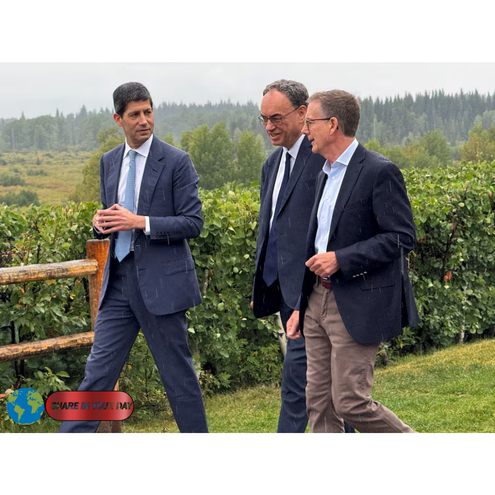
The outlook for Fed rate hikes has changed sharply after Federal Reserve Chair Kevin Warsh delivered a more forceful warning on inflation. Barclays now expects the U.S. central bank to raise interest rates twice more in 2026, with a 25-basis-point increase projected for September and another in December. RReuters
The change marks a significant shift in Barclays’ previous forecast. The bank had earlier expected the Federal Reserve to leave interest rates unchanged for the rest of the year.
Warsh’s speech at the Jackson Hole economic symposium appears to have changed that calculation. The Fed chair emphasized that inflation remains above the central bank’s 2% target and suggested policymakers would need to act if price pressures fail to move convincingly lower. FFederal Reserve+1
For investors, the message is important. A renewed cycle of Fed rate hikes could affect Treasury yields, the U.S. dollar, equities, mortgages and borrowing costs across the economy.
Barclays Changes Its Fed Rate Hikes Forecast
Barclays has moved from expecting no additional rate increases this year to forecasting two separate 25-basis-point hikes.
The first is expected at the Federal Reserve’s September meeting, while the second is projected for December. That would represent a total increase of 50 basis points before the end of 2026. RReuters
The shift reflects Barclays’ interpretation of Warsh’s comments as significantly more hawkish than the central bank’s previous messaging.
A hawkish central bank generally places greater emphasis on controlling inflation, even if tighter monetary policy creates risks for economic growth. In this case, Barclays appears to believe the Fed is becoming increasingly concerned that inflation has remained too persistent to justify leaving interest rates unchanged.
The forecast also illustrates how quickly financial-market expectations can change when central-bank officials deliver new guidance.
Internal link opportunity: Add a link here to your website’s existing article about the Federal Reserve, U.S. interest rates or monetary policy.
Kevin Warsh Sends a Strong Inflation Warning
Warsh’s Jackson Hole speech was closely watched because it was his first major appearance at the annual economic symposium as Fed chair.
His message focused heavily on inflation. Warsh argued that inflation remains too high and indicated that policymakers must be prepared to respond if price growth does not move toward the Federal Reserve’s 2% objective. FFederal Reserve
The Federal Reserve’s official transcript shows that Warsh used his address to discuss the central bank’s approach to monetary policy, inflation and broader economic conditions. FFederal Reserve
His remarks were interpreted by investors as a warning that the Fed is not prepared to tolerate a prolonged period of above-target inflation.
That interpretation matters because financial markets had previously been looking for signs that the central bank might become more cautious about tightening policy.
Instead, Warsh’s comments raised the possibility that interest rates could move higher sooner than previously anticipated.
Why Inflation Is Driving the Debate
Inflation remains at the center of the Federal Reserve’s policy dilemma.
Recent U.S. data showed annual inflation remaining above the Fed’s 2% target for an extended period. Reuters reported last week that inflation held steady in July, with price pressures remaining sufficiently elevated to intensify debate about whether the central bank should raise rates or keep policy unchanged. RReuters
That creates a difficult balancing act for policymakers.
If the Fed keeps rates too low while inflation remains persistent, price pressures could become harder to control. But if officials raise rates too aggressively, they could weaken economic activity and the labor market.
Warsh’s comments suggest the inflation side of that equation is becoming more important.
Barclays appears to believe that the Fed will ultimately prioritize price stability over concerns about the potential short-term impact of higher borrowing costs.
Markets Raise the Odds of a September Hike
Financial markets reacted quickly to Warsh’s speech.
According to Reuters, the CME Group’s FedWatch tool showed the probability of a September rate hike rising to around 60.4% after the Fed chair’s remarks. RReuters
Other market reporting also showed a substantial increase in expectations for a September move following the Jackson Hole speech. MMarketWatch
That change is significant because futures markets had previously assigned a considerably lower probability to a September increase.
The move in expectations demonstrates how much weight investors are placing on the Fed chair’s assessment of inflation.
It also means upcoming economic data could become even more important.
If inflation remains elevated or labor-market data points to continued economic resilience, expectations for a September hike could strengthen further. Conversely, weaker data could cause investors to reconsider the pace of monetary tightening.
September Fed Meeting Becomes a Key Test
The Federal Reserve is scheduled to meet on September 16, making the upcoming policy decision one of the most closely watched events for financial markets. Reuters said investors will look to that meeting for additional evidence about the central bank’s direction. RReuters
The decision will depend heavily on incoming economic information.
The Fed is particularly focused on inflation and employment because its policy decisions are designed to balance price stability with maximum employment.
That means the next few weeks could be crucial.
A stronger-than-expected inflation reading could reinforce Barclays’ forecast for a September increase. At the same time, weaker employment data could complicate the case for immediate tightening.
For now, however, the market has become much more receptive to the idea of another increase.
What Two Fed Rate Hikes Could Mean for Investors
Two additional Fed rate hikes would have consequences well beyond the federal funds rate.
Higher interest rates typically increase borrowing costs throughout the economy. Banks can adjust lending rates, while yields on government bonds and other financial assets can respond to changing expectations about monetary policy.
The stock market can also react.
Higher rates can put pressure on equity valuations because future corporate earnings become less attractive when discounted at higher rates. Growth and technology companies can be particularly sensitive to changes in interest-rate expectations.
Bond investors face a different dynamic.
Higher expectations for Fed tightening can push short-term Treasury yields higher as investors price in a greater probability of future rate increases.
The U.S. dollar can also respond to changes in interest-rate expectations because higher U.S. yields can make dollar-denominated assets more attractive relative to assets in other currencies.
Internal link opportunity: Link this section to your website’s existing article covering U.S. stocks, Treasury yields, the dollar or interest-rate investing.
Higher Rates Could Increase Borrowing Costs
Consumers and businesses could also feel the impact of additional Fed tightening.
Credit-card rates, business loans and other forms of variable-rate borrowing can become more expensive when monetary policy becomes tighter.
Mortgage markets are more complicated because mortgage rates are influenced by longer-term Treasury yields and market expectations, rather than moving one-for-one with the Federal Reserve’s policy rate.
Even so, expectations of higher rates can affect housing demand by increasing financing costs and reducing affordability.
Businesses may also reconsider investment plans if the cost of financing rises.
That is why the Federal Reserve must carefully weigh inflation risks against the possibility that tighter monetary policy could slow economic growth.
The Fed Faces a Difficult Policy Environment
The latest shift in expectations comes at a complicated time for the Federal Reserve.
Warsh has emphasized the importance of bringing inflation back under control, while financial markets remain sensitive to changes in monetary policy. Reuters has also reported that investors have been watching the central bank closely for clues about its approach under its new leadership. RReuters+1
The broader economic environment adds another layer of uncertainty.
Energy prices, geopolitical developments and changes in global financial conditions can all influence inflation. Reuters reported on August 31 that rising geopolitical tensions and higher oil prices were adding to inflation concerns while markets reassessed the outlook for interest rates. RReuters
That means the Fed cannot make its decision based on one inflation report alone.
Officials will have to evaluate a wide range of indicators before deciding whether additional tightening is appropriate.
Jobs Data Could Still Change the Outlook
Despite the hawkish shift, Barclays’ forecast is not a guarantee that the Federal Reserve will deliver two more increases.
Employment data could prove decisive.
If hiring slows sharply or unemployment rises, policymakers could become more cautious about raising rates. The Fed has to consider the risk that tighter monetary policy could weaken the labor market too much.
Conversely, a resilient labor market combined with persistent inflation would make additional tightening easier to justify.
This is why investors are likely to pay close attention to upcoming employment and inflation reports before the September meeting.
Market expectations can move quickly when new data changes the perceived balance of risks.
Barclays’ Forecast Marks a Major Policy Shift
The most notable part of the latest development is the change in Barclays’ own forecast.
The bank previously expected no additional Fed rate hikes in 2026. It now expects two increases, suggesting that Warsh’s speech significantly changed its assessment of the central bank’s likely reaction function. RReuters
That shift could encourage other financial institutions to reassess their forecasts.
If more banks begin predicting additional tightening, market expectations could become even more firmly anchored around a September move.
However, the Fed itself has not committed to the two-hike path projected by Barclays.
The central bank remains data dependent, meaning the final decision will depend on economic conditions between now and each policy meeting.
What Investors Should Watch Next
Several developments could determine whether Barclays’ forecast becomes reality.
First, investors will monitor the next major inflation reports for evidence that price pressures are either accelerating or easing.
Second, employment data will provide clues about the strength of the U.S. labor market.
Third, Treasury yields and futures markets will show how investors are adjusting their expectations.
Finally, comments from Federal Reserve officials could provide additional insight into the debate inside the central bank.
These indicators will help determine whether September becomes the beginning of another tightening phase or whether the Fed ultimately decides that current policy is already restrictive enough.
The Bottom Line
Barclays has made a dramatic change to its outlook for Fed rate hikes, now expecting two 25-basis-point increases before the end of 2026.
The forecast calls for a hike in September followed by another in December. The change follows Federal Reserve Chair Kevin Warsh’s hawkish Jackson Hole speech, in which he stressed the need to address inflation that remains above the central bank’s 2% target. RReuters+1
Markets have already responded by increasing the probability assigned to a September move.
Still, the Fed’s decision is not predetermined.
Inflation, employment, economic growth and financial conditions will all play a role. The next several weeks could therefore be critical for determining whether Barclays’ unexpectedly hawkish forecast becomes the new baseline for U.S. monetary policy.
For investors and businesses, the message is clear: the era of assuming that interest rates will simply move lower may need to be reconsidered.