Full Article (1200+ words)
Bulgaria Election 2026: A Defining Political Shift
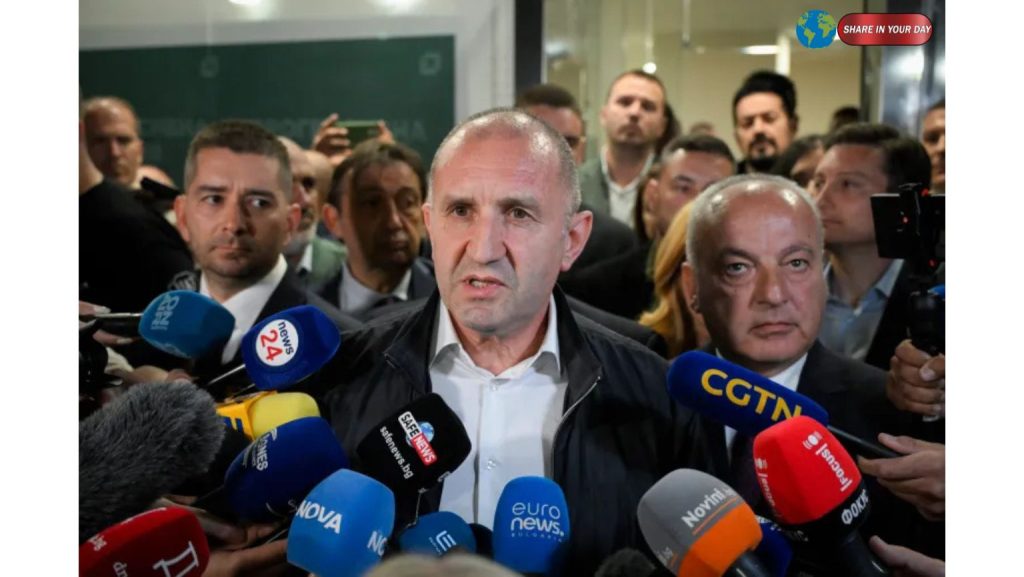
The Bulgaria Election 2026 is shaping up to be one of the most significant political turning points in the country’s recent history. Exit polls released immediately after voting closed suggest that former president Rumen Radev and his newly formed coalition, Progressive Bulgaria, are on track to win a decisive victory.
According to early projections, Radev’s party secured around 38% of the vote, far ahead of its closest rivals. This outcome signals a dramatic shift in Bulgaria’s political landscape, following years of instability, repeated elections, and widespread public frustration.
Exit Poll Results Signal Clear Lead
Exit polls conducted by Alpha Research indicate that Progressive Bulgaria has emerged as the dominant force in the Bulgaria Election 2026. The conservative GERB party, led by former Prime Minister Boyko Borissov, trails significantly behind, with support hovering around the mid-teens.
Meanwhile, the reformist coalition “We Continue the Change–Democratic Bulgaria” is projected to finish third, further highlighting the fragmented nature of the political field.
Although official results are still pending, the margin between Radev’s coalition and its competitors suggests a strong mandate from voters. However, it may still fall short of an outright majority, making coalition negotiations crucial in the coming days.
Who Is Rumen Radev?
At the center of the Bulgaria Election 2026 is Rumen Radev, a former air force general who served as president from 2017 until early 2026.
Radev resigned from the presidency in January to enter the parliamentary race—a bold move that underscored his ambition to reshape Bulgaria’s political system.
He built his campaign around several key themes:
- Anti-corruption reforms
- Ending political instability
- Challenging entrenched elite networks
- Restoring public trust in government
His message resonated strongly with voters who have grown weary of repeated elections and ineffective governments.
A Nation Tired of Political Instability
The Bulgaria Election 2026 marks the country’s eighth election in just five years, a staggering indicator of political dysfunction.
Since 2021, Bulgaria has struggled to form stable governments, with coalitions collapsing frequently due to ideological differences and internal disputes. This cycle of instability has had serious consequences:
- Delayed economic reforms
- Weak governance
- Declining public trust
- Reduced foreign investor confidence
Mass protests in late 2025 ultimately led to the collapse of the previous government, setting the stage for this latest election.
Anti-Corruption Message Drives Support
A major factor behind Radev’s apparent success in the Bulgaria Election 2026 is his strong anti-corruption stance.
During the campaign, he repeatedly criticized what he described as an “oligarchic governance model,” promising to dismantle entrenched networks of influence and restore accountability.
This message struck a chord with younger voters and urban populations, many of whom participated in large-scale protests demanding reform.
Radev has also pledged to:
- Strengthen judicial independence
- Increase transparency in public spending
- Reform state institutions
These proposals have positioned him as a reformist figure, despite his controversial positions on foreign policy.
Controversy Over Russia and Foreign Policy
While Radev’s domestic agenda has gained widespread support, his foreign policy stance has sparked debate both within Bulgaria and across Europe.
He is often described as:
- Eurosceptic
- Opposed to military aid for Ukraine
- Supportive of renewed dialogue with Russia
These positions have raised concerns among European Union officials, particularly given Bulgaria’s strategic role within the bloc.
Despite this, Radev has maintained that Bulgaria will remain committed to its EU and NATO memberships, while pursuing a more “balanced” foreign policy.
Coalition Talks Will Be निर्णative
Despite leading the Bulgaria Election 2026, Radev’s party is unlikely to secure an outright parliamentary majority.
This means that coalition negotiations will play a critical role in determining the country’s next government.
Potential coalition scenarios include:
1. Alliance with Reformist Parties
Radev has indicated openness to working with pro-European reformist groups. This could provide stability but may require compromises on foreign policy.
2. Minority Government
Another option is forming a minority government, relying on issue-based support from other parties.
3. Broad Coalition
A broader coalition could bring stability but may be difficult due to ideological differences.
Radev himself has emphasized the importance of avoiding yet another election, warning that continued instability would be “ruinous” for the country.
Economic and European Implications
The outcome of the Bulgaria Election 2026 could have significant economic implications.
Bulgaria recently adopted the euro, marking a major milestone in its integration into the European Union.
However, political instability has slowed economic progress and reform efforts.
A stable government under Radev could:
- Accelerate economic reforms
- Improve investor confidence
- Strengthen institutional credibility
At the same time, any shift in foreign policy could influence Bulgaria’s relationships within the EU.
Regional Impact and Geopolitical Significance
The Bulgaria Election 2026 is also being closely watched across Europe and beyond.
Radev’s rise comes at a time of shifting political dynamics in Eastern Europe, where debates over relations with Russia, energy security, and EU integration are intensifying.
His victory could:
- Influence regional political trends
- Affect EU policy discussions
- Impact NATO cohesion
Analysts suggest that Bulgaria’s direction under Radev will serve as an important indicator of broader geopolitical shifts in the region.
What Happens Next?
With exit polls pointing to a clear lead, the focus now turns to:
- Official election results
- Coalition negotiations
- Government formation
If Radev successfully forms a government, he will face immediate challenges, including:
- Restoring political stability
- Implementing reforms
- Managing foreign policy tensions
The coming weeks will be critical in determining whether Bulgaria can break its cycle of instability.
Conclusion: A Turning Point for Bulgaria
The Bulgaria Election 2026 represents a decisive moment for the country.
After years of political turbulence, voters have delivered a strong signal in favor of change. Rumen Radev’s projected victory reflects widespread frustration with the status quo and a desire for reform.
However, significant challenges remain.
The success of this political transition will depend not only on election results but also on the ability of leaders to build consensus and deliver meaningful change.
As Bulgaria stands at this crossroads, the decisions made in the coming weeks will shape its future for years to come.