Golden Orb Mystery Revealed: 5 Shocking Ocean Secrets
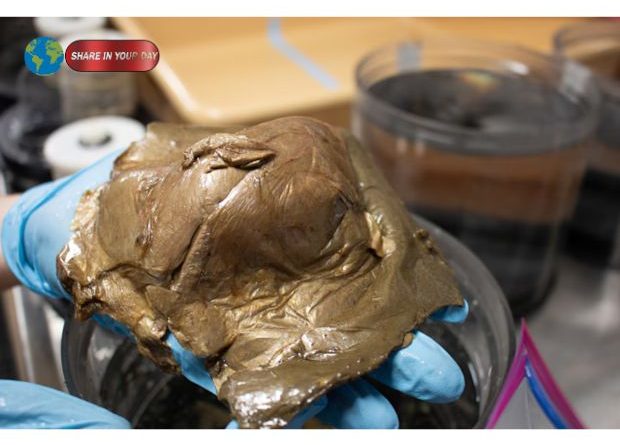
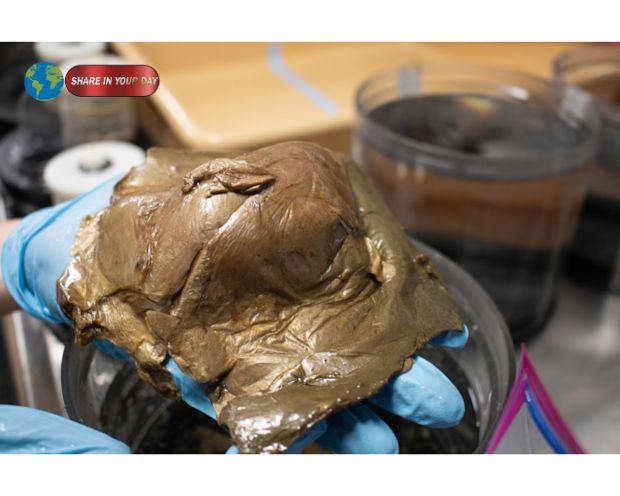
The golden orb mystery that captivated scientists and the public alike has finally been solved after years of investigation. What was once described as a strange, alien-like object discovered deep beneath the ocean surface has now been identified—revealing surprising insights about the hidden world of the deep sea.
The object, found in 2023 during a deep-sea expedition in the Gulf of Alaska, puzzled researchers with its unusual shape, texture, and biological ambiguity. Now, after extensive testing and analysis, scientists have uncovered the truth behind the mysterious orb—and the answer is both fascinating and unexpected.
A Strange Discovery Deep Beneath the Ocean
The golden orb mystery began on August 30, 2023, when scientists from the National Oceanic and Atmospheric Administration (NOAA) were exploring the ocean floor using a remotely operated vehicle.
At a depth of around 3,250 meters (more than two miles below the surface), the robotic explorer encountered something unusual: a smooth, golden, dome-shaped object attached to a rock.
The object measured roughly four inches in diameter and had a small hole in its surface, making it appear almost like an egg or a strange biological structure.
Researchers were immediately baffled.
Initial theories included:
- An egg casing from an unknown marine species
- A dead sponge or coral fragment
- A completely new form of life
The uncertainty surrounding the object quickly turned it into one of the most talked-about deep-sea discoveries in recent years.
Why the Golden Orb Confused Scientists
What made the golden orb mystery particularly challenging was the object’s lack of recognizable features.
Unlike most marine organisms, the orb did not display clear anatomical structures such as tentacles, eyes, or visible organs. Instead, it had a smooth, slightly fleshy surface with a fibrous texture.
Scientists noted that:
- It appeared biological, but not identifiable
- DNA testing initially produced inconclusive results
- Its structure did not match known species
This combination of factors made it difficult to classify using standard scientific methods.
As one researcher explained, solving the mystery required expertise from multiple fields, including genetics, marine biology, and deep-sea ecology.
The Breakthrough: What the Golden Orb Really Is
After nearly three years of research, scientists finally solved the golden orb mystery.
The object was identified as the remnant base of a giant deep-sea anemone, specifically a rare species known as Relicanthus daphneae.
Rather than being a complete organism, the orb was actually:
- A cluster of cells left behind
- Part of the structure that once anchored the anemone to the seafloor
- A biological remnant rather than a living creature
This discovery explained why the orb lacked recognizable features—it was only a fragment of a much larger organism.
What Is Relicanthus daphneae?
The species linked to the golden orb mystery, Relicanthus daphneae, is one of the least understood deep-sea creatures.
Key characteristics include:
- It belongs to the cnidarian group (related to jellyfish and corals)
- It lives in extreme deep-sea environments
- It can grow tentacles several feet long
- It attaches itself to rocks on the ocean floor
Unlike typical sea anemones, this species is rarely observed, making it difficult for scientists to study.
The golden orb represents the base structure that helps the anemone anchor itself—similar to roots in plants.
Why the Orb Was Left Behind
One of the most intriguing aspects of the golden orb mystery is why the structure was found alone.
Scientists believe several scenarios are possible:
- The anemone detached and moved to a new location
- The organism died, leaving the base behind
- Environmental conditions caused the structure to separate
However, the exact reason remains unknown.
This unanswered question highlights how much scientists still have to learn about deep-sea ecosystems.
5 Shocking Secrets Revealed by the Discovery
1. The Deep Ocean Is Still Largely Unknown
The golden orb mystery demonstrates that vast portions of the ocean remain unexplored. Scientists continue to discover new species and phenomena in extreme environments.
2. Even Experts Can Be Stumped
Despite advanced technology, researchers were unable to identify the object for years, showing how complex marine life can be.
3. Appearances Can Be Deceptive
What looked like an alien egg turned out to be part of a familiar biological group—just in an unfamiliar form.
4. DNA Technology Is Essential
The breakthrough came only after advanced genetic sequencing confirmed the orb’s connection to Relicanthus daphneae.
5. The Ocean Holds Countless Mysteries
Scientists emphasize that discoveries like this are just the beginning, with many more unknown organisms likely waiting to be found.
The Role of Deep-Sea Exploration
The golden orb mystery was uncovered during the Seascape Alaska expedition, part of a broader effort to map and study the ocean floor.
These missions use:
- Remotely operated vehicles (ROVs)
- High-resolution cameras
- Robotic sampling tools
Such technology allows scientists to explore environments that are otherwise inaccessible due to extreme pressure, darkness, and cold temperatures.
Without these tools, the golden orb would have remained undiscovered.
Why This Discovery Matters
Beyond solving a scientific puzzle, the golden orb mystery has broader implications.
It highlights:
- The importance of ocean exploration
- The diversity of life in extreme environments
- The need to protect deep-sea ecosystems
Researchers stress that understanding these ecosystems is crucial for:
- Climate science
- Marine conservation
- Sustainable resource management
Public Fascination and Speculation
When the orb was first discovered, it quickly gained attention online, with many people speculating about its origin.
Some theories included:
- Alien life forms
- Unknown deep-sea species
- Biological anomalies
While these ideas captured public imagination, the scientific explanation turned out to be grounded in known biology—though still extraordinary.
What Scientists Still Don’t Know
Even though the golden orb mystery has been solved, several questions remain:
- What happened to the original anemone?
- How often do these structures detach?
- Are similar organisms yet to be discovered?
These unanswered questions ensure that the discovery will continue to be studied for years to come.
A Window Into Earth’s Final Frontier
The deep ocean is often described as Earth’s final frontier, and the golden orb mystery is a perfect example of why.
Despite covering more than 70% of the planet, the ocean remains largely unexplored. Each expedition reveals new surprises, challenging our understanding of life on Earth.
Conclusion: Mystery Solved, Questions Remain
The golden orb mystery has finally been unraveled, revealing that the strange object found in the Gulf of Alaska was not an alien artifact or unknown organism, but a remnant of a rare deep-sea anemone.
However, the discovery is far from the end of the story.
Instead, it serves as a reminder of how much remains hidden beneath the ocean’s surface—and how every new finding opens the door to even more questions.
As scientists continue to explore the depths, one thing is certain: the ocean still holds countless secrets waiting to be discovered.