Hubble 36th Birthday Photo: 5 Stunning Facts Revealed
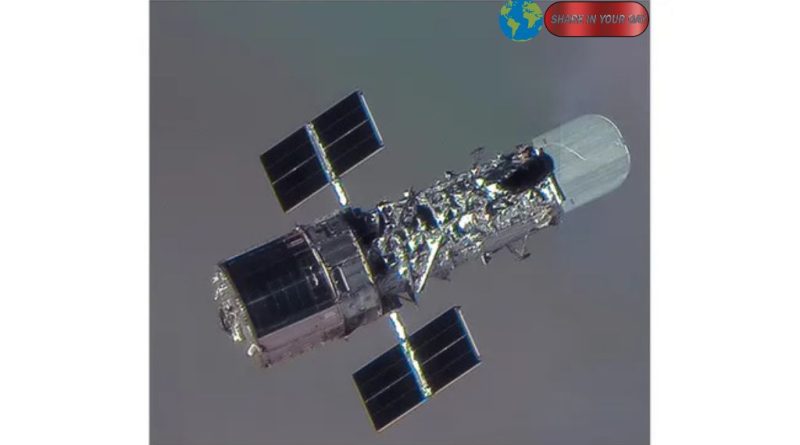
The Hubble 36th birthday photo has captivated space enthusiasts worldwide, offering a rare and breathtaking view of one of humanity’s most iconic scientific instruments. For the first time in years, the Hubble Space Telescope itself became the subject of a high-resolution image—captured not from Earth, but by another satellite in orbit.
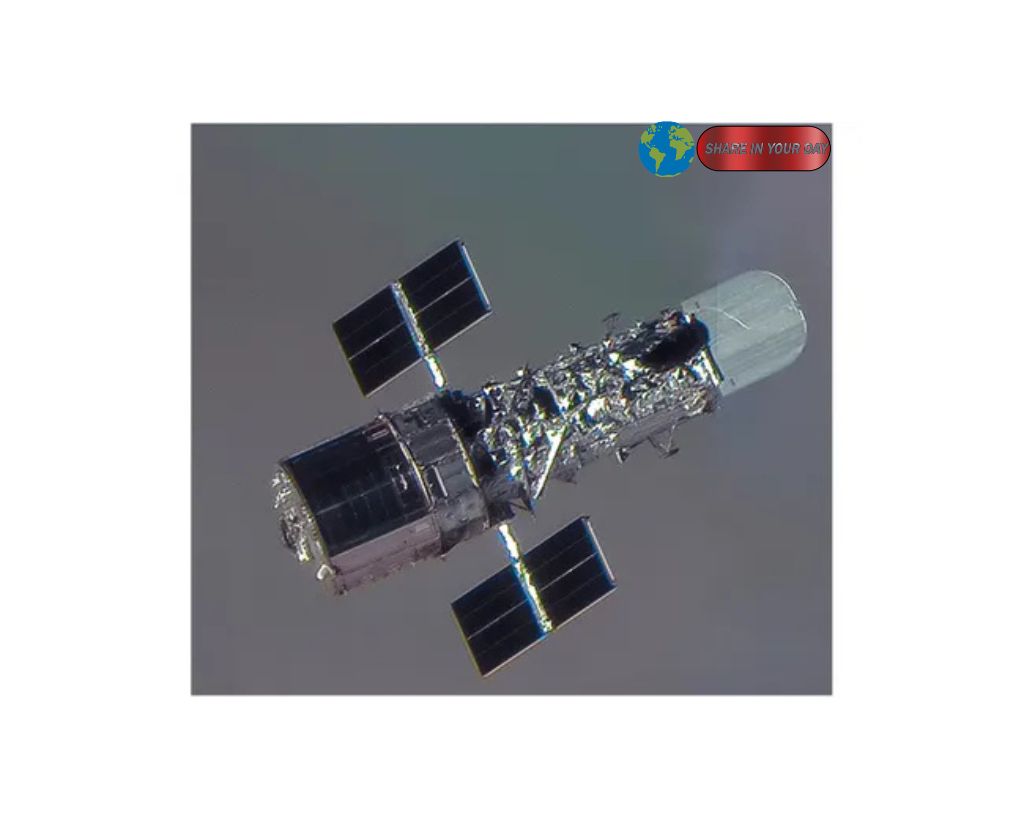
Released to mark Hubble’s 36th anniversary on April 24, 2026, the image highlights both the telescope’s enduring legacy and the remarkable technological progress that now allows us to photograph objects in space with unprecedented clarity.
A Rare View: Hubble Captured from Space
Unlike the stunning galaxy and nebula images Hubble typically produces, this time the telescope was the star of the show.
The photo was taken on April 23, 2026, by a WorldView Legion Earth-observing satellite, operated by a private spatial intelligence company. The satellite captured the image from approximately 61.8 kilometers (about 38 miles) away, providing an incredibly detailed perspective.
From this vantage point, key features of Hubble are clearly visible, including:
- Its cylindrical body
- Reflective thermal shielding
- Extended solar arrays
- Open aperture door
This level of detail is rarely seen, making the Hubble 36th birthday photo a truly unique moment in space imaging.
The Technology Behind the Image
The satellite responsible for the image belongs to the WorldView Legion constellation, a group of advanced Earth-observing satellites orbiting roughly 518 kilometers above Earth.
These satellites are capable of resolving objects as small as 30 centimeters on Earth. However, capturing an object in space—especially one moving at high orbital speeds—adds an entirely new level of complexity.
The success of this image demonstrates how far imaging technology has evolved. It also highlights the growing role of private companies in supporting and advancing space observation.
Meanwhile, the satellite that took the image was launched aboard a SpaceX Falcon 9 rocket, reflecting the increasing collaboration between commercial and governmental space efforts.
Celebrating 36 Years of Discovery
The Hubble 36th birthday photo is more than just a visual achievement—it is a celebration of over three decades of groundbreaking science.
Launched on April 24, 1990, aboard the space shuttle Discovery, Hubble revolutionized astronomy. Over the years, it has:
- Conducted more than 1.7 million observations
- Contributed to over 20,000 scientific papers
- Captured some of the most iconic images of the universe
From revealing the expansion rate of the universe to providing evidence for dark energy, Hubble has fundamentally changed our understanding of space.
Despite its age, the telescope continues to operate and deliver valuable scientific data, proving its enduring importance.
From Flawed Start to Legendary Status
Interestingly, Hubble’s journey was not without challenges.
Shortly after its launch, scientists discovered a flaw in its primary mirror, which caused blurry images. However, this issue was corrected during a servicing mission in 1993, transforming Hubble into the powerful observatory we know today.
Since then, Hubble has become a symbol of scientific resilience and innovation.
The Hubble 36th birthday photo serves as a reminder of how far the telescope has come—from early setbacks to becoming one of the most successful scientific instruments in history.
A Telescope Still Going Strong
Even after 36 years in orbit, Hubble continues to contribute to cutting-edge research.
NASA remains optimistic that the telescope could continue operating into the 2030s, despite showing signs of aging.
Recent observations include:
- Detailed images of star-forming regions
- Discoveries of new cosmic phenomena
- Ongoing studies of galaxies and nebulae
For example, to mark its anniversary, Hubble also released a stunning image of the Trifid Nebula, showcasing its continued ability to capture detailed cosmic scenes.
Why This Image Matters
The Hubble 36th birthday photo is significant for several reasons.
1. A New Perspective
For decades, humanity has looked outward through Hubble. Now, we are looking back at it—offering a fresh perspective on a familiar icon.
2. Technological Milestone
Capturing a moving spacecraft in orbit with such clarity demonstrates the rapid advancement of satellite imaging technology.
3. Symbol of Collaboration
The image represents collaboration between private companies and the broader space community, signaling a new era in space exploration.
4. Public Inspiration
Images like this continue to inspire curiosity and wonder about the universe, encouraging future generations to explore science and technology.
The Future of Space Telescopes
While Hubble remains operational, it is no longer alone in exploring the cosmos.
Newer telescopes, such as the James Webb Space Telescope, are expanding our capabilities even further. However, Hubble’s unique strengths—particularly in visible and ultraviolet light—ensure it still plays a vital role.
The Hubble 36th birthday photo highlights this transition period in space exploration, where legacy systems and next-generation technologies work together.
What Comes Next for Hubble?
Looking ahead, several possibilities remain for Hubble:
- Continued scientific observations into the 2030s
- Potential collaboration with future missions
- Gradual transition as newer telescopes take the lead
Despite these uncertainties, one thing is clear: Hubble’s impact on science and culture is unmatched.
Conclusion
The Hubble 36th birthday photo is more than just a striking image—it is a powerful symbol of human curiosity, innovation, and perseverance.
Captured by a satellite orbiting Earth, the image offers a rare glimpse of the telescope that has shown us the universe in extraordinary detail for over three decades.
As Hubble continues its mission, this photo stands as a tribute to its legacy—and a reminder that even after 36 years, it still has stories left to tell.