iPhone Duo Crease: Apple Reveals 3 Smart Fixes
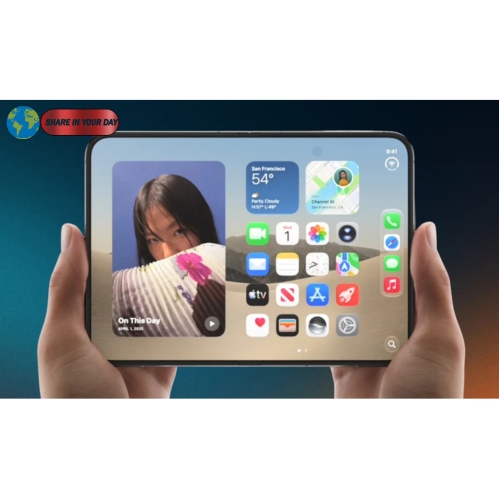
The iPhone Duo crease is one of the most closely watched details of Apple’s first foldable iPhone. While foldable phones have become increasingly sophisticated, the visible line running through a flexible display has remained one of the technology’s most recognizable compromises. Apple says it approached that problem through a combination of display materials, surface treatment and hinge engineering designed to make the crease far less noticeable.
The iPhone Duo was officially unveiled by Apple on September 9, 2026, introducing a 7.6-inch inner display that folds into a more compact 5.4-inch outer-screen device. Apple says the inner screen uses a special nano-texture finish that reduces glare and reflections while helping minimize the visibility of the fold.
The approach is important because Apple is entering a foldable-phone market after several years of development by Samsung and other manufacturers. Instead of simply making the crease less pronounced through the hinge, Apple has built several layers of technology into the display itself.
Here is how Apple says it made the iPhone Duo crease so difficult to notice.
iPhone Duo crease gets help from a nano-texture display
The first major part of Apple’s strategy is the surface of the inner display.
Apple says the iPhone Duo uses a premium nano-texture finish on its 7.6-inch folding screen. The finish creates a matte-like surface that reduces glare and reflections. More importantly for the iPhone Duo crease, Apple says the treatment helps minimize how visible the fold appears.
That matters because reflections can make a foldable display’s central crease look much more obvious.
When light hits a glossy display, even a relatively subtle change in the surface can become visible. A textured finish can scatter some of that reflected light, reducing the visual contrast around the folding area.
Apple is therefore not relying exclusively on the physical shape of the display to make the crease less visible. It is also changing how light interacts with the screen.
The result is a display designed to look more uniform when viewed under different lighting conditions.
However, there is an important distinction. Apple describes the crease as being minimized rather than completely eliminated. The company has not claimed that the physical fold is nonexistent.
A layered display helps control bending stress
The second part of Apple’s solution involves what sits underneath the visible surface.
Apple says the inner display has a scratch-resistant coating and a nano-textured cover layer made from a custom polymer. The company says this polymer can have up to 40% higher stiffness than other materials used in the industry.
Beneath that, high-strength glass is positioned above and below the folding display panel.
This layered construction is important because a foldable screen has to perform two conflicting jobs.
It needs to be rigid enough to feel like a conventional premium smartphone display. At the same time, it must flex repeatedly without developing excessive stress in one location.
Apple says its custom adhesives allow the display layers to glide past one another as the device bends, similar to the pages of a book. The company says this movement helps relieve bending stress.
That is a different approach from simply forcing every layer of the display to bend together in exactly the same way.
By allowing some internal movement, Apple can better manage how the different materials respond when the phone is opened and closed.
A titanium plate beneath the display provides another structural component, adding support to the folding assembly.
The iPhone Duo hinge is doing more than opening and closing
The third major piece of the iPhone Duo crease strategy is the hinge.
Apple says the precision hinge contains more than 100 components. Its job is not simply to connect the two halves of the phone. It is also designed to control the movement of the display and support the center section when the device is fully opened.
That distinction is significant.
A foldable display experiences its greatest mechanical challenge around the point where it bends. The hinge determines how far and how quickly that area bends, as well as the shape of the display when the phone is closed.
Apple says the hinge supports the center of the display when the iPhone Duo is opened flat. An integrated magnet array also helps provide a secure closure when the device is folded.
The company has also incorporated support ribs into the phone’s internal structure.
Together, these components are intended to create a controlled folding motion rather than leaving the flexible display to absorb all of the mechanical stress.
Why the iPhone Duo crease matters
The crease has become one of the defining challenges of foldable smartphones.
Traditional smartphones use rigid glass displays. A foldable phone has to replace that simple structure with a flexible assembly capable of surviving repeated movement.
That creates a difficult engineering balance.
The screen must bend, but it cannot simply behave like a sheet of plastic. It must remain responsive to touch, resist scratches, maintain image quality and survive thousands of opening and closing cycles.
At the same time, consumers expect an expensive flagship phone to feel refined.
This is where Apple’s approach to the iPhone Duo crease becomes particularly important.
Apple is combining several technologies rather than relying on a single component. The hinge controls movement. The internal layers manage mechanical stress. The nano-texture surface reduces reflections that can reveal the fold.
In other words, the visible result is being addressed at both the mechanical and optical levels.
Apple is also protecting the inner display
The display’s crease is not the only durability challenge facing a foldable phone.
Apple says the iPhone Duo’s inner display uses a scratch-resistant coating and a custom polymer cover layer. High-strength glass sits above and below the folding display panel, while custom adhesives allow those layers to move as the device bends.
The company has also built the phone around a grade 5 titanium enclosure.
The hinge cover itself is 3D-printed titanium, while the device includes internal support structures designed to increase stiffness. Apple says the iPhone Duo has an IP68 rating for splash, water and dust resistance.
That combination could prove significant because foldable phones traditionally have had to balance thinness and durability with mechanical complexity.
Apple is positioning the Duo as a device intended for everyday use rather than a technology demonstration.
The 7.6-inch display gives the crease a bigger stage
The iPhone Duo’s inner display measures 7.6 inches diagonally.
Apple says that makes it 50% larger than the display on the iPhone 18 Pro Max. When folded, the device switches to a 5.4-inch outer display.
The two displays share the same aspect ratio, allowing content to scale more consistently between the open and closed configurations.
That means the inner screen is a major part of the iPhone Duo experience.
The larger display is intended for multitasking, gaming, video, productivity and other activities that benefit from additional screen space.
Apple has also redesigned iOS 27 around the folding format. When the device is opened, apps can use Split View to place two applications side by side. Users can also open two windows of the same app, such as Safari.
That makes the inner display more than just a larger version of a standard iPhone screen.
The iPhone Duo uses a matte-looking screen for another reason
Apple’s decision to emphasize the nano-texture surface could also change how the iPhone Duo feels compared with other foldables.
The company says the finish reduces glare and reflections while minimizing crease visibility.
That could be especially useful when the phone is used under bright indoor lighting or outdoors.
A glossy surface can produce strong reflections, which may highlight even subtle changes in the display’s geometry. A more diffuse surface can make those changes harder to see.
This means the iPhone Duo crease solution is partly about changing the appearance of the display rather than completely eliminating the underlying physical fold.
That distinction is worth keeping in mind when evaluating Apple’s claims.
Apple is entering the foldable market with a different philosophy
Apple’s timing is also notable.
Samsung and other Android manufacturers have already released multiple generations of foldable phones. That has allowed competitors to refine hinge mechanisms, flexible displays and folding software over several product cycles.
Apple is entering later, but the company appears to be using that time to address several weaknesses associated with the category.
The iPhone Duo combines a titanium body, a precision hinge, a multi-layer inner display and a nano-textured surface. Apple has also added IP68 protection, a feature that is particularly relevant for a mechanically complex device.
The result is an attempt to make a foldable phone feel less experimental.
That does not mean the technology has been proven over years of consumer use. Real-world durability will only become clearer after customers have used the device for extended periods.
The crease is only one part of Apple’s foldable gamble
The iPhone Duo’s design includes several other changes that distinguish it from conventional iPhones.
Apple has moved to Touch ID in the side button, while the device uses an under-display FaceTime camera on the inner screen. It also includes a 48MP Fusion Main camera and a 48MP Fusion Ultra Wide camera.
The device is powered by Apple’s A20 Pro chip and includes a custom vapor chamber for thermal management.
Apple says the phone can deliver up to 35% better sustained performance than the iPhone 17 Pro. It also uses batteries on both sides of the foldable chassis, with Apple claiming up to 31 hours of video playback on the inner display and up to 44 hours using the outer display.
These features show that Apple is treating the foldable design as a complete hardware and software platform.
The iPhone Duo crease is therefore just one element of a much larger engineering project.
When can customers buy the iPhone Duo?
Apple says the iPhone Duo starts at $1,999 in the United States with 256GB of storage. Storage options extend through 512GB, 1TB and 2TB.
Pre-orders are scheduled to begin October 16, 2026, with availability starting October 23 in more than 70 countries and regions. Additional markets are scheduled to receive the device beginning October 30.
The high starting price puts the iPhone Duo firmly in the premium foldable category.
That also raises expectations for the display.
For a device costing $1,999, buyers will likely pay close attention not only to whether the crease is difficult to see on day one, but also to how the display performs after months or years of folding.
What Apple’s crease strategy could mean for foldable phones
Apple’s approach illustrates how the next stage of foldable-phone development may involve more than simply creating better hinges.
The visible crease is partly a mechanical problem and partly an optical one.
Apple’s solution addresses both.
The hinge controls how the screen moves. The internal construction distributes mechanical stress. The nano-textured surface changes how light reflects from the screen.
That combination could make the fold less distracting without requiring Apple to eliminate the physical bending point altogether.
Still, independent long-term testing will be important.
Apple’s specifications explain how the display is designed, but durability over thousands of folding cycles is something customers will ultimately judge through real-world use.
The iPhone Duo crease is a calculated compromise
The most revealing part of Apple’s explanation is that it does not simply promise a foldable screen with no crease.
Instead, Apple has engineered the iPhone Duo crease to become harder to notice.
That distinction reflects the reality of flexible displays.
The phone still has to bend. The hinge still needs a central folding area. The display still contains multiple layers that must withstand repeated movement.
Apple’s answer is to control those mechanical forces while reducing the visual cues that make the fold obvious.
The 7.6-inch display also uses ProMotion, Always On functionality and up to 3,000 nits of peak outdoor brightness, making the screen specifications comparable with Apple’s high-end display ambitions.
Whether the strategy succeeds completely will depend on how the screen looks in everyday conditions and how well it holds up over time.
For now, however, Apple has made clear that the crease was not an afterthought. It was one of the central engineering challenges behind its first foldable iPhone.
And with the iPhone Duo, Apple is betting that a combination of smarter materials, a sophisticated hinge and a carefully engineered surface can make one of the most obvious weaknesses of foldable phones far less noticeable.
Final takeaway
The iPhone Duo crease is the result of a deliberate multi-layer design strategy rather than a single breakthrough component.
Apple says its 7.6-inch folding display uses a nano-textured finish to reduce reflections and make the crease less visible. Beneath that surface, custom polymers, high-strength glass and specialized adhesives are designed to manage bending stress. Meanwhile, a hinge containing more than 100 components controls how the display opens, closes and sits when fully unfolded.
The approach is technically ambitious, but its real test will begin when the iPhone Duo reaches consumers.
If Apple’s design performs as described, the company may have addressed one of the most noticeable visual drawbacks of foldable phones without sacrificing the large-screen experience that makes the category attractive in the first place.