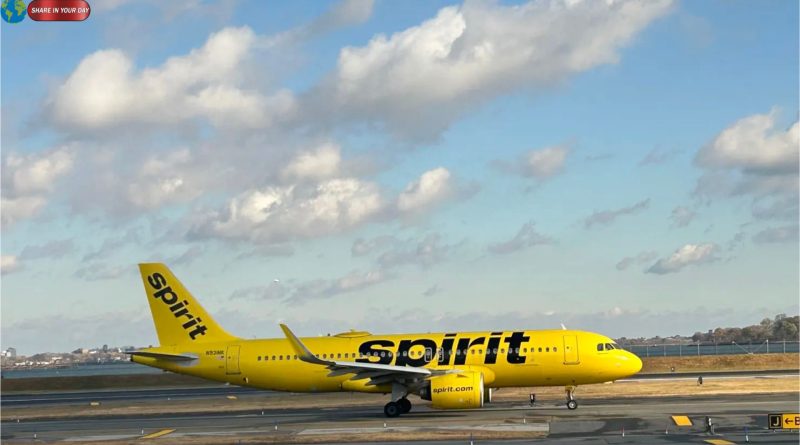
Spirit Airlines Rescue Deal: 5 Shocking Bankruptcy Facts
The Spirit Airlines rescue deal is rapidly becoming one of the most closely watched corporate crises in the aviation industry. As the ultra-low-cost carrier struggles to survive bankruptcy, U.S. officials and company executives are racing to finalize a potential lifeline worth up to $500 million.
The stakes are enormous. Without immediate funding, Spirit Airlines could run out of cash within days—raising the real possibility of liquidation and massive job losses.
This unfolding situation highlights not only the fragility of budget airlines but also the broader challenges facing the global aviation sector.
A Bankruptcy Crisis Years in the Making
The current Spirit Airlines rescue deal did not emerge overnight.
Spirit has faced mounting financial pressure for years. The airline filed for Chapter 11 bankruptcy twice in a short period, signaling deep structural issues in its business model.
Several factors contributed to this crisis:
- Rising operational costs
- Failed merger attempts
- Heavy debt from expansion
- Weak post-pandemic demand recovery
A major turning point came in 2024 when a federal judge blocked Spirit’s planned merger with JetBlue. That decision removed a critical path to financial stability and left the airline vulnerable.
Since then, Spirit has been fighting to restructure—but time is running out.
1. A $500 Million Lifeline Could Save the Airline
At the center of the crisis is a proposed Spirit Airlines rescue deal involving up to $500 million in government-backed financing.
According to reports, the funding would help the airline:
- Continue operations
- Exit bankruptcy
- Avoid immediate liquidation
However, this is not a simple bailout.
The U.S. government could receive warrants that may translate into a significant ownership stake—potentially as high as 90%.
This structure means taxpayers could effectively become major stakeholders in the airline.
2. The Airline Could Run Out of Cash Within Days
One of the most alarming aspects of the situation is the urgency.
Spirit’s legal team warned in court that the company may face a severe cash shortage almost immediately. Without new funding, it may not be able to sustain operations.
In practical terms, this means:
- Flights could be canceled
- Employees could be laid off
- Customers could face disruptions
The timeline has added intense pressure on negotiations, pushing stakeholders toward a rapid decision.
3. Tens of Thousands of Jobs Are at Risk
The Spirit Airlines rescue deal is not just about corporate survival—it is also about employment.
The airline supports more than 17,000 jobs, including pilots, flight attendants, and ground staff.
Unions have strongly backed the bailout proposal, arguing that:
- A collapse would devastate workers
- The aviation sector would lose critical capacity
- Local economies would be affected
On the other hand, critics question whether taxpayer money should be used to save a struggling private company.
4. Rising Fuel Costs and Global Conflict Made Things Worse
External factors have significantly worsened Spirit’s financial situation.
A surge in jet fuel prices—linked to geopolitical tensions involving Iran—has added substantial costs to airline operations.
Reports indicate that fuel-related expenses alone have cost Spirit around $100 million.
Combined with existing debt and operational challenges, these rising costs pushed the airline closer to the edge.
5. Political and Industry Debate Is Intensifying
The proposed Spirit Airlines rescue deal has sparked a heated debate in Washington and across the aviation industry.
Supporters argue that:
- The bailout would protect jobs
- It would preserve competition in the airline market
- It could stabilize the broader aviation sector
Critics, however, warn that:
- It could waste taxpayer money
- It may set a dangerous precedent
- Other airlines have survived without government aid
Some policymakers have compared the situation to controversial bailouts during the 2008 financial crisis, raising concerns about public perception.
Why Spirit Airlines Is So Important
Despite its struggles, Spirit Airlines plays a critical role in the U.S. travel market.
As a leading ultra-low-cost carrier, it offers some of the cheapest fares available, making air travel accessible to millions.
If Spirit collapses:
- Ticket prices could rise
- Competition could decrease
- Budget travelers could lose options
Analysts estimate that the airline’s disappearance could reduce domestic capacity and impact airfare pricing nationwide.
The Shadow of Failed Mergers
The airline’s current crisis is closely tied to past failed mergers.
Spirit previously attempted deals with:
- JetBlue
- Frontier Airlines
Both efforts ultimately collapsed due to regulatory challenges and financial disagreements.
The blocked JetBlue acquisition was particularly damaging, as it would have provided a financial cushion and strategic direction.
Without those deals, Spirit was left to navigate a highly competitive market alone.
What Happens Next?
The future of the Spirit Airlines rescue deal remains uncertain.
Several outcomes are possible:
1. Successful Bailout
The government provides funding, allowing Spirit to restructure and continue operating.
2. Partial Rescue
Spirit receives limited support but must make deeper cuts to survive.
3. Liquidation
If no agreement is reached, the airline could shut down entirely.
Each scenario carries significant consequences for travelers, employees, and the broader aviation industry.
A Turning Point for Budget Airlines
The crisis surrounding Spirit Airlines reflects a larger trend.
Ultra-low-cost carriers operate on thin margins, making them highly vulnerable to:
- Fuel price increases
- Economic downturns
- Regulatory decisions
The outcome of this rescue effort could reshape the future of budget airlines in the United States.
The Bigger Picture: Government Intervention in Business
Beyond aviation, the Spirit Airlines rescue deal raises broader questions about government involvement in private companies.
Should taxpayer money be used to save struggling businesses?
Or should market forces determine which companies survive?
There is no simple answer.
However, this case highlights the delicate balance between economic stability and free-market principles.
Conclusion
The Spirit Airlines rescue deal represents a critical moment for the airline, its employees, and the entire aviation industry.
With a potential $500 million bailout on the table, the company stands at a crossroads between survival and collapse.
While the deal could preserve jobs and maintain competition, it also raises serious concerns about financial risk and government intervention.
One thing is certain: the outcome of this crisis will have lasting implications far beyond Spirit Airlines itself.