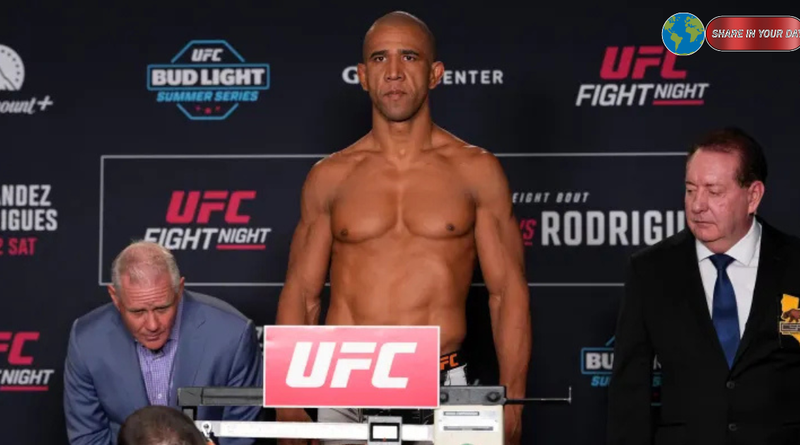
UFC Sacramento Fight Night Weights Reveal a Surprising Gap
The UFC Sacramento fight night weights have revealed a remarkable detail from Saturday’s main event: Gregory Rodrigues weighed only 2.2 pounds more than Anthony Hernandez when the two middleweights entered the Octagon.
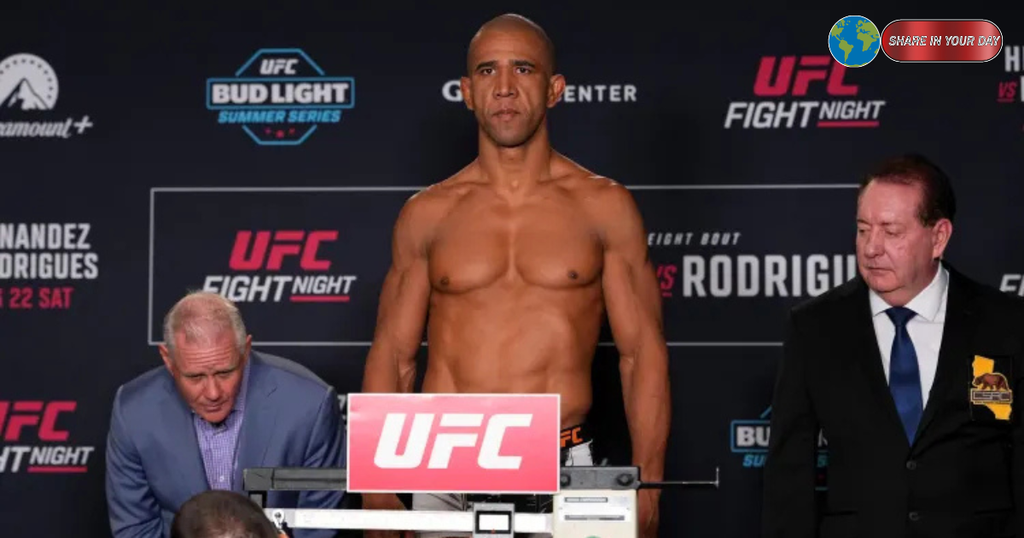
The California State Athletic Commission released the fight-night measurements after UFC Sacramento, providing a look at how much weight competitors regained between the official weigh-ins and the bout. The figures showed that Rodrigues entered the main event at 204.4 pounds, while Hernandez weighed 202.2 pounds.
That was a surprisingly small difference considering Rodrigues is widely regarded as one of the larger middleweights on the UFC roster.
The numbers also highlight the broader issue surrounding weight cutting in mixed martial arts. Fighters can lose substantial amounts of weight before an official weigh-in, only to regain many pounds before competing less than 24 hours later.
In Sacramento, several fighters experienced dramatic increases.
However, the main event stood out for a different reason. Rodrigues and Hernandez both added significant weight, yet they arrived at the Octagon almost exactly the same size.
Rodrigues Added 19.4 Pounds Before UFC Sacramento Main Event
Rodrigues officially weighed 185 pounds at Friday’s weigh-in for his middleweight contest against Hernandez.
By fight night, however, he had gained another 19.4 pounds, bringing his weight to 204.4 pounds. That represents a substantial overnight increase and illustrates how dramatically a fighter’s weight can change during the final stages of a fight camp.
Hernandez followed a similar pattern.
The California State Athletic Commission listed Hernandez at 186 pounds during the official weigh-in. By fight night, he had increased his weight by 16.2 pounds to reach 202.2 pounds.
As a result, the two fighters were separated by only 2.2 pounds.
That is particularly notable because the official weigh-in suggested Hernandez was actually one pound heavier than Rodrigues.
Once both fighters had rehydrated and refueled, Rodrigues regained the larger amount of weight. Yet the final difference remained minimal.
UFC Sacramento Fight Night Weights Show How Fast Fighters Can Change
The numbers from Sacramento offer another reminder of the extreme physical changes involved in UFC weight cutting.
At the official weigh-in, Rodrigues was 185 pounds. Within roughly a day, he was listed at 204.4 pounds.
That means he regained more than 10% of his official weigh-in body weight before competing.
Hernandez also underwent a major change. His increase from 186 to 202.2 pounds represented a gain of more than 16 pounds.
These figures do not necessarily mean the fighters added that amount of body mass in the conventional sense. Much of the increase can come from rehydration, food intake and the restoration of fluids and glycogen after the weight-cutting process.
Nevertheless, the difference demonstrates why fight-night weights have become an important subject in combat sports.
A fighter’s official weight can tell only part of the story.
Why the California State Athletic Commission Tracks Fight-Night Weights
The California State Athletic Commission has been tracking fight-night weights as part of an effort to discourage extreme weight cutting.
The objective is to give regulators more information about how much weight athletes are losing and regaining around competition. The data can also provide insight into whether fighters are entering bouts at substantially different weights despite competing in the same official division.
Weight cutting has been a longstanding issue in MMA.
Fighters often compete in divisions below their normal walking weight because reducing weight can create a size advantage. The problem is that rapid dehydration can carry significant risks.
By collecting fight-night measurements, regulators have another way to monitor those practices.
The Sacramento figures therefore offer more than an interesting statistic. They provide another snapshot of the relationship between official weight classes and the actual size of fighters once they enter the cage.
Marcio Barbosa Had the Biggest Weight Increase
Although Rodrigues and Hernandez attracted attention because of their tiny 2.2-pound difference, they were not the fighters who gained the most weight on the Sacramento card.
That distinction went to featherweight Marcio Barbosa.
Barbosa weighed 145.5 pounds at the official weigh-in. On fight night, he was listed at 171 pounds, representing a remarkable 25.5-pound increase.
That was the largest increase reported from the event.
The difference was especially striking because Barbosa’s opponent, Ryan Kuse, did not regain nearly as much weight. The result was an estimated fight-night advantage of roughly 18 pounds for Barbosa.
For a fight originally contested at featherweight, the numbers were significant.
Barbosa’s transformation also demonstrates why fight-night measurements can change the way fans look at weight-class dynamics.
Two fighters can both make the same official limit but have substantially different body weights when they actually compete.
Several UFC Sacramento Fighters Gained More Than 20 Pounds
Barbosa was not the only athlete who experienced a dramatic increase.
The California State Athletic Commission’s data showed several other fighters adding more than 20 pounds between weigh-in day and fight night.
Gauge Young gained approximately 24.7 pounds, while Stan Dorsainvil added about 23.5 pounds. Jackson McVey increased his weight by approximately 22.8 pounds.
Those numbers show that substantial post-weigh-in increases were not isolated incidents.
The scale data therefore creates an interesting picture of the Sacramento event. Some fighters entered the cage only modestly heavier than their official weights, while others underwent dramatic overnight transformations.
For regulators and medical professionals, that difference can be important.
Rodrigues and Hernandez Were Almost Identical in Size
The main event between Rodrigues and Hernandez became even more interesting when the fight-night numbers were compared directly.
Rodrigues entered the cage at 204.4 pounds.
Hernandez entered at 202.2 pounds.
The difference was only 2.2 pounds.
That is a relatively small gap for a UFC middleweight fight, especially when considering how much both athletes had regained.
The official weigh-in numbers were also close. Hernandez came in at 186 pounds, while Rodrigues was 185 pounds.
The fight therefore featured two athletes who were remarkably similar in weight at both stages of the competition.
The biggest difference was how much weight each regained.
Rodrigues added 19.4 pounds.
Hernandez added 16.2 pounds.
That 3.2-pound difference in weight recovery ultimately produced only a 2.2-pound difference when the fighters stepped into the Octagon.
Rodrigues Still Produced the Bigger Performance
The fight-night scale figures are particularly interesting because Rodrigues went on to win the main event.
The Brazilian earned a unanimous decision over Hernandez after five hard-fought rounds. The judges scored the contest 49-46, 48-47 and 48-47 in Rodrigues’ favor.
Rodrigues’ performance was built around strong striking, effective leg kicks and improved defense against Hernandez’s wrestling pressure.
Hernandez attempted repeatedly to take the fight into his preferred grappling-heavy style, but Rodrigues was able to defend many of those attempts and maintain enough striking success to control important portions of the contest.
The victory extended Rodrigues’ winning streak to four fights.
It also strengthened his position in the UFC middleweight division after entering the contest ranked No. 15.
For Rodrigues, the result was therefore much more significant than the weight statistics.
He defeated a dangerous opponent over 25 minutes and positioned himself for potentially bigger opportunities in the division.
Anthony Hernandez’s Weight Did Not Prevent a Difficult Fight
Hernandez also showed why he remains a difficult opponent.
The California fighter entered the main event after a strong run in the UFC, but he was unable to stop Rodrigues from controlling significant portions of the contest.
Even so, Hernandez remained competitive over five rounds.
His ability to continue fighting despite Rodrigues’ leg attacks and pressure illustrated the durability that has helped make him one of the UFC’s notable middleweight contenders.
The defeat, however, marked his second consecutive loss after an eight-fight winning streak.
That makes the Sacramento result an important turning point for Hernandez.
He will now have to regroup and determine the best path back toward the top of the division.
The Weight Difference Was Not the Story of the Fight
It would be easy to look at the UFC Sacramento fight night weights and assume the 2.2-pound difference was a major factor in the result.
The fight itself suggests otherwise.
Rodrigues did not win because he entered the Octagon dramatically heavier than Hernandez. Instead, his victory came from his tactical execution over five rounds.
He defended takedowns, landed effective leg kicks and managed the pace of the fight. Hernandez had moments of success, particularly when he was able to pressure Rodrigues and force extended exchanges, but Rodrigues regained control in the championship rounds.
The weight data is therefore best viewed as context rather than an explanation for the result.
Both fighters made the middleweight limit.
Both regained substantial weight.
And both entered the cage at almost exactly the same size.
What Fight-Night Weights Mean for MMA
The latest figures also raise a broader question about the future of weight cutting in MMA.
Combat sports have traditionally allowed athletes to manipulate their weight in order to compete in divisions below their normal body weight.
The strategy can create competitive advantages, but it also carries potential health concerns when athletes rely on aggressive dehydration to reach the official limit.
That is why commissions have increasingly examined the issue.
Fight-night weight data does not automatically solve the problem. However, it provides regulators with more information than they would have if they looked only at the official weigh-in.
Over time, the data could help commissions identify patterns.
If a particular fighter consistently regains enormous amounts of weight, regulators may have additional evidence to evaluate whether the athlete’s chosen division is appropriate.
Could Fight-Night Weight Rules Become More Important?
The Sacramento figures could also contribute to a larger conversation about whether MMA needs stronger rules around weight cutting.
Different athletic commissions have experimented with approaches designed to reduce extreme weight manipulation.
Some have considered hydration testing, additional weigh-ins and limits on how much weight athletes can regain.
There is no simple solution.
Weight classes are fundamental to MMA, but fighters naturally seek competitive advantages. If one athlete stops cutting weight while an opponent continues doing so, the first fighter could potentially give up a size advantage.
That creates a difficult balance between fighter safety and competitive fairness.
The California State Athletic Commission’s continued collection of fight-night weights provides valuable information for that debate.
UFC Sacramento Provided a Clear Example
Few numbers from the event illustrate the issue more clearly than the main-event measurements.
Rodrigues:
- Official weigh-in: 185 pounds
- Fight-night weight: 204.4 pounds
- Weight regained: 19.4 pounds
Hernandez:
- Official weigh-in: 186 pounds
- Fight-night weight: 202.2 pounds
- Weight regained: 16.2 pounds
Final difference: 2.2 pounds.
The figures are striking because they tell two stories simultaneously.
First, both fighters underwent substantial weight changes before competing.
Second, despite those changes, they ultimately entered the cage at nearly identical weights.
That combination makes the Sacramento main event an unusually interesting case study in MMA weight cutting.
Rodrigues Now Looks Toward the Middleweight Elite
The most immediate consequence of the fight is Rodrigues’ position in the UFC middleweight division.
After four straight victories, the Brazilian is looking for a bigger opponent.
Following his win, Rodrigues called out former UFC champion Dricus du Plessis, signaling his desire to move quickly toward the upper levels of the division.
Whether that matchup materializes remains to be seen.
The middleweight division is crowded with contenders, and Rodrigues still has work to do before he can realistically expect a title opportunity.
However, defeating Hernandez in a five-round main event gives him a strong argument for a step up in competition.
His combination of power, durability and improved tactical discipline makes him an increasingly dangerous matchup for ranked middleweights.
Conclusion: The Numbers Tell a Bigger Story
The UFC Sacramento fight night weights provided one of the most interesting statistical takeaways from the event.
Gregory Rodrigues entered the Octagon at 204.4 pounds, while Anthony Hernandez weighed 202.2 pounds. Despite regaining 19.4 and 16.2 pounds respectively after the official weigh-in, the two main-event fighters were separated by just 2.2 pounds.
The figures also showed just how dramatic weight recovery can be across an MMA card.
Marcio Barbosa gained 25.5 pounds. Gauge Young added 24.7. Stan Dorsainvil gained 23.5. Several other fighters also exceeded 20 pounds of post-weigh-in weight gain.
For Rodrigues and Hernandez, however, the numbers ultimately provided an interesting backdrop to a competitive five-round fight.
Rodrigues won the contest by unanimous decision and extended his winning streak to four. Hernandez suffered his second straight defeat after previously winning eight consecutive fights.
The Sacramento data will likely continue to fuel discussion about how fighters manage their weight and whether extreme weight cutting remains sustainable in modern MMA.
For now, one statistic stands out above the rest: after all the cutting and recovery, the two UFC middleweights were almost exactly the same size when it mattered most.
External sources:
- MMA Fighting — UFC Sacramento fight-night weights
- UFC — Official UFC Sacramento weigh-in results
- UFC — UFC Fight Night: Hernandez vs. Rodrigues
Internal link: Add a relevant article from your target website covering UFC, MMA, Gregory Rodrigues, Anthony Hernandez or combat-sports news.
Image ALT Text
UFC Sacramento fight night weights show Gregory Rodrigues and Anthony Hernandez separated by just 2.2 pounds