BRICS Summit 2026: Key Takeaways From New Delhi
The 2026 BRICS Summit in New Delhi ended with the expanded group seeking a larger role in global affairs, while also exposing the limits of its ability to agree on some of the world’s most difficult geopolitical crises.
Leaders from the 11-member bloc gathered in India on September 12 and 13 as wars, trade disputes and growing tensions between major powers reshaped the international landscape. The summit brought together countries with very different foreign-policy interests, including China, Russia, India, Iran and the United Arab Emirates.
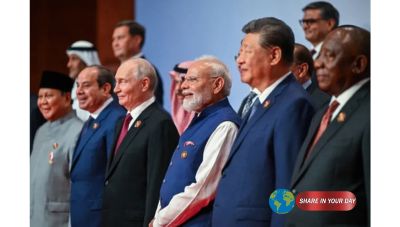
The result was a lengthy joint declaration covering international security, trade, technology, artificial intelligence, climate policy and reform of global institutions. Yet one of the most important messages from the meeting was that BRICS is becoming more influential without necessarily becoming more unified.
Middle East War Tests BRICS Unity
The conflict involving the United States, Israel and Iran was among the biggest challenges facing the summit.
BRICS members called for restraint and a diplomatic approach to the crisis, but the bloc stopped short of issuing the kind of forceful condemnation that some members had sought.
That cautious language reflected the group’s complicated internal relationships. Iran is now a BRICS member, while the United Arab Emirates maintains close security and economic ties with the United States.
The summit therefore demonstrated both the potential and limitations of BRICS as a geopolitical organization. Members can agree on broad principles such as sovereignty, dialogue and opposition to unilateral military action, but their individual strategic interests can make a unified position difficult.
The declaration also addressed the wider Middle East crisis, including the situation involving Palestinians and Lebanon. Leaders reiterated support for international law and called for peaceful solutions to regional conflicts.
Stronger Opposition to Tariffs and Sanctions
Economic policy was another major theme.
BRICS leaders criticized unilateral tariffs and other trade restrictions, warning that protectionist measures can disrupt international commerce and place additional pressure on developing economies.
The position comes as the United States continues to use tariffs and economic restrictions as major tools of foreign policy.
Rather than announcing a common BRICS currency, the summit focused on more practical steps toward reducing dependence on existing financial systems.
Members backed continued work on cross-border payment mechanisms and greater use of national currencies for trade and investment. The BRICS Payment Task Force is studying ways to make different national payment and messaging systems work more effectively together.
The approach represents a gradual attempt to make trade among member countries easier without requiring them to create a single currency.
BRICS Pushes for a More Multipolar World
One of the summit’s central political themes was the group’s long-standing demand for reform of international institutions.
BRICS leaders argued that global governance structures should better reflect the growing economic and political importance of developing countries.
The declaration again called for reform of the United Nations, including the Security Council, with greater representation for countries from Africa, Asia and Latin America.
India has repeatedly sought a permanent seat on the Security Council, and Brazil has also pushed for greater representation in the institution.
The broader objective is to give emerging economies more influence over decisions involving global security, finance and development.
For BRICS, the argument is increasingly tied to the concept of a multipolar world in which no single power or group of Western institutions dominates international decision-making.
Artificial Intelligence Becomes a Major Priority
Artificial intelligence featured prominently in the summit’s economic and technological agenda.
BRICS members emphasized the need for AI development that is secure, inclusive and beneficial to developing economies. The bloc also backed cooperation on technology, scientific research and innovation.
The focus reflects the growing importance of AI to economic competitiveness and national security.
China has been particularly active in promoting greater BRICS cooperation on AI. President Xi Jinping used the summit to advocate stronger collaboration and announced initiatives aimed at expanding technology cooperation across the enlarged group.
For developing countries, access to AI infrastructure, data, technical expertise and investment is increasingly viewed as a key part of future economic growth.
Health, Climate and Development
The summit also produced commitments extending beyond geopolitics and trade.
BRICS countries agreed to strengthen cooperation in public health and support efforts to improve preparedness for future infectious disease outbreaks.
India promoted an early-warning approach to infectious diseases and highlighted the importance of cooperation in health technology and knowledge-sharing.
Climate change, food security, sustainable development and resilient supply chains were also included in the broader agenda.
The declaration emphasized that economic development should remain inclusive and sustainable, particularly for countries that face significant financing and infrastructure challenges.
A Larger BRICS, but Still Divided
The 2026 summit showed how dramatically BRICS has changed since it began with Brazil, Russia, India and China before South Africa joined.
The expanded membership now includes major economies and energy producers from different regions, giving the organization considerably greater demographic and economic weight.
However, enlargement has also made consensus more complicated.
India and China have their own strategic rivalry. Iran has sharply different relations with Western powers than some other members. The UAE maintains important partnerships with the United States and other Western economies.
These differences mean BRICS is unlikely to function like a traditional military or political alliance.
Instead, its strength may lie in creating a platform where countries that do not always agree can coordinate on selected economic and diplomatic priorities.
China Takes Over the BRICS Chair
India’s presidency of BRICS concluded with the leadership passing to China for 2027.
That transition could be significant as Beijing seeks to expand economic cooperation, technological partnerships and the bloc’s influence in global governance.
The next phase will test whether BRICS can turn the ambitions outlined in New Delhi into concrete projects.
For now, the 2026 summit delivered a clear message: BRICS wants a stronger voice for the Global South and a greater role in shaping international institutions.
But the meeting also demonstrated that influence and unity are not the same thing.
As global tensions continue to rise, the future of BRICS will depend not only on how many countries join the group, but on whether its increasingly diverse members can turn shared interests into practical cooperation.