Israel Strike on Beirut Threatens Fragile Ceasefire
An Israel strike on Beirut has intensified fears of a renewed regional conflict after Israeli forces targeted Hezbollah’s elite Radwan Force in the southern suburbs of the Lebanese capital. The attack, which hit the Haret Hreik district on May 6, marks the first Israeli strike near Beirut since a fragile U.S.-brokered ceasefire took effect in April.
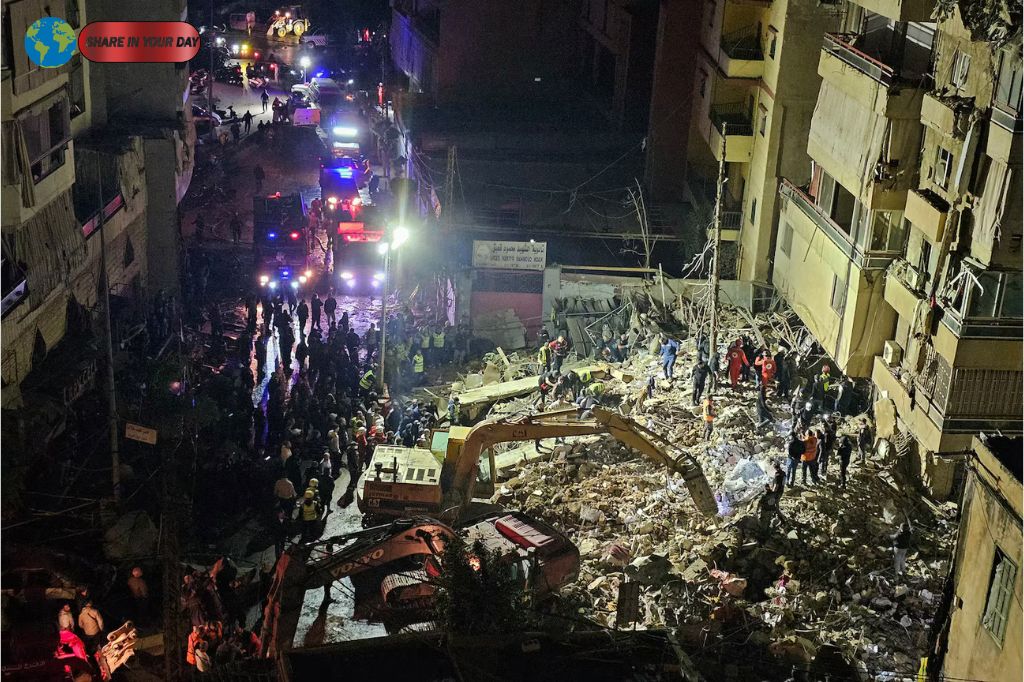
The strike immediately triggered panic across southern Beirut, where residents fled the area amid concerns that hostilities between Israel and Hezbollah could rapidly escalate once again. Lebanese officials and regional observers warned that the latest attack could undermine already fragile diplomatic efforts aimed at preventing a wider Middle East war.
Israeli Forces Target Hezbollah Radwan Commander
Israeli Prime Minister Benjamin Netanyahu confirmed that the operation specifically targeted a senior commander within Hezbollah’s Radwan Force, an elite military unit considered one of the group’s most battle-hardened divisions.
According to Israeli officials, the commander was allegedly involved in directing attacks against Israeli communities and military personnel. Netanyahu stated that “no terrorist has immunity,” signaling that Israel intends to continue pursuing Hezbollah leaders despite ongoing ceasefire negotiations.
Multiple reports identified the targeted figure as Malek Ballout, described by sources close to Hezbollah as the operations commander of the Radwan Force. However, Hezbollah had not officially confirmed his death at the time of reporting.
The Israeli military has not publicly released full operational details regarding the strike. Nevertheless, Lebanese media reported that missiles struck an apartment building in the Haret Hreik neighborhood, causing severe structural damage and sending rescue teams rushing into the area.
Haret Hreik Once Again Becomes Conflict Zone
The Haret Hreik district has long been considered a Hezbollah stronghold and has repeatedly been targeted during past conflicts between Israel and Hezbollah. The densely populated suburb lies within Beirut’s southern Dahieh area, a region closely associated with Hezbollah’s political and military infrastructure.
Residents described scenes of chaos after the attack, with smoke rising above damaged buildings as families hurried to evacuate nearby streets. Videos shared online showed emergency responders searching through rubble while crowds gathered around the impact site.
The latest strike also revived painful memories of previous Israeli bombardments that heavily damaged southern Beirut during earlier wars. In recent months, many residents had only just begun returning after earlier rounds of violence forced mass evacuations throughout the area.
Ceasefire Faces Serious Test
The Israel strike on Beirut threatens to destabilize the temporary ceasefire agreement brokered in mid-April between Israel and Lebanon. The truce aimed to halt escalating violence linked to broader regional tensions involving Iran and Hezbollah.
Although the ceasefire reduced direct strikes near Beirut, fighting never fully stopped in southern Lebanon. Israeli airstrikes and Hezbollah rocket attacks continued intermittently, raising concerns that the agreement remained highly fragile from the beginning.
Under the terms of the ceasefire, Israel retained the right to respond to what it described as imminent threats. Hezbollah, however, was not formally part of the agreement, complicating enforcement efforts and creating uncertainty about how violations would be interpreted.
Analysts now warn that renewed strikes inside Beirut could trigger retaliation from Hezbollah and potentially collapse ongoing diplomatic negotiations altogether.
Hezbollah’s Radwan Force Explained
The Radwan Force is widely viewed as Hezbollah’s elite combat division. Formed after the 2006 Lebanon war, the unit includes experienced fighters who participated in conflicts across Syria and other regional battlefronts.
Israeli intelligence agencies consider the Radwan Force one of Hezbollah’s most dangerous operational branches because of its advanced combat training and strategic role near the Israeli border.
Israeli officials have repeatedly accused the unit of planning cross-border attacks and coordinating drone and missile operations targeting Israeli forces.
The assassination or attempted assassination of senior Radwan commanders has become a key Israeli military objective during the ongoing conflict. Previous Israeli strikes in Beirut and southern Lebanon have similarly focused on Hezbollah’s leadership structure.
Regional Tensions Continue to Escalate
The strike occurred during a period of heightened instability across the Middle East. Regional tensions involving Israel, Iran, Hezbollah, and U.S. military operations have increased dramatically since early 2026.
Diplomatic efforts involving Washington, Tehran, Beirut, and regional Gulf states have attempted to prevent a wider regional war. However, repeated military exchanges continue threatening those negotiations.
The latest attack also comes amid continued clashes in southern Lebanon, where Hezbollah and Israeli forces have exchanged rocket fire, drone attacks, and artillery strikes despite the ceasefire.
Observers fear that any large-scale retaliation by Hezbollah could quickly pull Lebanon deeper into a broader regional confrontation involving Iran-backed groups and Israeli military operations.
Beirut Residents Fear Renewed War
For many civilians in Beirut, the strike renewed fears of another devastating urban conflict. Southern Beirut has experienced repeated destruction during previous wars, leaving entire neighborhoods damaged and forcing hundreds of thousands of residents to flee.
Many residents had only recently returned home after weeks of displacement caused by earlier Israeli attacks in March and April. Local reports described heavy traffic jams and panic as families attempted to leave southern suburbs immediately after the latest airstrike.
Lebanese political leaders have continued calling for calm while warning that ongoing military actions threaten national stability. Officials in Beirut have also pushed for stronger international pressure to preserve the ceasefire agreement.
At the same time, criticism of Hezbollah within Lebanon has also increased in recent months. Some Lebanese citizens blame the group’s military involvement in regional conflicts for drawing destructive Israeli retaliation into the country.
International Community Watches Closely
International governments are now closely monitoring developments after the Israel strike on Beirut. The United States, France, and other regional powers have repeatedly urged restraint while attempting to maintain ceasefire negotiations.
Diplomatic officials fear that direct attacks in Beirut could derail ongoing talks between Israel and Lebanon regarding border security and broader peace negotiations.
Earlier ceasefire arrangements represented one of the first significant diplomatic openings between the two countries in decades. However, continued violence has demonstrated how difficult it remains to establish lasting stability in the region.
Meanwhile, humanitarian concerns continue growing as thousands of Lebanese civilians remain displaced and infrastructure damage spreads across affected areas.
Israel Says Operations Will Continue
Israeli leaders have indicated that military operations against Hezbollah targets will continue if they believe threats against Israeli citizens remain active. Netanyahu and Defense Minister Israel Katz defended the strike as a necessary security operation targeting militants responsible for attacks on Israeli communities.
Israeli officials argue that Hezbollah’s ongoing military activities violate ceasefire understandings and justify continued military action. Hezbollah, however, has accused Israel of repeatedly undermining diplomatic efforts through aggressive strikes inside Lebanon.
The situation remains highly volatile, with analysts warning that further retaliation from either side could rapidly trigger broader conflict.
Uncertain Future for the Ceasefire
The future of the ceasefire now appears increasingly uncertain following the latest developments in Beirut. Although diplomatic channels remain open, both Israel and Hezbollah continue signaling readiness for further confrontation.
For civilians living across Lebanon and northern Israel, the renewed violence raises fears that the region could once again slide into prolonged war.
The Israel strike on Beirut may ultimately become a defining moment in determining whether fragile diplomatic efforts survive or collapse under mounting military pressure. As regional powers continue negotiating behind the scenes, residents across the Middle East remain braced for what could come next.