North Korea Missile Launches Raise Regional Tensions
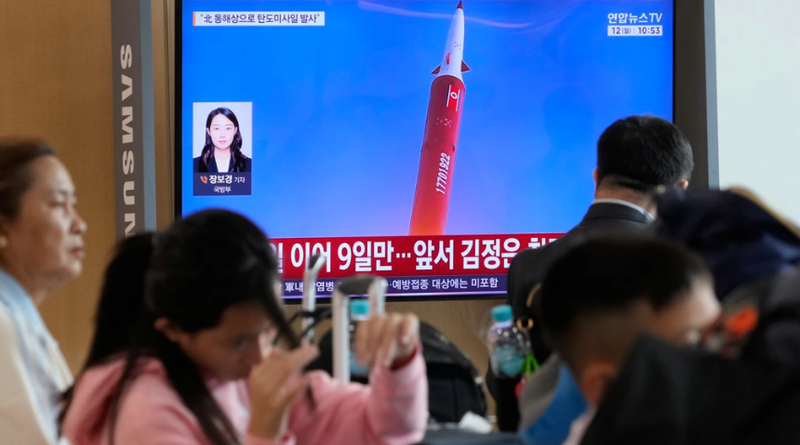
North Korea fired multiple ballistic missiles toward its eastern waters on Monday, October 12, 2026, according to South Korea’s military, intensifying regional concerns amid a prolonged freeze in diplomatic relations. The latest North Korea missile launches came days after South Korea tested its own domestically developed hypersonic weapon, adding another layer of tension to the already strained relationship between the two countries.
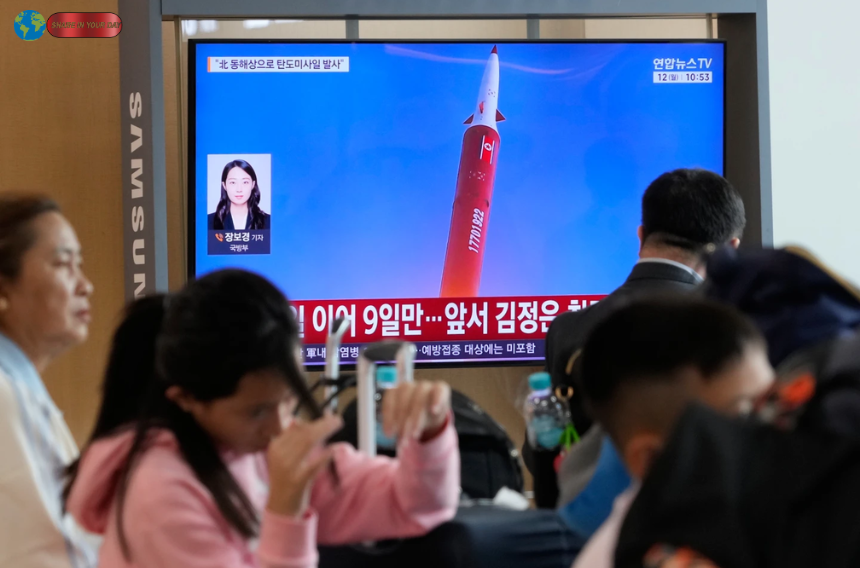
South Korea’s Joint Chiefs of Staff said the missiles were launched from an area near Pyongyang, the North Korean capital. At least one missile traveled more than 900 kilometers before landing in the sea. Officials did not immediately disclose the total number of missiles detected.
Japan also reported detecting at least two projectiles launched approximately 17 minutes apart. Japanese officials said one traveled around 220 kilometers, while another flew more than 910 kilometers along what they described as an irregular trajectory.
There were no immediate reports of damage to aircraft or vessels.
North Korea Missile Launches Follow South Korean Weapons Test
The latest launches followed South Korea’s flight test of its first domestically developed hypersonic weapon on October 8. President Lee Jae Myung described the test as an important step toward strengthening the country’s conventional defense capabilities.
The South Korean weapon is designed to travel at least five times the speed of sound and maneuver in ways intended to make interception more difficult. Officials said the test demonstrated the weapon’s ability to separate from its booster, maneuver during flight, and strike a designated target.
South Korea has presented the development as part of its efforts to strengthen its independent military capabilities.
Jang Do-young, a spokesperson for South Korea’s Joint Chiefs of Staff, said North Korea’s latest missile activity could be intended to advance its weapons technology and potentially respond to Seoul’s recent test.
However, North Korea has not publicly confirmed that the latest launches were a direct response to South Korea’s hypersonic program.
Japan and South Korea Condemn the Launches
The missile tests prompted renewed concern in Seoul and Tokyo, both of which closely monitor North Korea’s weapons development.
South Korea’s presidential national security office called on Pyongyang to stop its repeated ballistic missile launches, arguing that the tests violate United Nations Security Council resolutions and undermine efforts to manage tensions on the Korean Peninsula.
Japan also protested the launches through diplomatic channels in Beijing, according to Japanese officials.
The launches highlight the continuing security challenges facing the region. North Korea’s missile program has advanced over several years, with the country developing weapons intended to strengthen its ability to deliver conventional and nuclear payloads.
Ballistic missile testing is prohibited under multiple United Nations Security Council resolutions targeting North Korea’s nuclear and missile programs.
Despite international sanctions, Pyongyang has continued expanding its military capabilities.
Kim Jong Un Continues to Expand North Korea’s Weapons Program
North Korean leader Kim Jong Un has maintained a strong focus on military modernization while rejecting recent efforts by Washington and Seoul to restart diplomatic negotiations.
On October 3, North Korea tested what it described as a hypersonic intermediate-range missile. The country said the weapon traveled more than 1,000 kilometers, while South Korean and Japanese assessments reported different flight distances.
North Korea has argued that hypersonic weapons could improve its ability to overcome missile defense systems. However, outside assessments of the country’s weapons performance remain limited, and official claims are not always independently verifiable.
The government has also conducted missile exercises, artillery drills, and other demonstrations of military capability.
Kim’s government has taken an increasingly hard line toward South Korea, describing the neighboring country as a permanent enemy and halting most forms of inter-Korean cooperation.
Diplomatic efforts with the United States have also remained stalled since negotiations broke down in 2019. Pyongyang has demanded that Washington abandon what it calls a hostile policy and accept its nuclear status as a condition for renewed talks.
The United States and its regional partners have continued to call for progress toward denuclearization.
Border Incident Adds to Tensions on the Korean Peninsula
Relations between the two Koreas have also deteriorated following land mine explosions near the heavily fortified inter-Korean border last month.
Three South Korean soldiers were injured in the incidents. South Korea’s military and the United Nations Command concluded that the explosions were caused by mines planted by North Korea.
Pyongyang has denied responsibility and rejected South Korea’s demands for an apology.
The incident has added to existing distrust at a time when both countries are strengthening their military preparedness.
South Korean President Lee has expressed support for improving relations with the North, but his administration has also emphasized the need to strengthen national defense in response to continuing security threats.
The latest missile launches present another challenge for efforts to reduce tensions and restore communication between the two sides.
Regional Security Concerns Remain High
North Korea’s latest weapons demonstrations underscore the difficulties facing regional governments as they seek to balance military preparedness with diplomatic engagement.
South Korea and Japan continue monitoring missile activity closely, while cooperation with the United States remains an important part of their broader security arrangements.
At the same time, Pyongyang’s continued weapons development and resistance to negotiations have limited opportunities for progress.
The latest launches do not necessarily indicate that a military confrontation is imminent. However, repeated weapons tests, competing military developments, and unresolved border disputes increase the risk of miscalculation.
For now, regional governments are likely to continue tracking North Korea’s missile program while assessing the implications of its latest tests.
Conclusion
North Korea’s October 12 missile launches have renewed regional concerns as South Korea and Japan respond to another demonstration of Pyongyang’s growing military capabilities.
The timing, following South Korea’s hypersonic weapon test, highlights the increasingly competitive security environment on the Korean Peninsula. Although the precise purpose of the latest launches remains uncertain, the tests demonstrate that North Korea continues prioritizing weapons development despite international restrictions and stalled diplomacy.
Whether renewed diplomatic efforts can reduce tensions remains unclear. For South Korea, Japan, and the United States, monitoring North Korea’s military activities and managing the risk of escalation will remain central regional security challenges.