Nepal Floods: PM Calls Disaster a Global Warning
The Nepal floods have become a major focus of international attention after Prime Minister Balendra Shah told world leaders that the devastating disaster was a “warning to the world” about the growing risks associated with climate change.

Speaking at the United Nations General Assembly in New York on September 24, Shah urged governments to respond more quickly to climate change and provide greater support to countries facing severe climate-related disasters. His remarks came weeks after catastrophic flooding struck parts of Nepal and neighbouring Tibet.
The disaster has left a huge humanitarian and reconstruction challenge. Nepal has also argued that countries with relatively low greenhouse-gas emissions should not be left to shoulder the financial consequences of a warming planet alone. AAl Jazeera+1
Nepal Floods Put Climate Change at Center of UN Speech
Shah used his address to the 81st UN General Assembly to connect the destruction in Nepal with the wider global climate debate.
The prime minister described the Bhotekoshi-Trishuli disaster as more than a national tragedy. He presented it as evidence of the risks facing vulnerable countries as the climate changes.
According to reporting by Al Jazeera, Shah asked whether world leaders had actually heard the warning delivered by the disaster. AAl Jazeera
His remarks were directed at an international audience that includes governments responsible for some of the world’s largest greenhouse-gas emissions.
Shah argued that Nepal has contributed only a very small share of global emissions while facing serious consequences from climate-related hazards.
The Guardian reported that Shah said Nepal accounts for less than one-tenth of 1 percent of the heat-trapping gases behind climate change. He argued that Nepal did not create the crisis but is paying a heavy price for it. TThe Guardian
What Caused the Nepal Floods?
The August disaster was associated with a collapse involving a glacier in the Himalayan region.
Earlier reporting by Al Jazeera said that part of a glacier collapsed on August 26, triggering catastrophic flooding along the Nepal-Tibet border. Initial reports recorded hundreds of deaths and more than 1,500 people missing across Nepal and China’s Tibet region. AAl Jazeera
The consequences continued long after the floodwaters receded.
Search and rescue operations were followed by efforts to locate missing people, recover bodies and provide assistance to survivors. Infrastructure, homes and hydropower facilities were also damaged.
The precise chain of events behind the glacier collapse has been examined by scientists and authorities. Al Jazeera has reported that scientists found climate change played a major role in the conditions surrounding the disaster, while the exact mechanisms behind the collapse have continued to receive scrutiny. AAl Jazeera
That distinction is important.
A changing climate does not mean that every individual flood or glacier collapse can automatically be attributed to climate change in isolation. Scientists instead examine how warming temperatures alter glaciers, snow, precipitation and other environmental conditions that can affect the likelihood or severity of hazards.
The Human Cost of the Disaster
The Nepal floods have caused extensive human suffering.
By September, Nepal was still dealing with missing people, displaced families and communities struggling to recover from the destruction.
Al Jazeera reported that more than 500 Nepali children were staying in shelters after losing parents or having parents declared missing or dead following the August 26 floods. AAl Jazeera
The disaster also disrupted livelihoods.
Homes were destroyed, roads were damaged and vital infrastructure was affected. For communities in remote mountainous areas, reaching damaged locations and delivering assistance can be especially difficult.
The humanitarian consequences therefore extend well beyond the initial flood event.
Families that survived the disaster have faced the additional challenge of rebuilding their lives while searching for missing relatives and dealing with the loss of homes, possessions and income.
Nepal Says Recovery Will Require Major Financial Support
The financial consequences are another major issue raised by Nepal’s government.
Shah said the country’s recovery and reconstruction requirements were estimated at roughly 10 percent of gross domestic product following the disaster, according to The Guardian. TThe Guardian
The figure illustrates the scale of the challenge facing the Himalayan nation.
Nepal is a developing economy with limited fiscal resources. A disaster of this size can place additional pressure on government budgets while simultaneously reducing economic activity in affected communities.
Shah has therefore argued that vulnerable countries should receive international assistance to rebuild rather than being forced to take on additional debt following catastrophic climate events.
Recent reporting also indicates that Nepal has sought grant-based assistance rather than loans to support recovery from the disaster. DDD India
The debate is part of a broader international argument over climate finance.
Developing countries have repeatedly called for greater financial assistance to help them adapt to climate risks and recover from extreme weather events. Wealthier countries, meanwhile, have faced pressure to increase funding commitments while negotiating the structure and delivery of climate finance.
Why the Himalayas Are Particularly Vulnerable
The Himalayan region is highly exposed to climate-related hazards.
Glaciers, snow and high-altitude ecosystems are sensitive to changes in temperature. When environmental conditions change, the risks facing downstream communities can also change.
This is particularly significant because millions of people across the Himalayan and surrounding regions depend on mountain water systems.
The August disaster demonstrated how quickly an event high in the mountains can have consequences far downstream.
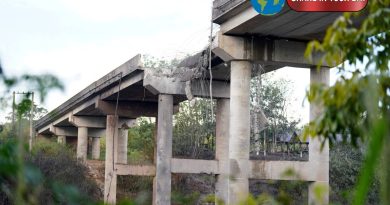
Floodwaters can destroy bridges and roads, isolate communities and damage hydropower infrastructure. In densely populated valleys, the consequences can become even more severe.
For Nepal, this creates a complicated combination of environmental and development challenges.
The country needs economic growth and infrastructure while simultaneously preparing for hazards that can become more difficult to manage as environmental conditions change.
Cross-Border Risks Complicate Flood Warnings
The disaster also raised questions about regional cooperation.
The August 26 floods affected areas on both sides of the Nepal-China border. Al Jazeera subsequently reported that the event prompted wider questions about cross-border warning systems and whether countries in the Himalayan region have sufficient mechanisms to share information quickly when hazards develop. AAl Jazeera
This issue goes beyond climate policy.
Even when a dangerous event begins in a remote area, communities downstream may have only a limited amount of time to react.
Effective early-warning systems can therefore make a critical difference.
That can require cooperation between governments, meteorological agencies, disaster-response authorities and local communities.
Information must not only be collected but also transmitted quickly and converted into practical instructions for people living in vulnerable areas.
Nepal Wants Climate Action and Climate Justice
Shah’s UN speech also placed the disaster within Nepal’s broader demand for what it describes as climate justice.
The argument is based on a basic disparity: countries can contribute very different amounts to global greenhouse-gas emissions while experiencing very different consequences from climate-related disasters.
Nepal’s government has emphasized that its contribution to global emissions is extremely small while its geography exposes it to hazards associated with a changing climate.
The country’s position has been echoed by other vulnerable states that have called for international mechanisms to provide financial support after climate disasters.
Nepal’s foreign ministry has also pursued the issue of climate compensation and international assistance in the aftermath of the floods. Al Jazeera reported earlier this month that Nepal had formally raised the issue with international partners. AAl Jazeera
The debate remains politically and financially complex.
Questions include who should provide funding, how responsibility should be calculated, whether assistance should take the form of grants or loans and how governments can ensure that money reaches communities facing the greatest risks.
A Warning Beyond Nepal
The significance of the Nepal floods extends beyond the country’s borders because Himalayan disasters can affect multiple countries and communities.
The region is home to major river systems that support agriculture, industry and millions of people.
Damage to infrastructure in mountain regions can also affect transportation, electricity generation and local economies.
The recent disaster has therefore renewed attention on preparedness and resilience.
For Nepal, that can include improving early-warning systems, strengthening infrastructure, protecting vulnerable communities and improving disaster-response capacity.
For the international community, it also raises questions about how climate finance can help countries prepare before disasters occur rather than providing assistance only after catastrophic events.
The UN Appeal for Faster Action
Shah’s speech came during a period of intense international discussion about climate change.
His central message was that vulnerable countries are already dealing with consequences that require urgent action.
Rather than treating the Nepal disaster as an isolated event, Shah presented it as part of a larger pattern of risk.
The prime minister’s comments are also significant because they place Nepal’s domestic recovery needs within the international climate negotiations.
The country is seeking assistance not simply for emergency relief but also for reconstruction and long-term resilience.
That distinction could become increasingly important as governments face more frequent and costly climate-related disasters.
Nepal Floods Leave a Long Recovery Ahead
The immediate emergency may have passed in many affected areas, but the recovery from the Nepal floods is likely to take much longer.
Families must rebuild homes and livelihoods. Authorities must repair infrastructure. Search operations and identification efforts have continued in areas where people remain missing.
At the same time, Nepal faces the challenge of preparing for future disasters.
The country cannot eliminate the risk posed by its mountainous geography. But stronger warning systems, resilient infrastructure, emergency planning and international cooperation can influence how communities respond when disasters occur.
For the government, securing adequate financial resources will be central to that process.
What Happens Next?
The international response to Nepal’s appeal will now be closely watched.
Nepal is asking for greater support as it rebuilds from one of the country’s most devastating recent disasters. Shah has argued that international assistance should help vulnerable countries recover without pushing them deeper into debt.
The flood has also strengthened Nepal’s call for greater attention to climate risks in the Himalayas.
For communities affected by the disaster, however, the issue is more immediate than international negotiations.
They face damaged homes, disrupted livelihoods, missing relatives and the difficult process of rebuilding.
The tragedy has put a human face on the broader climate debate.
Shah’s message at the United Nations was that the world should treat what happened in Nepal not merely as a national disaster, but as a warning about the risks that vulnerable communities may increasingly face.
Whether that warning results in stronger climate action, improved early-warning systems and greater international financial support remains a question for governments and international institutions.
What is already clear is that the Nepal floods have transformed a devastating regional disaster into a major international discussion about climate risk, responsibility and resilience.