OpenAI Lawsuit Revealed: 5 Shocking Musk vs Altman Facts
The OpenAI lawsuit between Elon Musk and Sam Altman has quickly become one of the most consequential legal battles in the history of artificial intelligence. What began as a shared mission to build safe AI for humanity has now escalated into a courtroom showdown involving billions of dollars, competing visions, and the future of the tech industry.
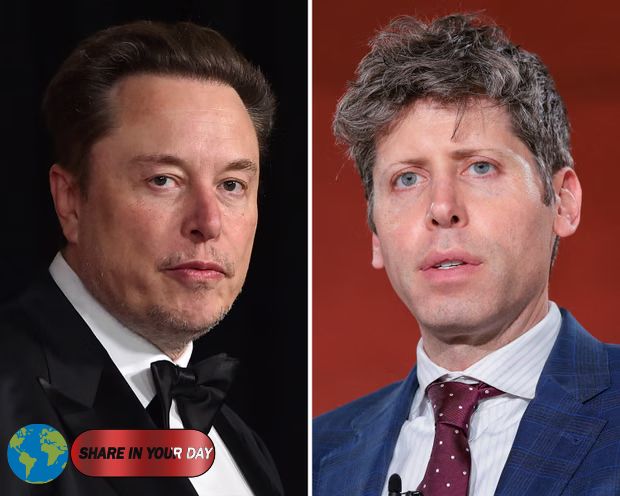
Filed in the United States and now underway in California, the case centers on allegations that OpenAI abandoned its founding principles. Musk claims the organization has transformed into a profit-driven enterprise, while Altman and his team strongly deny any wrongdoing.
The Origins of the OpenAI Lawsuit
The OpenAI lawsuit traces back to 2015, when Musk and Altman co-founded OpenAI as a nonprofit organization. The goal was clear: develop artificial intelligence safely and ensure it benefits humanity rather than corporate interests.
However, tensions began to rise just a few years later. By 2017, discussions emerged about restructuring OpenAI into a “capped-profit” model to attract investment. Musk argues that this shift violated the original agreement and misused his financial contributions.
Altman and OpenAI counter that Musk was aware of—and even supported—these changes before leaving the organization in 2018.
A $100 Billion+ Legal Battle
At the heart of the OpenAI lawsuit is an extraordinary financial demand. Musk is seeking damages exceeding $100 billion, claiming unjust enrichment and breach of trust.
He is also pushing for dramatic structural changes, including:
- Removing Altman and key executives from leadership
- Reverting OpenAI back to its nonprofit roots
- Restricting what he sees as excessive commercialization
Legal experts say the scale of the case is unprecedented in the AI sector and could reshape how tech startups are governed.
The Microsoft Factor
One of the most controversial aspects of the OpenAI lawsuit involves Microsoft, a major investor and partner of OpenAI.
Musk alleges that Microsoft’s involvement accelerated the company’s shift toward profit, effectively turning OpenAI into what he describes as a “closed-source, for-profit powerhouse.”
OpenAI, however, argues that the partnership has been essential for scaling AI technology responsibly. The company points to its products, including ChatGPT, as evidence of its continued commitment to broad public benefit.
Inside the Courtroom Drama
The trial, held in Oakland, California, is expected to last several weeks and includes testimony from major tech figures. Among those anticipated to appear are:
- Elon Musk
- Sam Altman
- Satya Nadella
- Other key executives and insiders
The proceedings are already revealing internal tensions, private communications, and strategic disagreements that shaped OpenAI’s evolution.
Notably, some of Musk’s claims—such as fraud allegations—have been dismissed by the court, narrowing the case to issues like breach of trust and unjust enrichment.
Competing Visions for Artificial Intelligence
At its core, the OpenAI lawsuit is not just about money—it’s about ideology.
Musk argues that artificial intelligence should remain open, transparent, and free from corporate control. He has since launched his own AI venture, xAI, positioning it as an alternative to OpenAI’s current direction.
Altman, on the other hand, believes that scaling AI safely requires significant capital and structured governance. Under his leadership, OpenAI has secured massive investments and is reportedly aiming for a valuation approaching $1 trillion.
This clash highlights a broader debate in the tech world:
Should transformative technologies be controlled by nonprofits or driven by market forces?
Why This Case Could Change the AI Industry
The outcome of the OpenAI lawsuit could have far-reaching implications for the global tech ecosystem.
1. Redefining Startup Governance
If Musk succeeds, companies may face stricter legal obligations to honor their founding missions.
2. Impact on AI Investment
A ruling against OpenAI could shake investor confidence in hybrid nonprofit-profit structures.
3. Regulatory Ripple Effects
Governments may use this case as a blueprint for regulating AI companies and ensuring accountability.
4. Industry Competition
The rivalry between OpenAI and Musk’s xAI could intensify, influencing innovation and market dynamics.
5. Public Trust in AI
The trial exposes internal conflicts, raising questions about transparency and ethics in AI development.
Experts say the case could become a landmark precedent, shaping how future AI organizations are structured and monitored.
The Bigger Picture: From Allies to Rivals
The transformation of Musk and Altman from collaborators to adversaries is one of Silicon Valley’s most dramatic shifts.
Once united by a shared vision, they now represent opposing philosophies:
- Musk: decentralization and open AI
- Altman: scalable, commercially supported AI
Their rivalry reflects deeper tensions within the tech industry, where innovation, ethics, and profit often collide.
What Happens Next?
As the trial continues, several key questions remain unresolved:
- Will the court force structural changes at OpenAI?
- Can Musk prove that the original mission was legally binding?
- How will investors and regulators respond to the outcome?
The answers could define the next era of artificial intelligence.
For now, the OpenAI lawsuit stands as a powerful reminder that even the most ambitious technological missions are not immune to conflict, ambition, and competing visions.
Conclusion
The OpenAI lawsuit between Elon Musk and Sam Altman is more than a legal dispute—it is a defining moment for the future of AI. With billions of dollars at stake and global attention focused on the courtroom, the outcome could reshape not only OpenAI but the entire technology landscape.
As artificial intelligence continues to evolve, this case may ultimately determine who controls it—and for whose benefit.