
Trump Mail-In Voting Rule: 24 States Fight Back
The Trump mail-in voting rule is facing a fresh legal challenge from a coalition of states just weeks before the 2026 midterm elections. Twenty-four attorneys general and Pennsylvania Gov. Josh Shapiro have filed a new lawsuit against the U.S. Postal Service, arguing that the administration’s latest requirements could disrupt mail voting programs and interfere with states’ constitutional authority over elections.
The lawsuit marks a new stage in a rapidly developing legal battle over how Americans can vote by mail. It comes only days after the U.S. Supreme Court cleared a procedural obstacle for President Donald Trump’s executive order, while leaving the central legal questions unresolved.
That distinction is important.
The Supreme Court did not rule that Trump’s mail-voting policy is constitutional. Instead, the justices concluded that the states’ earlier challenge came before they could establish the kind of injury needed to proceed. The court’s decision left open the possibility of a new lawsuit once the Postal Service finalized its rules.
Now, the states are attempting exactly that.
Trump Mail-In Voting Rule Faces New Lawsuit
The latest complaint targets a final rule issued by the U.S. Postal Service to implement provisions of Trump’s March executive order.
According to the states, the rule creates new requirements for mail ballots, including standardized envelope designs and systems involving lists of voters who are expected to receive mail ballots. The states argue that these changes would require them to redesign existing election materials and create new systems on an extremely short timeline.
The plaintiffs warn that the consequences could extend beyond administrative inconvenience.
In their complaint, the states say the rule could frustrate or prevent them from operating their mail-voting programs during the November election. They also argue that eligible voters could potentially be disenfranchised if states cannot meet the new federal requirements in time.
The legal challenge was filed in Massachusetts, where a federal judge has already played a central role in the earlier litigation.
The case therefore places the Postal Service’s final rule directly under judicial scrutiny at a particularly sensitive moment in the election calendar.
What Trump’s Mail Voting Policy Would Change
Trump’s executive order, issued in March, sought significant changes to the administration of federal elections.
One provision calls for states to create what the order describes as state citizenship lists. The Postal Service provisions are designed to connect mail-ballot delivery with those lists.
Under the Postal Service’s final rule, ballots would have to meet specified envelope requirements. The agency also plans to generate state-specific mail-in voting participation lists.
The administration has defended the policy as an election-security measure.
White House spokesperson Lauren Bis said the Supreme Court’s recent decision was a major victory for election security. She also accused Democratic opponents of resisting measures intended to protect mail ballots and ensure that only eligible Americans participate in federal elections.
The states see the issue differently.
Their central argument is that election administration has traditionally been handled by state and local governments, and that neither the president nor the Postal Service has broad authority to impose these new voting procedures.
The Massachusetts complaint argues that federal law does not give USPS authority to control mail-in voting in the manner contemplated by the executive order.
Supreme Court Decision Did Not Settle the Case
The Supreme Court’s August 24 decision has become a crucial part of the dispute.
The justices lifted a lower-court injunction that had blocked implementation of parts of Trump’s executive order. However, the ruling focused on the procedural question of whether the states had sued too early.
The court did not decide the ultimate legality of the mail-voting provisions.
That means the administration received an important procedural victory without receiving a definitive ruling that its policy is lawful.
The Supreme Court itself left the door open for another lawsuit if the Postal Service’s final rule caused concrete harm to the states. The new complaint is based on that changed circumstance.
This distinction could become increasingly important as the litigation moves forward.
The states now argue that the final USPS rule provides the concrete injury that was missing from their earlier case. They say election officials must act quickly because ballots for the November midterms are already approaching production and distribution deadlines.
Why Timing Matters for the 2026 Midterms
The timing of the Trump mail-in voting rule is one of the most significant elements of the dispute.
Several states are expected to begin issuing mail ballots in September. That leaves election administrators with a narrow window to determine which rules will govern their programs.
Changing ballot envelopes, voter databases and transmission systems shortly before an election can create substantial logistical challenges.
Election officials must coordinate ballot printing, mailing, voter registration information, ballot tracking and return procedures. Any federal requirement that changes those systems could require states to modify processes that have already been prepared for the election.
The litigation therefore is not simply about what the rules might look like in the future.
It could determine how states administer the 2026 election.
A hearing on the renewed challenge is scheduled for September 3, according to reporting on the case. That date comes just before some states are scheduled to begin distributing mail ballots.
That compressed schedule increases pressure on the courts.
A ruling that arrives late could force election officials to change procedures after preparations are already underway. Conversely, blocking the USPS rule could require federal officials to suspend or revise implementation.
States Say USPS Is Overstepping Its Authority
The constitutional dispute goes beyond the technical design of ballot envelopes.
At its core, the lawsuit asks how much power the federal government has over state-administered elections.
The states argue that the Constitution gives them a central role in determining how elections are conducted. They contend that the Postal Service cannot independently transform itself into an authority deciding which ballots may be transmitted.
The Massachusetts complaint makes a similar argument, saying that Congress has not delegated authority to USPS to control mail-in voting in the way required by the executive order.
That argument could become one of the most important legal questions in the case.
If the courts agree with the states, the administration could face significant limits on its ability to use federal agencies to change election procedures.
If the courts reject those arguments, the administration could gain greater authority to impose nationwide standards affecting mail voting.
Either outcome could have consequences beyond the 2026 midterms.
Administration Defends the New Requirements
The Trump administration maintains that the new measures are designed to improve election security.
Supporters of the policy argue that standardized ballot procedures and stronger verification mechanisms can help protect the integrity of mail voting.
The administration’s position also reflects Trump’s longstanding criticism of mail-in voting. He has repeatedly questioned aspects of the system, particularly when discussing election security and ballot verification.
The states, however, argue that the federal government is attempting to impose major changes without sufficient authority or time for implementation.
That disagreement is now being tested in federal court.
A New Phase in the Legal Battle
The current lawsuit follows months of litigation over Trump’s election executive order.
In an earlier case, a federal judge in Massachusetts issued a nationwide block on the mail-voting restrictions. That injunction later became part of the Supreme Court dispute.
After the Supreme Court’s August 24 decision, the lower-court barrier was removed.
Judge Indira Talwani subsequently reversed the earlier nationwide block, allowing the legal dispute to move into its next phase.
The new lawsuit changes the legal posture.
Instead of challenging a proposed policy before it had been finalized, the states are now challenging an actual USPS rule that has been published and could affect their election operations.
That is precisely the type of development the Supreme Court indicated could support a future challenge.
Justice Ketanji Brown Jackson, in dissent, warned that allowing the administration’s order to proceed on the basis that the states had sued too early could create uncertainty ahead of the midterms.
What Happens Next?
The immediate question is whether a federal judge will temporarily block the USPS rule while the broader case proceeds.
The states are seeking emergency relief because election preparations are already moving forward.
A preliminary injunction could prevent USPS from enforcing the new requirements while the court considers the constitutional and statutory arguments. Without such relief, election officials could have to prepare for compliance while the legal dispute continues.
That creates a difficult situation for states.
Officials may not know whether to follow existing procedures or prepare for the new federal requirements. Waiting for a final judicial decision could leave little time to make operational changes.
Meanwhile, the administration has an incentive to defend the rule because the Supreme Court’s recent decision removed a major procedural barrier.
The courts therefore face a rapidly developing election-law dispute with unusually tight deadlines.
What the Case Means for Voters
For voters, the most important point is that the rules are not yet settled.
The latest lawsuit does not mean mail voting has been eliminated. It also does not mean the Trump administration’s new requirements are permanently in effect.
Instead, the legal battle is continuing over whether USPS can enforce the new requirements and whether the federal government has the authority to impose them.
Voters who rely on mail ballots should continue following instructions issued by their state and local election officials.
Those officials will ultimately communicate how and when ballots are distributed, how ballots must be completed and returned, and what procedures apply in each jurisdiction.
The outcome of the lawsuit could determine whether those existing systems remain in place or have to adapt to the federal requirements.
The Bigger Election Fight
The dispute over the Trump mail-in voting rule is part of a much larger national debate over election administration.
Mail voting has become a central political issue in the United States, with supporters emphasizing accessibility and convenience while critics focus on verification and election security.
The latest legal battle adds another dimension: the balance of power between Washington and the states.
The states challenging USPS argue that federal intervention could fundamentally alter how elections are administered. The administration argues that the measures are legitimate safeguards designed to protect federal elections.
The courts now have to determine where that authority begins and ends.
With the 2026 midterms approaching, the decision may come sooner rather than later.
For now, the Supreme Court’s ruling has not provided a final answer. Instead, it has moved the dispute into a new stage — one in which the Postal Service has a finalized rule, states claim they face immediate harm, and election officials are working against the clock.
The September court proceedings could therefore become a critical moment in determining whether Trump’s mail-voting restrictions take effect before Americans begin casting ballots in the 2026 midterm elections.
Sources: Axios — States renew fight against Trump’s mail-in voting rule · U.S. Supreme Court opinion in Trump v. California · Massachusetts court complaint challenging the USPS rule
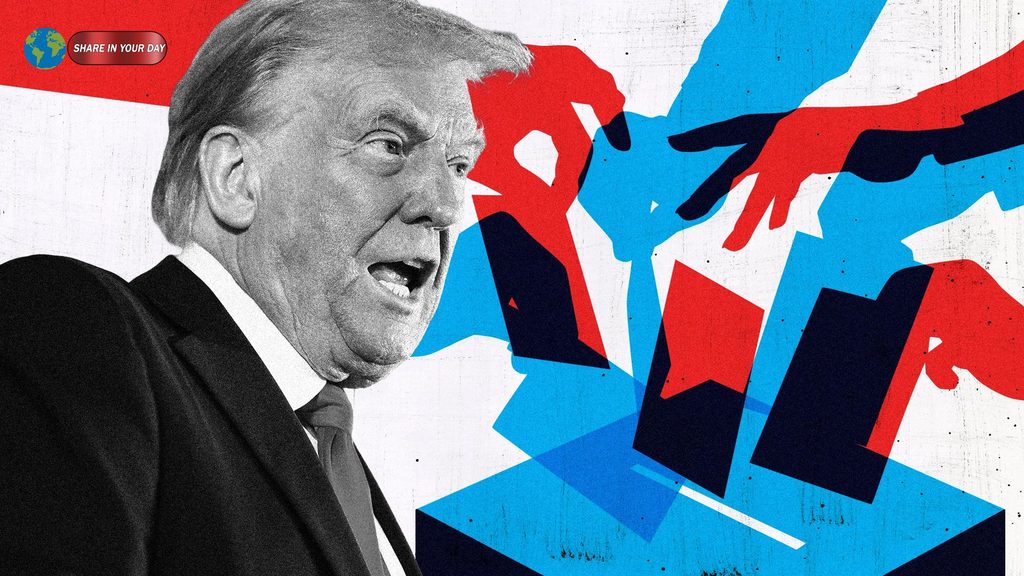
Image ALT Text: Trump mail-in voting rule sparks lawsuit from 24 states ahead of the 2026 midterm elections
Suggested Image: Axios photo illustration showing Donald Trump and mail ballots. Use the original publisher image only if your licensing or syndication rights permit it.