Stablecoins Face Major Payment Warning From BIS
Stablecoins face a major challenge to their ambitions as a mainstream form of money after the Bank for International Settlements said they are not yet a credible means of payment at scale.
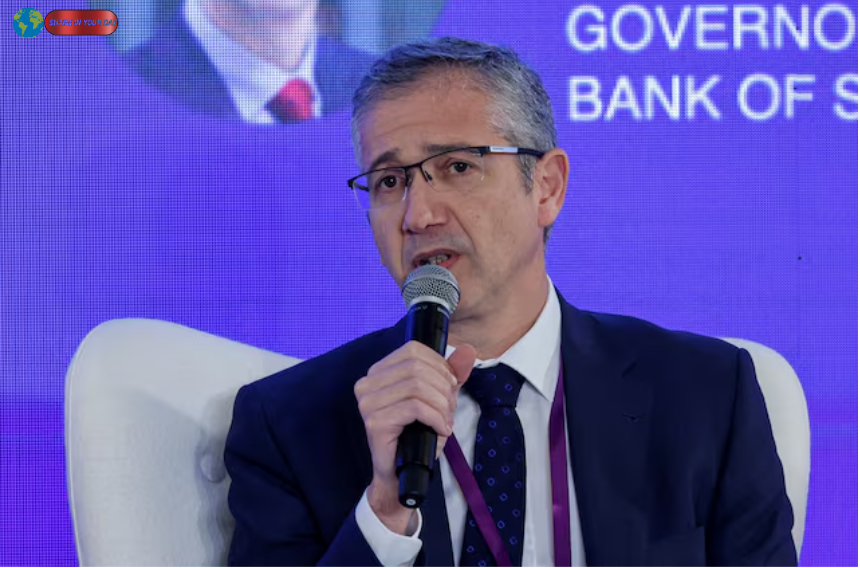
Pablo Hernández de Cos, general manager of the Bank for International Settlements, made the assessment on August 28 at the Jackson Hole Economic Symposium. He argued that stablecoins still have important weaknesses involving interoperability, financial integrity, monetary sovereignty and their ability to maintain stable redemption during periods of financial stress.
The comments come at a critical moment for the cryptocurrency industry. Stablecoins have expanded rapidly and are increasingly being discussed as a potential bridge between traditional finance and blockchain-based payments.
However, the BIS is warning that popularity alone does not make a digital token equivalent to money.
Instead, de Cos argued that tokenized deposits could provide a more convincing foundation for the next generation of payment systems.
Stablecoins Payment Debate Intensifies
The stablecoins payment debate has become increasingly important as financial institutions and governments consider how blockchain technology could reshape money.
Stablecoins are cryptoassets designed to maintain a relatively stable value against an underlying asset, most commonly the U.S. dollar. Unlike volatile cryptocurrencies such as Bitcoin, stablecoins are intended to minimize price fluctuations.
Their use has expanded considerably inside the crypto ecosystem. The BIS has described stablecoins as an increasingly important medium of exchange within cryptocurrency markets, while also warning about their broader macroeconomic implications.
The attraction is straightforward.
Stablecoins can move digitally across blockchain networks, potentially enabling faster and more programmable transactions. They can also provide people in some countries with relatively easy access to dollar-denominated assets.
But using stablecoins within crypto markets is different from replacing conventional money in everyday commerce.
That distinction is at the heart of the BIS argument.
BIS Chief Questions Stablecoins at Scale
Speaking at Jackson Hole, de Cos said stablecoins do not currently satisfy the fundamental properties required for money to work reliably at large scale.
The BIS chief focused on three broad areas: maintaining a single and reliable monetary unit, ensuring interoperability and settlement finality, and preserving financial integrity.
The institution’s argument is that money works because users can generally accept it without having to investigate the specific quality of every payment instrument they receive.
In today’s financial system, central bank money provides an anchor for commercial bank deposits and payments. Supervised banks operate within that framework, while settlement between institutions ultimately relies on central bank money.
Stablecoins operate differently.
Different issuers can create different tokens that are intended to represent the same currency. But those tokens do not necessarily trade at exactly the same value in every market or under every condition.
That can create friction that does not exist with conventional money.
The Problem of Stablecoin Fragmentation
One of the BIS’s most important concerns is fragmentation.
De Cos used a hypothetical example involving two dollar stablecoins. If one person holds USDT while the recipient accepts only USDC, the sender may have to exchange one stablecoin for another before completing the payment.
That introduces a secondary-market transaction.
Under normal conditions, the difference may be small. But during periods of financial stress, stablecoins can trade away from their intended one-to-one value.
That means the payment system may not always provide the same certainty associated with conventional money.
The BIS argues that this issue becomes particularly important if stablecoins are expected to support payments on a massive scale.
A system with many tokens, issuers and blockchain networks could potentially create a fragmented monetary environment rather than a unified payment system.
For everyday users, that could mean having to think about which stablecoin they own, which stablecoin a merchant accepts and whether the two can be exchanged at par.
That is very different from the experience of using conventional currency.
Interoperability Is Another Major Challenge
The BIS also highlighted interoperability.
Stablecoins can operate across different blockchain networks and platforms. But moving assets between those networks is not necessarily simple or risk-free.
Bridges and other mechanisms designed to connect blockchains can introduce additional vulnerabilities.
The challenge is therefore not simply moving a digital token from one wallet to another.
A large-scale monetary system requires reliable settlement across different institutions, platforms and jurisdictions.
It also needs legal certainty about when a transaction is final.
The BIS argues that stablecoin systems still have gaps in these areas.
If stablecoins become deeply integrated into global commerce, these weaknesses could become much more consequential.
A payment network that works effectively during normal market conditions may face entirely different pressures during a crisis.
Financial Stability Risks Remain
The BIS is also concerned about the potential financial stability consequences of widespread stablecoin adoption.
Stablecoin issuers typically hold reserves backing the tokens. Depending on how those reserves are structured, a rapid increase in redemptions could create pressure to sell assets.
That can become especially problematic if many holders attempt to redeem their stablecoins simultaneously.
The BIS has previously examined how stablecoin arrangements could affect financial markets, banking systems and monetary policy. Its research has noted that stablecoins aspire to money-like functions while lacking some of the institutional structures supporting today’s monetary system.
This does not mean the BIS believes stablecoins have no useful applications.
Instead, the institution is questioning whether they can safely become a primary form of everyday money without substantial changes to their structure and regulatory framework.
Tokenized Deposits Offer a Different Model
The BIS chief sees tokenized deposits as a potentially stronger alternative.
Tokenized deposits represent traditional bank deposits in digital token form. They can use blockchain or distributed-ledger technology while remaining connected to the existing banking system.
That distinction is important.
A tokenized deposit remains a claim on a regulated bank. Payments can move between accounts while interbank settlement continues to occur through central bank accounts.
This gives tokenized deposits a connection to the existing two-tier monetary system.
The BIS argues that this could preserve some of the most important properties of conventional money while allowing financial institutions to benefit from programmable digital technology.
In other words, the objective is not necessarily to reject blockchain technology.
It is to integrate that technology into a monetary architecture that already has established mechanisms for trust, regulation and settlement.
Stablecoins Could Still Have Specialized Uses
The BIS position does not amount to a call for stablecoins to disappear.
De Cos acknowledged that stablecoins may have roles in specialized applications.
The concern is their use as the foundation for everyday payments at global scale.
That distinction leaves room for stablecoins to remain important within cryptocurrency markets, decentralized finance and certain cross-border transactions.
Stablecoins can also provide users with access to dollar liquidity, especially in economies where demand for foreign-currency assets is high. BIS research has found that stablecoins have become an important channel for dollar access in emerging and developing economies.
Therefore, the future may not involve choosing between stablecoins and traditional banking altogether.
Instead, different forms of digital money could coexist, with each serving specific functions.
The Dollar Adds Another Dimension
The debate is also closely connected to the global role of the U.S. dollar.
Most of the largest stablecoins are dollar-linked.
That means widespread stablecoin adoption could potentially increase access to dollars around the world.
For supporters, this is one of the technology’s biggest advantages.
U.S. Treasury Secretary Scott Bessent has argued that stablecoins can strengthen the dollar’s global position and increase demand for U.S. Treasury securities. Reuters reported that Bessent supports the expansion of dollar-backed stablecoins as part of the broader effort to reinforce the dollar’s international role.
The BIS, however, is concerned about the opposite side of the equation.
If people and businesses increasingly rely on foreign-currency stablecoins, countries could face challenges to their monetary sovereignty.
That could be particularly important in jurisdictions where domestic currencies are already under pressure.
Monetary Sovereignty Could Become a Major Issue
A country’s monetary system depends partly on its ability to manage its own currency and monetary conditions.
If residents increasingly use foreign-currency stablecoins instead of domestic money, central banks could find it harder to influence economic activity.
This phenomenon resembles traditional forms of dollarization, but digital stablecoins could potentially make foreign-currency access easier.
BIS research has specifically examined the relationship between stablecoin dollarization and conventional dollarization, highlighting possible implications for monetary control and financial stability.
That means the stablecoin debate is not only about technology.
It is also about economic sovereignty.
Central banks must consider what happens if digital currencies issued or backed outside their jurisdictions become widely used for domestic payments.
Anti-Money-Laundering Concerns
Another issue highlighted by the BIS is financial integrity.
Traditional payment systems operate within extensive anti-money-laundering and know-your-customer frameworks.
Stablecoin transactions can occur across blockchain networks, wallets and intermediaries operating under different regulatory regimes.
That can complicate enforcement.
The BIS argues that any monetary system operating at large scale needs mechanisms that protect financial integrity and uphold the rule of law.
This does not necessarily make blockchain payments impossible.
However, it means policymakers need to determine how regulatory requirements can be applied consistently across decentralized and cross-border infrastructure.
Stablecoins Are Still Growing Despite the Criticism
The BIS warning comes at a time when stablecoins remain one of the fastest-growing parts of the digital-asset sector.
They have become central to cryptocurrency trading and blockchain-based financial activity.
The BIS itself has acknowledged that stablecoins demonstrate some of the potential benefits of tokenization, including faster and programmable payments. But the institution has also argued that their current design contains structural weaknesses.
That creates an unusual situation.
Central bankers are not dismissing the underlying technology.
Instead, they are attempting to determine which parts of the technology can be incorporated into the existing financial system without undermining monetary stability.
The answer could shape the future of digital finance.
Regulation Will Shape the Next Stage
The regulatory environment will be critical.
Governments around the world are developing rules for stablecoin issuers, reserve requirements, consumer protection and financial-market oversight.
The BIS recently highlighted significant differences in how jurisdictions regulate stablecoin issuance, including which entities are permitted to issue them and what activities are allowed.
Those differences could create another form of fragmentation.
A stablecoin that is permitted in one jurisdiction may face restrictions in another. Issuers may also face different capital, reserve and compliance requirements.
For global payments, those differences could become a significant obstacle.
Policymakers therefore face a difficult balance between encouraging innovation and preventing regulatory gaps.
What Happens Next for Stablecoins?
The BIS position is unlikely to end the stablecoin debate.
Instead, it could intensify the discussion over what stablecoins should actually be used for.
If stablecoins remain primarily crypto-market instruments and specialized payment tools, many of the BIS’s concerns may remain manageable.
If they become widely used as everyday money, however, the requirements become much higher.
They would need reliable redemption mechanisms, strong reserves, interoperability across platforms, legal certainty and robust financial-integrity controls.
The BIS has not ruled out that possibility.
Its message is that stablecoins would need to overcome significant structural challenges before they could credibly perform the role of money at scale.
The Bigger Digital Money Battle
The debate between stablecoins and tokenized deposits represents a much larger question about the future of money.
Should digital finance build an entirely new monetary system around privately issued tokens?
Or should banks and central banks incorporate blockchain technology into the existing monetary architecture?
The BIS clearly favors the second approach.
Its argument is that technological innovation should improve the monetary system without weakening the institutional foundations that make money trustworthy.
That could mean tokenized bank deposits become an important part of future payments, while stablecoins remain useful in more specialized markets.
Central banks could also play a greater role in providing the settlement infrastructure needed for tokenized finance.
Stablecoins Face a Critical Test
The latest BIS warning represents a significant challenge for stablecoin advocates.
The technology has already demonstrated its usefulness within cryptocurrency markets. It has also created new ways to transfer dollar-denominated value digitally.
But becoming genuine money is a much higher standard.
A payment system must work reliably in good times and bad. It must preserve value, settle transactions with certainty and maintain trust across institutions and borders.
According to BIS chief Pablo Hernández de Cos, stablecoins have not yet demonstrated that they can meet those requirements at global scale.
Tokenized deposits, meanwhile, could offer a way to combine programmable digital technology with the established banking system.
The debate is therefore moving beyond whether blockchain has a future.
Increasingly, the question is which form of digital money will become the foundation of that future.
For stablecoins, the answer will depend on whether the industry can address the concerns surrounding interoperability, financial stability, monetary sovereignty and financial integrity.
Until then, the BIS message is clear: stablecoins may have a role in the future of finance, but they are not yet ready to become the world’s everyday payment infrastructure.