Nepal-China Flood Disaster: 5 Shocking Updates
The Nepal-China flood disaster has become one of the most devastating Himalayan disasters in recent years, with at least 750 people reported dead and more than 3,000 still missing after catastrophic flooding and landslides struck areas along the Nepal-China border.
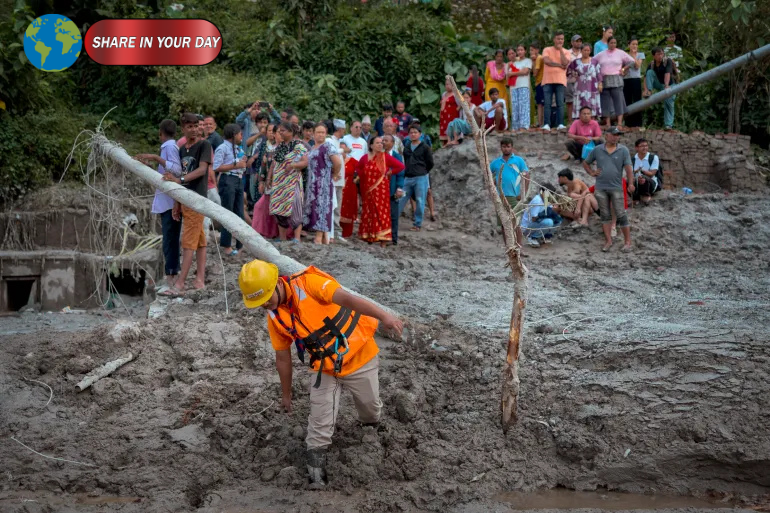
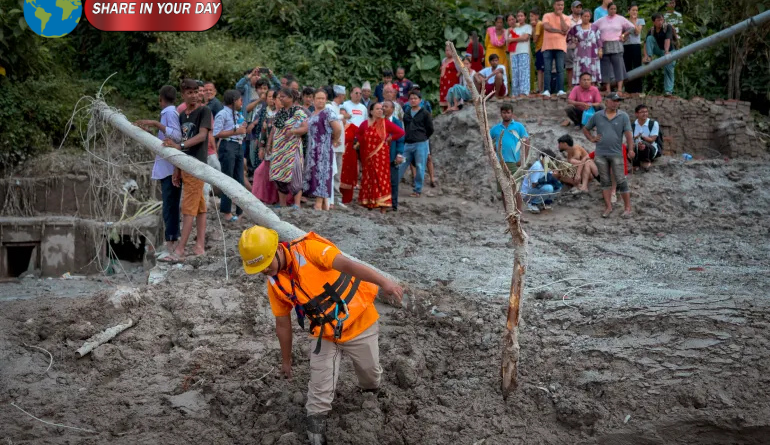
The disaster began on Wednesday after a glacier collapse in the high Himalayas triggered a huge surge of water, mud and debris. The flooding swept through communities, damaged roads and bridges, disrupted hydropower projects and left rescue teams struggling to reach isolated areas.
Nepal has reported 734 deaths, while Chinese authorities have confirmed 16 deaths in Tibet. The combined number of missing people has reached more than 3,000, although the figures are still being updated as rescue teams search damaged communities and infrastructure.
1. Nepal-China Flood Disaster Death Toll Rises
The latest figures show the scale of the catastrophe.
Nepal’s National Disaster Risk Reduction and Management Authority reported 734 deaths on Sunday. Chinese authorities separately reported 16 deaths in Gyirong County in Tibet. Together, those figures bring the reported death toll to at least 750.
The number could rise further.
Search teams continue to find bodies in areas affected by mudslides and fast-moving floodwaters. Some bodies have also reportedly been carried far downstream, creating additional challenges for authorities trying to identify victims and notify their families.
The humanitarian situation has been made more difficult by limited morgue capacity. According to Al Jazeera’s reporting, unidentified bodies have been transferred to hospitals in several districts while authorities work to preserve and identify them. DNA testing is also being used where possible.
The disaster has therefore become both a rescue emergency and a major identification operation.
For families waiting for information, the uncertainty is particularly painful. Thousands of people remain unaccounted for, and authorities are still trying to establish exactly how many victims were trapped in homes, vehicles, tunnels and industrial sites.
2. More Than 3,000 People Are Still Missing
The missing-person figure is one of the most alarming aspects of the Nepal-China flood disaster.
Nepal has reported 2,498 people missing, while Chinese authorities have reported another 546 missing in Tibet. Together, that puts the number of missing people at 3,044.
The figure includes local residents, workers, tourists and foreign nationals.
Nepal’s missing-person list includes hundreds of foreigners and people associated with foreign travel groups. In Tibet, Chinese authorities said 261 foreign nationals from 23 countries were among those reported missing.
The international dimension has made the disaster particularly significant.
Foreign nationals reported missing in Tibet include people from Nepal, India, Latvia, the United States, the United Kingdom, Canada, Australia and several European countries. Authorities are working to establish identities and determine whether some people listed as missing may have reached safety without being registered.
Because communications and transport links have been severely disrupted, obtaining an accurate list has been difficult.
[Internal link suggestion: Link the phrase “latest Nepal disaster news” to your website’s Nepal or Asia news category.]
3. Hundreds of Hydropower Workers Are Unaccounted For
One of the most urgent rescue operations is taking place around hydropower projects in central Nepal.
Around 933 people are reported missing or unaccounted for at 11 hydropower project sites and tunnels in the Rasuwa and Nuwakot districts, according to Nepal’s Independent Power Producers’ Association.
Many of these facilities are located in mountainous terrain, where access can be extremely difficult even under normal conditions.
The flooding covered roads and industrial areas with mud and debris. Some tunnels have also been filled with rubble, preventing rescuers from reaching workers who may still be trapped underground.
At the Upper Trishuli-1 hydropower project, Nepali soldiers have already rescued hundreds of workers. However, other sites remain difficult to access.
At the Chilime Hydropower project, for example, rescuers have faced major obstacles because the tunnel entrance is blocked by mud. Officials have discussed bringing in specialist rock-climbing and tunnel-rescue teams to assist the operation.
The Nepalese government has mobilised thousands of security personnel for the broader rescue operation. Foreign Secretary Amrit Bahadur Rai said about 19,000 security personnel and 16 helicopters had been deployed.
India has also sent medical personnel and tunnel-rescue specialists to support operations in some of the worst-hit areas.
4. A New Flood Threat Remains
The initial flooding has passed in many locations, but authorities are still watching for another dangerous surge.
A temporary lake formed when debris blocked water in the mountainous region near the Nepal-China border. Rising water levels led authorities to temporarily suspend some rescue operations because of fears that the natural barrier could fail and release another wave downstream.
Rescue operations later resumed after authorities assessed the immediate threat as manageable.
However, officials have stressed that the danger has not completely disappeared.
Chinese authorities are monitoring the area using satellites, radar and drones. The objective is to detect changes in the barrier lake and provide warnings if conditions deteriorate.
Heavy rain has added another layer of uncertainty.
On Sunday, water levels in Nepal’s Trishuli River rose again following additional rainfall. Residents and rescue workers were reportedly forced to move toward higher ground as authorities continued to monitor rivers in northern Nepal.
That means emergency teams must balance two priorities: searching for people who may still be alive while protecting rescuers from additional flooding and landslides.
5. Roads, Bridges and Infrastructure Have Been Devastated
The Nepal-China flood disaster has also caused extensive damage to transportation and energy infrastructure.
Floodwaters and landslides destroyed roads and bridges, cutting off some of the hardest-hit communities. The damage has slowed the movement of rescue teams, food, medical supplies and heavy machinery.
This is particularly serious in Nepal because many affected settlements are located in mountainous areas.
When bridges disappear and roads are buried under debris, helicopters may become the only practical way to reach isolated communities. Yet helicopters cannot replace the capacity of functioning highways for sustained humanitarian operations.
The damage has also affected hydropower facilities, which are important to Nepal’s electricity system and economy.
Nepal’s finance minister has estimated that the economic losses from the disaster could exceed $4 billion, according to Al Jazeera’s reporting.
The final economic cost could take months or even years to calculate.
Beyond physical infrastructure, communities face the loss of homes, businesses, farmland and sources of income. Many survivors are now trying to recover personal belongings from buildings filled with mud and debris.
Why Was the Flood So Destructive?
The immediate trigger was a glacier collapse in the high Himalayas.
The collapse sent huge amounts of water, rock and debris into river systems, producing catastrophic flooding downstream. The resulting flows affected communities along the Trishuli and Bhotekoshi river systems and caused extensive destruction on both sides of the border.
The event has also renewed concerns about the growing risks associated with unstable glaciers and changing conditions in the Himalayas.
The region is particularly vulnerable to climate-related hazards because communities, roads, hydropower projects and tourist routes often exist close to steep mountain valleys and rivers.
Scientists and officials have repeatedly warned that changing temperatures can increase instability in high-altitude environments. The disaster has therefore raised broader questions about how governments can better monitor glaciers, lakes and other potential sources of sudden flooding.
[Internal link suggestion: Link “climate change and extreme weather” to your website’s climate or environment category.]
International Rescue Efforts Expand
Nepal and China are working to locate missing people and identify victims, while international assistance is also arriving.
China has deployed about 2,100 rescue workers and allocated at least 220 million yuan, or approximately $32.7 million, for emergency relief efforts. Heavy-lift drones and helicopters are being used to move equipment and supplies in difficult terrain.
Other countries and international organisations have also offered assistance.
The United Nations, Red Cross movement, Australia, India, South Korea and the United States are among those involved in the international response. The US and Canada have each pledged $3.6 million in humanitarian aid, while the United Kingdom has offered $6.8 million, according to Al Jazeera.
The United Nations has also released emergency funding.
These contributions are expected to support immediate rescue and humanitarian needs, including medical care, emergency supplies and assistance for displaced communities.
What Happens Next?
The immediate priority remains finding survivors.
Rescue teams must continue searching hydropower tunnels, damaged buildings, riverbanks and isolated settlements while monitoring the possibility of additional flooding.
The next challenge will be providing sustained humanitarian assistance.
Many roads remain damaged, while some communities are still difficult to reach. Restoring transport links will be essential for delivering food, medicine, clean water and other supplies.
Authorities will also face the enormous task of identifying victims.
With bodies being recovered far from where the flooding began, forensic identification will be critical. DNA testing and cooperation between Nepal, China and foreign governments could help families determine the fate of missing relatives.
Meanwhile, the disaster has highlighted the vulnerability of Himalayan communities to sudden environmental hazards.
A Disaster With Regional Consequences
The scale of the Nepal-China flood disaster extends beyond the immediate death toll.
Thousands of families have been affected. Infrastructure has been destroyed. Hydropower workers remain missing. Foreign tourists and residents are among those unaccounted for, while communities on both sides of the border face a long recovery.
The disaster has also demonstrated how quickly a high-altitude environmental event can become an international emergency.
For Nepal, one of Asia’s most mountainous countries, the incident is a reminder of the enormous challenge involved in protecting communities located along vulnerable river valleys.
For China and other countries with interests in the Himalayan region, it underscores the importance of early-warning systems, cross-border communication and rapid disaster-response capabilities.
As rescue operations continue, authorities are still trying to answer the most urgent questions: how many people survived, how many remain trapped and how many victims have yet to be identified.
For thousands of families, those answers cannot come soon enough.
Latest verified position: Nepal has reported 734 deaths and 2,498 missing people, while Chinese authorities have reported 16 deaths and 546 missing in Tibet. The combined reported death toll is therefore at least 750, with more than 3,000 people still unaccounted for. These figures remain subject to change as search and identification operations continue.