US Strikes Iran: 3 Key Strait of Hormuz Risks
The US strikes Iran near the Strait of Hormuz on Sunday, August 30, marked the first confirmed American military action against Iran in roughly a month and shattered a fragile lull in the six-month conflict. The operation targeted Iranian rocket launchers that U.S. officials said were being prepared for attacks involving sea mines in the strategically important waterway. AAP News
Iran quickly threatened retaliation. Iranian state television later showed what it described as ballistic missiles being launched toward U.S. bases in Jordan, while Jordanian authorities said they intercepted eight missiles that entered the country’s airspace early Monday. AAP News
The renewed confrontation has placed the Strait of Hormuz back at the center of an already volatile regional crisis. The narrow waterway normally handles about one-fifth of the world’s oil flows, making any sustained disruption a potential threat to energy markets and global trade. AAP News
Why the US Strikes Iran Matter
The latest U.S. operation is significant because Washington had recently indicated that its strategy was shifting away from direct military action and toward economic pressure.
President Donald Trump’s administration had said it intended to increase sanctions and other economic measures against Tehran in an effort to pressure Iran toward an end to the war. That approach followed months of sustained military operations and growing concerns about American weapons inventories and long-term military readiness. AAP News
The Sunday strikes therefore represent more than another exchange of fire.
They show how quickly the conflict can return to direct military confrontation, even after Washington had signaled a preference for economic pressure. The development also demonstrates the difficulty of maintaining a pause when Iranian military activity and commercial shipping in the Strait of Hormuz remain closely connected.
U.S. Central Command spokesperson Tim Hawkins said Iranian Revolutionary Guard forces had been observed preparing rocket launchers capable of sending rockets with sea mines into the strait.
The timing was especially important because U.S. forces had completed a mine-clearing operation in the international shipping lanes just days earlier. AAP News
Strait of Hormuz Becomes the Main Flashpoint
The Strait of Hormuz has emerged as one of Iran’s most important sources of strategic leverage.
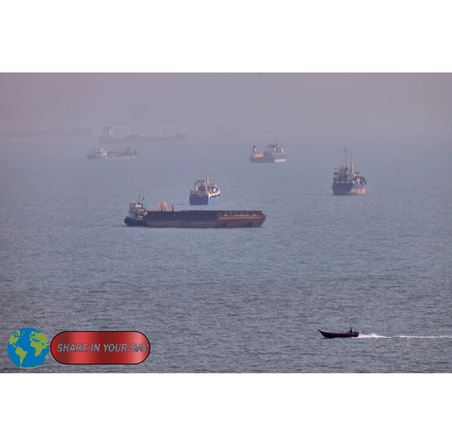
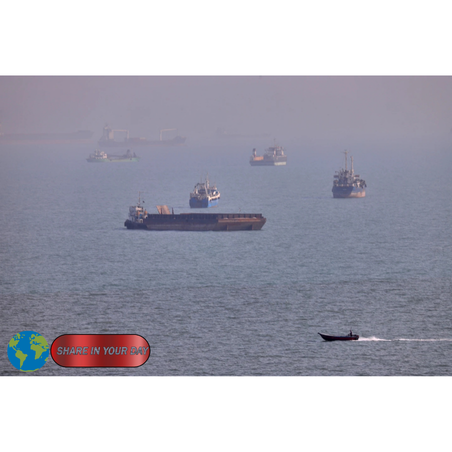
The waterway connects the Persian Gulf with the Gulf of Oman and the Arabian Sea. Under normal circumstances, it is one of the world’s most important energy corridors. Before the war, roughly 130 vessels crossed the strait each day, according to figures cited by The Associated Press. Last week, Trump said 24 vessels had passed through it, highlighting the enormous reduction in commercial traffic. AAP News
That difference matters.
Even though the U.S. president has repeatedly said the Strait of Hormuz is open, commercial traffic remains far below prewar levels. A multinational coalition overseen by the U.S. Navy described shipping activity as being at reduced levels. AAP News
Iran has used the situation to increase pressure on Washington.
Tehran has argued that it should have a major role in managing the waterway and has tied wider access to demands involving the U.S. military presence, sanctions, frozen Iranian assets and compensation for war damage. Those demands make the strait not merely a military issue but also a major bargaining tool in the broader conflict.
Oil Prices Rise After the Attack
The immediate financial reaction was another warning sign.
U.S. crude rose 1.8% to $84.94 per barrel following the attack, while Brent crude, the international benchmark, increased 1.9% to $89.79. AAP News
Energy markets are particularly sensitive to developments around the Strait of Hormuz because of the enormous volume of oil and liquefied natural gas that normally moves through the region.
A prolonged disruption could increase transportation and energy costs far beyond the Middle East. Higher crude prices can feed into gasoline, shipping, manufacturing and other consumer expenses.
The latest price increase does not necessarily mean another major global energy crisis is imminent. Markets can move rapidly in response to geopolitical developments, and alternative supply routes and strategic reserves can reduce some of the pressure.
However, the renewed fighting introduces another layer of uncertainty.
If attacks on shipping intensify, traders could begin pricing a larger risk premium into crude oil. That could push prices higher even before a significant physical shortage develops.
Iran Promises Retaliation
Iran’s response suggests that the latest U.S. action could trigger another cycle of escalation.
Iran’s Revolutionary Guard described the American attack as a serious mistake and warned that Washington would face military and economic consequences. Iranian officials also reported casualties among their forces and civilians, although independent verification of the precise number was not immediately available. AAP News
Iranian state television subsequently broadcast footage it said showed ballistic missiles being fired toward U.S. bases in Jordan.
Jordan’s military said eight missiles that entered its airspace were intercepted.
The incident demonstrates the geographic reach of the conflict. Fighting centered on Iran and the Strait of Hormuz can quickly involve neighboring states that host American military forces.
That creates a particularly difficult challenge for Gulf governments.
Countries such as Qatar, Saudi Arabia and the United Arab Emirates previously urged Washington to hold back from additional strikes. Their concern is understandable: an expanded conflict could threaten infrastructure, energy exports, shipping routes and civilian populations across the region.
The US Had Tried a Different Strategy
The latest attack also comes at a moment when Washington’s approach to Iran was changing.
After months of military operations, the Trump administration had increasingly emphasized economic pressure. The strategy included threats against countries and companies that continued doing business with Tehran. AAP News
There were also concerns about the impact of a prolonged war on U.S. military readiness.
The United States has used large quantities of weapons during the conflict, while American officials have had to consider how continued operations could affect stockpiles needed for other potential crises around the world.
That makes the decision to strike Iranian launchers especially significant.
The operation indicates that Washington remains willing to use military force when it believes American interests or commercial shipping are under immediate threat, even while pursuing broader economic pressure.
Three Major Risks From the New Escalation
1. Shipping Disruption Could Get Worse
The first major risk is commercial shipping.
Iran still possesses drones and missiles capable of threatening vessels traveling through the Strait of Hormuz. With relatively few oil and LNG carriers willing to risk the route, another wave of attacks could discourage shipping companies even further. AAP News
The consequences would extend beyond individual vessels.
Shipping companies could face higher insurance premiums, longer routes and increased security costs. Energy exporters could also be forced to rely more heavily on alternative routes where available.
The result could be higher prices for consumers around the world.
2. The Conflict Could Spread
The second risk is regional escalation.
Iran has already targeted American military bases and infrastructure in Gulf countries during the war. The latest missile launches toward Jordan show that the conflict can reach countries far beyond the immediate battlefield. AAP News
A larger exchange could pull additional governments into the fighting.
That possibility is particularly dangerous because several countries in the region maintain close security relationships with Washington while also trying to avoid becoming direct participants in the war.
3. Diplomacy Could Become Harder
The third risk is the loss of diplomatic momentum.
The United States and Iran have both faced pressure to find a way out of the conflict. Yet every new military exchange makes negotiations more politically difficult.
Iran’s demands over the Strait of Hormuz are particularly complicated because Tehran views control of the waterway as a strategic source of leverage.
Washington, meanwhile, has repeatedly emphasized freedom of navigation and the need to protect commercial shipping.
Those positions are difficult to reconcile.
What Happens Next?
The immediate question is whether Sunday’s strikes remain an isolated operation or become the beginning of another sustained campaign.
The U.S. military’s previous confirmed attack on Iran occurred July 29, when American forces announced a major wave of strikes against Revolutionary Guard targets, including coastal surveillance and defense facilities. On Aug. 1, Trump said he would hold off on additional attacks following requests from Qatar, Saudi Arabia and the United Arab Emirates. AAP News
That pause has now ended.
The next several days will therefore be closely watched for signs of further Iranian attacks, additional U.S. military operations or renewed diplomatic efforts.
Commercial shipping will be another key indicator.
If more vessels begin moving through the strait safely, markets may interpret that as evidence that the latest escalation can be contained. If shipping activity falls further, oil prices could face additional upward pressure.
A Critical Test for the Strait of Hormuz
The Strait of Hormuz has become much more than a shipping route in the current conflict.
For Iran, it provides strategic leverage against the United States and other regional powers. For Washington, protecting navigation through the waterway is closely tied to military credibility and global energy security.
For the international economy, meanwhile, the strait remains a vital commercial artery.
The latest US strikes Iran operation therefore carries consequences well beyond the immediate battlefield.
The United States says it acted to prevent Iranian forces from preparing an attack involving sea mines. Iran says the strike was a serious provocation and has promised retaliation. Meanwhile, commercial traffic remains far below its normal level and oil prices have already reacted to the renewed fighting. AAP News+1
The central question now is whether the latest exchange remains limited or becomes another stage of the wider war.
For energy markets, shipping companies and governments across the Middle East, that answer could prove critical.
As long as the Strait of Hormuz remains vulnerable, every missile launch, naval movement and attack on commercial shipping has the potential to affect not only the region but the global economy.
The immediate priority for international governments will be preventing another escalation while keeping commercial shipping lanes as safe and open as possible.
For now, however, the return of direct U.S.-Iran military action is a clear reminder that the conflict remains far from settled.