Besxar Orbital Semiconductor Factory: 5 Key Facts
The Besxar orbital semiconductor factory is turning one of the most unusual ideas in the chip industry into a real engineering project: manufacturing semiconductor materials in space. Instead of building another massive fabrication facility on Earth, the startup wants to use the natural vacuum of orbit to produce ultra-pure materials for advanced electronics.
Besxar has already begun testing its concept aboard SpaceX Falcon 9 missions. The company plans to use a series of short-duration orbital flights to develop its technology before eventually moving toward larger manufacturing systems. If the approach works at commercial scale, it could create an entirely new category of semiconductor manufacturing.
The idea comes at a time when demand for advanced semiconductor technology continues to grow. Artificial intelligence data centers, electric vehicles, robotics and other high-performance systems increasingly depend on sophisticated chips and materials.
Here are five key facts about Besxar’s ambitious plan.
1. The Besxar orbital semiconductor factory uses space as a manufacturing environment
Traditional semiconductor manufacturing requires extremely controlled conditions. Dust, particles and other contaminants can damage wafers where the surrounding environment naturally provides an ultra-high vacuum. Instead of spending enormous amounts of money creating and maintaining certain vacuum conditions on Earth, the company believes some manufacturing processes can take advantage of the environment that already exists in during production, which is why chipmakers invest heavily in specialized cleanrooms and sophisticated manufacturing infrastructure.
Besxar’s strategy is different.
The startup wants to take parts of semiconductor manufacturing into orbit, where the surrounding environment naturally provides an ultra-high vacuum. Instead of spending enormous amounts of money creating and maintaining certain vacuum conditions on Earth, the company believes some manufacturing processes can take advantage of the environment that already exists in space.
Founder and CEO Ashley Pilipiszyn has argued that manufacturing should take place where the underlying physics is advantageous rather than constantly trying to recreate those conditions on Earth.
That does not mean a complete semiconductor factory can simply be launched into orbit tomorrow. The technology still needs extensive testing, automation, thermal control, material handling and reliable transportation.
However, Besxar believes that the vacuum of space could eventually become a valuable industrial resource.
2. Besxar is using SpaceX Falcon 9 flights to test its technology
One of the biggest advantages for Besxar is the growing availability of reusable rockets.
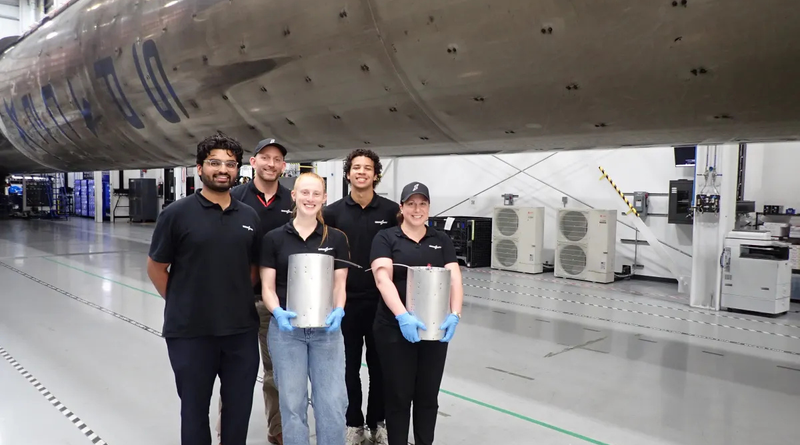
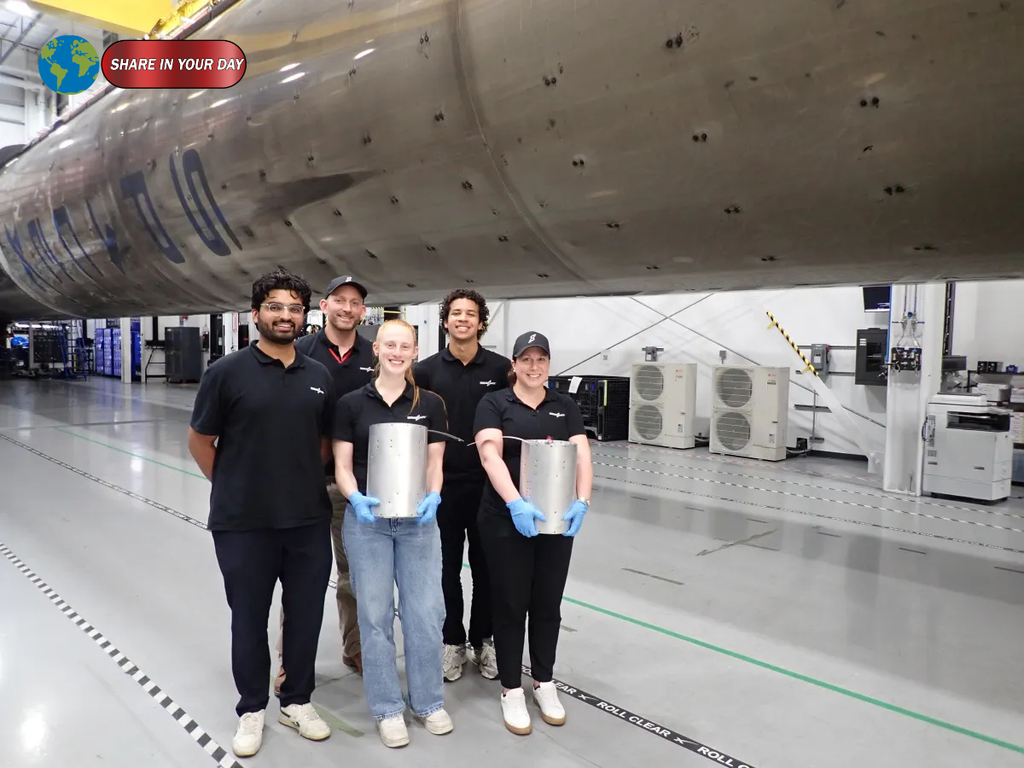
The company has signed an agreement with SpaceX covering 12 missions for its Fabship manufacturing systems. Besxar’s plan is to place its small manufacturing payloads on Falcon 9 first-stage boosters and recover them after the rocket returns to Earth.
This approach is important because Besxar does not need a giant orbital factory at the beginning.
Instead, it can gradually test individual manufacturing steps. The company can launch a relatively small system, evaluate the resulting materials, modify the hardware and fly again.
That creates an iterative development cycle similar to how many modern space startups develop hardware.
SpaceX’s reusable Falcon 9 system makes the strategy considerably more practical. SpaceX reported that Falcon 9 had completed approximately 620 orbital launches by March 31, 2026, while the company had demonstrated first-stage reuse up to 34 flights at that point. Snt
By August 2026, one Falcon 9 booster had reached a 37th mission, highlighting how frequently the platform can be reused.
For a company attempting to develop an orbital manufacturing business, that flight frequency could be critical.
3. The first Fabship tests have already produced promising results
Besxar’s first two experimental Fabships flew during a July Starlink mission.
The systems were designed to answer several fundamental questions. Could the hardware survive launch? Could it protect semiconductor samples from contamination? And could the samples be successfully exposed to the vacuum environment of space?
According to Besxar, the initial demonstration successfully achieved those objectives, although one of the canisters experienced a flight-data-system malfunction that the company is investigating.
The startup also reported that the flown samples contained less particulate contamination than its terrestrial comparison wafers.
That result is potentially significant, but it should be viewed as an early demonstration rather than proof that commercial semiconductor production in orbit is already viable.
Manufacturing a useful semiconductor material involves many more steps than simply exposing a wafer to vacuum.
Besxar’s next experiments are therefore expected to become progressively more complicated.
The company plans to move from heating wafers to depositing one material and eventually multiple materials. Each additional step will help determine whether the orbital manufacturing concept can move beyond laboratory demonstrations.
4. Besxar wants to build larger orbital fabs
The long-term vision goes well beyond small experimental canisters.
Besxar ultimately wants to develop larger orbital manufacturing facilities capable of producing substantial quantities of semiconductor materials. The company expects its technology to evolve over the next several years before larger systems can become practical.
The startup has raised almost $14 million, including a $9 million seed round led by Dauntless Ventures and Overture VC, according to TechCrunch. Another industry report put the seed financing at approximately $9.35 million.
The difference between those figures reflects the way funding totals can be reported at different stages, but both sources point to a multimillion-dollar financing effort supporting Besxar’s development.
The company’s eventual objective is to produce qualification samples that could be evaluated by semiconductor manufacturers.
If the technology proves commercially useful, Besxar expects production to expand from hundreds to potentially thousands of wafers per manufacturing system.
That scale would be difficult to achieve using today’s small orbital payloads.
Consequently, the economics of reusable launch vehicles systems. The company originally approached SpaceX about Starship several years ago, but eventually chose to begin with a Falcon 9-based payload strategy to reduce technological risk. will be just as important as the semiconductor technology itself.
5. Starship could become crucial to the business model
Falcon 9 provides Besxar with a useful test platform, but the company’s larger ambitions could depend on a new generation of heavy reusable rockets.
Besxar has identified SpaceX’s Starship as a potential vehicle for larger orbital manufacturing systems. The company originally approached SpaceX about Starship several years ago, but eventually chose to begin with a Falcon 9-based payload strategy to reduce technological risk.
The logic is straightforward.
A small Fabship can demonstrate whether individual manufacturing processes work. A much larger reusable spacecraft could eventually provide the volume and transportation economics required for commercial production.
That is why the progress of Starship and competing reusable launch vehicles could have implications far beyond satellite deployment.
Companies such as Rocket Lab and Stoke Space are also developing next-generation reusable launch systems. More frequent and lower-cost access to orbit could make space manufacturing increasingly attractive across several industries.
For Besxar, cheaper transportation would make it easier to send manufacturing hardware into orbit and, just as importantly, bring finished materials back to Earth.
Why manufacturing semiconductors in space could matter
The semiconductor industry already operates at an extraordinary level of complexity.
Modern chip production requires expensive factories, advanced lithography systems, highly controlled environments and enormous amounts of supporting infrastructure. Even small improvements in material quality can potentially have major consequences for performance and manufacturing yields.
Space offers several unusual physical characteristics.
The most obvious is vacuum. But the environment also provides microgravity and other conditions that can influence how materials behave during manufacturing.
Besxar is particularly interested in producing precursor materials and substrates rather than immediately attempting to manufacture complete commercial processors in orbit.
That distinction matters.
The and depositing materials onto them. As the process becomes more sophisticated, Besxar should gain a clearer picture of whether its concept can transition from an experimental demonstration to a commercially relevant manufacturing platform. early tests demonstrate why the idea is attracting attention. The company has moved beyond a purely theoretical proposal and begun testing its Fabship hardware in actual spaceflight company is not proposing to launch an entire conventional Earth-based chip factory into space. Instead, it is targeting specific manufacturing processes where the space environment may offer a measurable advantage.
According to Besxar, its potential markets include technologies associated with AI infrastructure, quantum computing, nuclear systems and defense applications.
The biggest challenge is still cost
The technology may be promising, but economics remain the biggest question.
A semiconductor manufacturing facility on Earth can operate continuously. An orbital facility must be launched, operated remotely and eventually return its products to customers.
That creates additional transportation requirements.
Besxar therefore needs launch costs to fall far enough that the improved material quality can justify the expense of going to space.
This is where reusable rockets become essential.
Falcon 9 has already demonstrated that rocket boosters can fly repeatedly. SpaceX’s increasingly high launch cadence is also creating a transportation network that is fundamentally different from the expendable-launch era.
But manufacturing hundreds or thousands of wafers would require much greater capacity than today’s demonstration missions.
The company will therefore be watching the development of Starship and other heavy reusable vehicles closely.
Besxar is entering a growing space-manufacturing race
Besxar is not the only company exploring semiconductor production in space.
Other companies, including Space Forge and United Semiconductors, are also investigating how orbital conditions could improve semiconductor materials and manufacturing.
The competition highlights a broader change in the commercial space industry.
For decades, space businesses primarily focused on communications, Earth observation, navigation and launch services. Now startups are exploring whether space itself can become a place where valuable products are manufactured.
That shift could eventually expand beyond semiconductors.
Pharmaceuticals, advanced materials, fiber optics and other products could potentially benefit from orbital manufacturing if companies can demonstrate a sufficient economic advantage.
The central question is no longer simply whether something can be manufactured in space.
It is whether it can be manufactured in space cheaply enough to sell on Earth.
What happens next?
Besxar expects to spend the next two years progressively testing and improving its technology.
The immediate goal is not to build a giant orbital semiconductor factory. Instead, the company needs to demonstrate individual manufacturing steps and prove that its Fabships can reliably operate, process materials and return useful products.
The next milestones will include heating wafers and depositing materials onto them. As the process becomes more sophisticated, Besxar should gain a clearer picture of whether its concept can transition from an experimental demonstration to a commercially relevant manufacturing platform.
If those tests succeed, larger Fabships could eventually follow.
That could make Besxar one of the companies helping establish an entirely new industrial supply chain beyond Earth.
The bigger picture
The Besxar orbital semiconductor factory represents a striking convergence of two industries that were once largely separate: spaceflight and semiconductor manufacturing.
Its strategy depends on several trends happening at the same time.
Reusable rockets must continue lowering the cost of reaching orbit. Spacecraft must become capable of performing increasingly sophisticated automated manufacturing operations. And the resulting materials must provide enough value to justify the additional transportation and operational costs.
None of those conditions is guaranteed.
Yet Besxar’s early tests demonstrate why the idea is attracting attention. The company has moved beyond a purely theoretical proposal and begun testing its Fabship hardware in actual spaceflight.
The next stage will be considerably harder.
Producing a clean sample in orbit is one thing. Repeatedly manufacturing valuable semiconductor materials at commercial scale, returning them to Earth and selling them at a competitive price is another.
If Besxar can solve that challenge, the result could be much bigger than a new semiconductor startup.
It could mark the beginning of an era in which some of the world’s most advanced electronic materials are no longer manufactured entirely on Earth.