Apple CEO Shock: John Ternus to Replace Tim Cook in 2026
Apple has officially confirmed one of the most significant leadership transitions in modern corporate history. Longtime CEO Tim Cook will step down in September 2026, ending a 15-year tenure that reshaped Apple into a $4 trillion technology giant. His successor will be John Ternus, Apple’s senior vice president of hardware engineering, marking a strategic shift toward a product-focused leadership era.
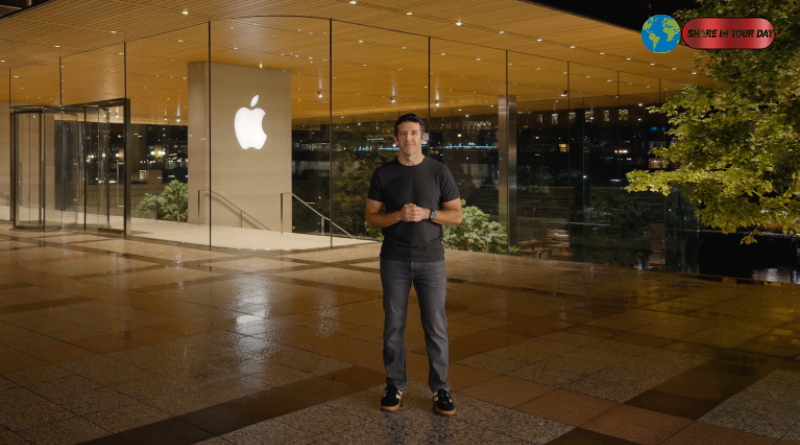
The announcement signals the end of an era defined by operational excellence and global expansion, and the beginning of a new chapter centered on hardware innovation, artificial intelligence, and next-generation devices.
According to Apple, the decision follows a “thoughtful, long-term succession planning process” approved unanimously by the company’s board of directors.
Who is John Ternus, Apple’s New CEO?
John Ternus is not a public-facing Silicon Valley celebrity like Steve Jobs or Tim Cook. Instead, he represents Apple’s deeply internal engineering culture.
He joined Apple in 2001 as part of the product design team and gradually rose through the ranks to become one of the company’s most influential hardware executives.
Over the past two decades, Ternus has played a central role in shaping nearly every major Apple product line, including:
- iPhone hardware development
- Mac lineup modernization
- iPad engineering evolution
- AirPods architecture
- Apple Silicon transition
By 2021, he had become senior vice president of hardware engineering, placing him in direct control of Apple’s entire hardware ecosystem.
Industry analysts often describe him as a “product engineer at heart,” someone deeply involved in design decisions rather than purely financial or operational management.
Why Apple Chose John Ternus
Apple’s decision reflects a deliberate strategic direction.
While Tim Cook is widely credited with transforming Apple into a financial powerhouse through supply chain mastery and services expansion, the company is now entering a new technological phase dominated by:
- Artificial intelligence integration
- Mixed reality computing
- Advanced silicon chip development
- Foldable and next-gen iPhone designs
Ternus is seen as uniquely positioned for this shift because of his engineering-first mindset.
According to Fortune reporting, Apple’s board believes he represents continuity without stagnation—someone capable of preserving Apple’s stability while accelerating product innovation.
Tim Cook’s Legacy at Apple
Tim Cook’s departure closes one of the most successful leadership eras in corporate history.
Since taking over in 2011 after Steve Jobs, Cook has:
- Increased Apple’s market value from hundreds of billions to around $4 trillion
- Expanded the services division into a massive revenue stream
- Launched Apple Watch and AirPods
- Strengthened global supply chain resilience
- Positioned Apple as one of the world’s most profitable companies
Despite these achievements, critics argue that Apple’s innovation pace has slowed in recent years, particularly in artificial intelligence and breakthrough product categories.
Even so, Cook remains widely respected for scaling Apple into a global financial leader while maintaining operational stability.
A Strategic Shift Toward Engineering Leadership
The transition from Cook to Ternus represents more than a personnel change—it reflects a philosophical shift.
Cook’s era emphasized:
- Operational efficiency
- Global expansion
- Services monetization
- Supply chain dominance
Ternus is expected to emphasize:
- Product engineering innovation
- Hardware-software integration
- AI-driven device evolution
- Next-generation computing platforms
This shift suggests Apple is preparing for a new competitive cycle where hardware innovation once again becomes central.
What Happens Next for Apple
Cook will not fully exit Apple. Instead, he will become executive chairman of the board, continuing to influence strategy and global relations.
Ternus will officially assume the CEO role on September 1, 2026, after a transition period where both leaders will work closely together.
Analysts expect Apple’s near-term focus to include:
- Enhanced AI integration across iOS and macOS
- Development of foldable iPhone models
- Expansion of Apple Silicon capabilities
- Refinement of Vision Pro ecosystem
The leadership transition comes at a critical time as Apple faces growing competition from Google, Microsoft, and Samsung in AI-driven technology.
Market Reaction and Industry Outlook
Initial market reactions were relatively calm, reflecting investor confidence in Apple’s structured succession planning.
However, analysts remain divided:
- Some view Ternus as a strong technical leader suited for Apple’s next phase
- Others question whether he has the global executive experience of Cook
Still, most agree that Apple’s leadership transition is among the most carefully managed in corporate history.
Conclusion
The appointment of John Ternus as Apple’s next CEO marks a defining moment for the company. As Tim Cook steps into a chairman role, Apple is betting on a deeply technical leader to guide it through the next era of computing.
Whether this shift leads to a new wave of innovation or a continuation of cautious evolution will depend on how Ternus balances Apple’s engineering DNA with the demands of an increasingly AI-driven tech landscape.