The FTC Amazon lawsuit has opened a new front in the U.S. government’s scrutiny of the world’s largest online retailer, with regulators accusing Amazon of secretly inflating the prices businesses paid to advertise on its platform.
The Federal Trade Commission, joined by attorneys general from 22 states, filed the lawsuit on August 31, 2026, in federal court in Washington state. The complaint alleges that Amazon used undisclosed pricing mechanisms in its advertising auctions to extract tens of billions of dollars from advertisers over more than seven years.
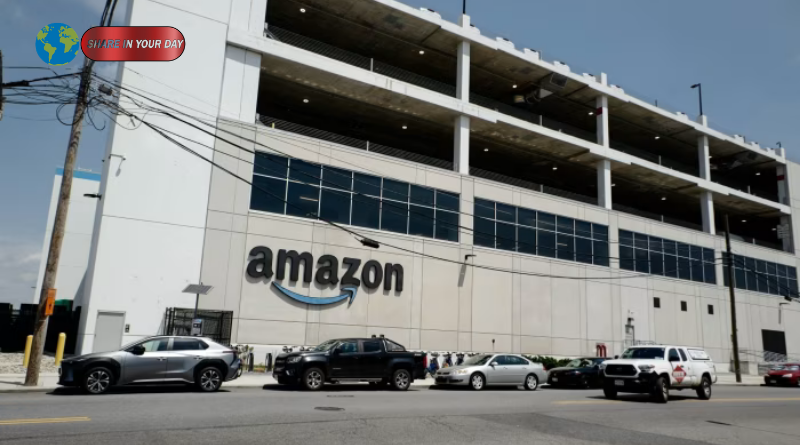
Amazon strongly rejects the allegations. The company says the FTC misunderstands how its advertising auctions operate and argues that advertisers have received increasingly better results from its focus on ad relevance.
The dispute could have major implications for Amazon’s rapidly expanding advertising business. It also raises broader questions about transparency in digital advertising, where complex automated auctions determine how much companies pay to reach potential customers.
Here are five key facts about the FTC Amazon lawsuit and why the case matters.
1. FTC Amazon lawsuit targets advertising prices
At the center of the case is Amazon’s system for selling advertising placements on its website and mobile app.
Amazon sells several types of advertising, including Sponsored Products, Sponsored Brands and Display Ads. Businesses bid for opportunities to have their products appear when shoppers search for relevant terms.
According to the FTC complaint, Amazon represented its advertising auctions as a form of generalized second-price auction. Under that model, advertisers generally expect to pay an amount determined by competing bids rather than simply paying their maximum bid.
The FTC alleges that Amazon secretly changed how the system worked.
According to the regulator, Amazon introduced an undisclosed surcharge that could push advertisers’ final prices above what would have resulted from genuine competition among advertisers. The FTC says Amazon internally referred to part of the mechanism as a “soft reserve price.”
The distinction is important because advertisers use auction rules when deciding how much to bid.
If businesses believe they will normally pay only slightly more than the next-highest competing bid, they may be willing to submit higher maximum bids. If they believe they could pay their full bid, they may behave differently.
The FTC alleges Amazon benefited from advertisers continuing to operate under their previous assumptions.
2. Regulators say the alleged scheme generated billions
The financial scale of the allegations is one of the most significant elements of the FTC Amazon lawsuit.
The FTC says Amazon’s alleged practices affected more than one million advertising customers and may have generated tens of billions of dollars in additional revenue. The agency also says more than 500,000 small and medium-sized businesses participated in the relevant advertising auctions.
Reuters reported that the FTC estimates advertisers may have lost at least $20 billion as a result of the alleged pricing practices.
The complaint further alleges that Amazon increased the impact of its pricing practices during major shopping periods.
High-volume events such as Prime Day and Black Friday are particularly important to advertisers because consumer traffic rises sharply. The FTC alleges that Amazon’s surcharges became substantially larger during some of these periods.
That allegation could become an important issue in court because advertising costs can have a direct effect on sellers’ margins.
For a small business operating on tight margins, even a modest increase in cost per click can affect profitability. For larger brands spending millions of dollars on advertising, the financial consequences can become much greater.
The case therefore extends beyond a technical disagreement over auction design. It could become a major test of how much transparency large digital platforms owe the businesses that depend on them.
3. The FTC says Amazon used hidden auction mechanisms
A major part of the FTC Amazon lawsuit involves what regulators describe as an “invented auction participant.”
The FTC alleges that Amazon used internal pricing mechanisms that effectively introduced additional bids into advertising auctions.
The regulator says these mechanisms were designed to raise the amount advertisers paid, even though the advertisers did not know that Amazon was influencing the auction in this way.
The FTC claims the practice gradually became more common.
For Sponsored Products advertisements, the complaint says the percentage of auctions in which advertisers paid their own bid increased from roughly 30% to 40% in 2021 to about 70% in 2022 and approximately 80% in 2024.
That allegation is significant because the FTC is not simply arguing that Amazon charged high advertising prices.
Instead, regulators are arguing that Amazon misrepresented the mechanism used to determine those prices and deliberately concealed changes from advertisers.
The legal distinction could matter considerably.
A company can generally design its own commercial pricing system. But regulators argue that deceptive representations about how a pricing system works can create legal problems, particularly when customers make purchasing decisions based on those representations.
The FTC alleges that Amazon understood advertisers might reduce their bids if they discovered the pricing changes.
According to the complaint, Amazon therefore had an economic incentive to keep the mechanism from becoming widely understood.
4. Amazon strongly denies the allegations
Amazon has pushed back aggressively against the FTC Amazon lawsuit.
In its official response, Amazon called the case misguided and said the FTC fundamentally misunderstands how advertisers operate. The company argues that advertisers make decisions based primarily on real-world performance rather than simply relying on descriptions of auction mechanics.
Amazon also disputes the suggestion that advertisers were financially harmed.
The company says the average cost per click for Sponsored Products search ads remained flat from 2019 through 2024 after adjusting for inflation. At the same time, Amazon says advertising performance improved.
Amazon further argues that its advertising system does not simply award placements to whoever submits the highest bid.
Instead, the company says its system considers relevance as well as bid value. Amazon says that in 2024, about 92% of selected Sponsored Products advertisements were not the highest bid.
The company also estimates that advertisers saved more than $8 billion between 2021 and 2025 because its system incorporated ad relevance rather than selecting advertisements based solely on bid amount.
That creates a central disagreement between the two sides.
The FTC focuses on whether Amazon secretly changed or supplemented its auction pricing mechanism while advertisers continued to believe they were participating in a competitive second-price system.
Amazon, meanwhile, argues that the FTC’s interpretation fails to account for the increasingly sophisticated relevance models used to determine which advertisements are displayed.
The court will ultimately have to assess the evidence behind both positions.
5. Consumer prices could become a major issue
Although the FTC Amazon lawsuit primarily concerns advertisers, the potential impact on consumers is also important.
The FTC argues that higher advertising costs can eventually affect shoppers because businesses selling products on Amazon may pass some of those additional expenses on through higher retail prices. The agency says the consequences could therefore extend beyond the companies buying advertisements.
Amazon disputes that argument.
In its response, the company says the FTC’s complaint does not provide evidence showing that consumers actually paid higher prices because of the advertising practices under investigation. Amazon also points to its own pricing and advertising-performance data in arguing that there was no consumer harm.
This disagreement could become important as the case progresses.
Digital advertising costs are not normally paid directly by shoppers. Instead, advertisers pay platforms to reach consumers. Businesses then determine how those costs affect product pricing, marketing budgets and profit margins.
That means establishing a direct link between advertising costs and consumer prices may require detailed economic evidence.
The case could consequently involve not only internal Amazon documents but also extensive analysis of advertiser behavior, bidding patterns, retail prices and advertising performance.
Why the FTC Amazon lawsuit matters to small businesses
The case could have an especially important impact on small and medium-sized businesses.
Amazon says its advertising tools allow businesses of different sizes to reach shoppers without the need to build their own large advertising networks. Sponsored Products, for example, can put a relatively unknown product in front of consumers already searching for related items.
That makes advertising particularly valuable to smaller sellers.
However, if the FTC’s allegations are proven, advertisers could argue that they were making bidding decisions based on an inaccurate understanding of Amazon’s auction system.
The FTC specifically says more than 500,000 small and medium-sized businesses participated in the auctions covered by its complaint.
For those businesses, advertising transparency can be more than a regulatory issue.
It can directly affect budgeting.
A company spending $10,000 a month on advertising may have a very different strategy if it expects to pay close to the second-highest competing bid compared with a system in which its maximum bid is more frequently used.
That is why the details of Amazon’s auction system could receive significant attention during litigation.
Amazon’s advertising business has become increasingly important
The FTC Amazon lawsuit also arrives as advertising becomes a major part of Amazon’s overall business.
Amazon’s advertising operation generated about $68 billion in revenue in 2025, according to reporting on the case. That makes the advertising business one of the company’s most important growth engines.
The growth reflects a broader shift in digital advertising.
For years, Google and Meta dominated the online advertising market. Amazon has increasingly become a major competitor because it has something many advertising platforms do not: direct access to shoppers who are already searching for products.
That gives Amazon valuable information about consumer purchase intent.
A person searching for a particular product on Amazon is often much closer to making a purchase than someone casually browsing a social-media feed.
As a result, advertisers can view Amazon’s platform as particularly valuable.
The greater the value of that advertising inventory, however, the greater the importance of transparent pricing.
The case is part of wider Big Tech scrutiny
The FTC Amazon lawsuit does not exist in isolation.
U.S. regulators have increasingly challenged the business practices of major technology companies, particularly where government officials believe companies have gained substantial market power.
The FTC previously sued Amazon in 2023, alleging that the company illegally maintained monopoly power through a range of practices involving sellers, competitors and consumers.
The new advertising case is different because it focuses specifically on how Amazon sells digital advertising.
It also arrives amid broader scrutiny of the digital advertising industry.
Google, Meta and other major technology companies have faced questions from regulators and lawmakers about advertising auctions, market concentration, data and platform power.
The Amazon case could therefore influence the broader regulatory debate over how automated advertising markets should operate.
What happens next in the FTC Amazon lawsuit?
The case was filed in the U.S. District Court for the Western District of Washington. The FTC’s case page lists the matter as pending.
The lawsuit seeks monetary relief and court orders addressing the practices described in the complaint. The legal process is likely to involve extensive discovery, expert testimony and analysis of Amazon’s advertising systems.
Amazon is expected to defend its auction practices and challenge the FTC’s interpretation of the evidence.
The outcome could take considerable time.
Importantly, the allegations in the lawsuit have not been proven in court. The FTC must establish its claims through the legal process, while Amazon will have the opportunity to present evidence supporting its position.
For advertisers, however, the case could already have practical consequences.
Businesses that rely heavily on Amazon advertising may pay closer attention to their campaign performance, bidding strategies and cost-per-click data. They may also become more interested in understanding exactly how automated ad auctions determine prices.
A potentially defining test for digital advertising transparency
The FTC Amazon lawsuit could ultimately become about more than Amazon.
At its core, the case raises a fundamental question: How transparent must a technology platform be when it controls an automated marketplace that determines what its customers pay?
The FTC says Amazon secretly changed the economics of its advertising auctions and benefited because advertisers did not know what was happening.
Amazon says that description is fundamentally wrong and argues that its system has improved advertising performance while keeping costs stable.
Those competing claims will now be tested in court.
For millions of businesses using digital advertising, the outcome could establish an important precedent. If regulators prevail, major advertising platforms could face greater pressure to explain how auction pricing works and disclose meaningful changes to those systems.
If Amazon prevails, the case could reinforce the industry’s ability to use increasingly sophisticated algorithms and relevance-based models without adopting the FTC’s interpretation of traditional auction mechanics.
Either way, the FTC Amazon lawsuit is likely to become an important case for the future of online advertising.
The stakes are substantial. Amazon’s advertising business is worth tens of billions of dollars, millions of businesses depend on its platform, and shoppers ultimately interact with the products and prices shaped by these advertising systems.
The central question now is whether Amazon’s advertising model represents legitimate technological evolution—or whether, as the FTC alleges, it crossed the line into deceptive pricing.