Android Earthquake Alerts Expand to More Than 200 Regions
Google is expanding Android earthquake alerts to more than 200 countries and regions worldwide, bringing its early-warning technology to a much larger global audience. Announced on October 15, 2026, the update also introduces plans for more detailed notifications designed to help people understand earthquake risks and respond more quickly when shaking is detected.
The expansion marks a significant step for Google’s earthquake detection system, which has been available since 2021. According to Google, the service has delivered more than one billion alerts, helping Android users receive potentially valuable warnings before an earthquake’s strongest shaking reaches them.
Previously available in 98 countries and regions, the system now covers more than 200. Google specifically highlighted Panama and Guatemala among the newly supported locations.
Alongside the broader availability, the company is preparing an update that will provide additional information through its existing earthquake notification system.
Android Earthquake Alerts Now Cover 200+ Regions
The expansion significantly increases the geographical reach of Android’s built-in earthquake warning technology.
Google developed the Android Earthquake Alerts System to use sensors in smartphones to identify signals associated with earthquake activity. By processing information from participating Android devices, the system can help detect earthquakes and distribute warnings to potentially affected users.
Traditional earthquake monitoring networks rely on specialized seismic equipment installed in specific locations. Google’s approach uses the widespread availability of Android smartphones to help identify seismic activity across supported regions.
The objective is to provide people with a few seconds of advance warning whenever possible. Even a short warning can give someone an opportunity to move away from windows, take cover under sturdy furniture or prepare for shaking.
However, earthquake alerts are not guaranteed to arrive before shaking begins. Detection speed, distance from the earthquake and other technical factors can affect when a notification reaches a device.
The expansion to more than 200 regions demonstrates Google’s effort to make this technology available to more people, although support and performance can vary by location.
Google Improves Android Earthquake Alerts With More Information
Beyond expanding availability, Google is preparing a more informative version of its earthquake notifications.
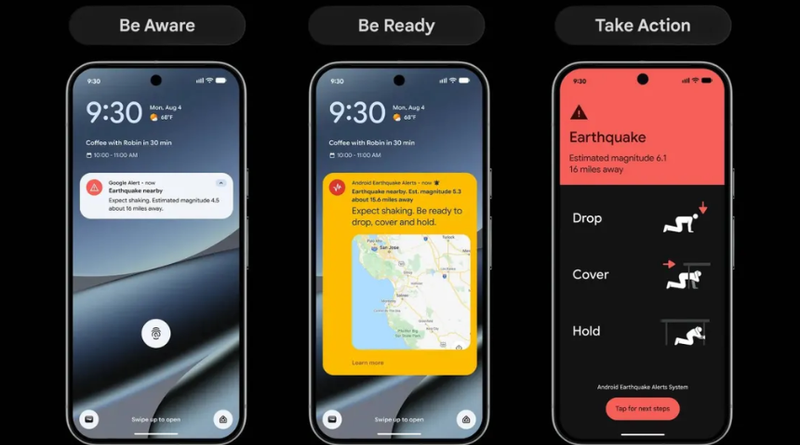
The upcoming changes focus on the system’s existing “Be Ready” alert, which warns users when stronger shaking is expected or detected nearby.
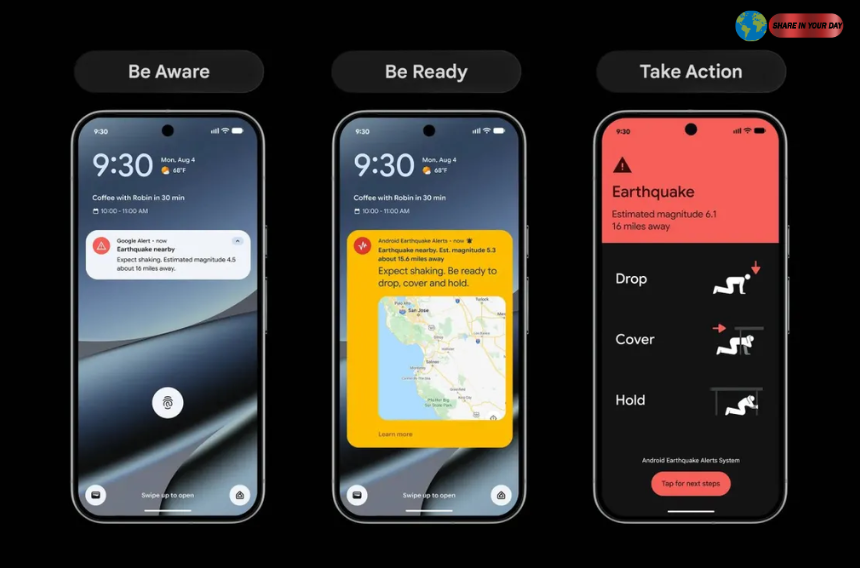
Google says the updated notification will eventually include a map showing the area where shaking has been detected, an estimated earthquake magnitude and guidance explaining what users can do to protect themselves.
The notification will also include an option to learn more about the earthquake as additional information becomes available.
These improvements are intended to help users understand the situation rather than simply receive a warning without context.
For example, knowing the approximate affected area can help someone understand why an alert appeared on their phone. An estimated magnitude may also provide additional information about the earthquake, although magnitude estimates can change as more data becomes available.
Google says the enhanced information will arrive in the coming months. The announcement does not mean every Android user will immediately see the redesigned notification.
Three Types of Android Earthquake Alerts Explained
Google’s system uses three alert levels designed to communicate different levels of earthquake risk.
1. Be Aware
The “Be Aware” notification is intended for situations involving estimated light shaking.
It informs users that an earthquake has been detected nearby. The notification provides an early indication of seismic activity without the more urgent presentation used for stronger shaking.
2. Be Ready
The “Be Ready” alert provides more detailed information when stronger shaking is expected.
This is the notification Google plans to improve with additional guidance, an affected-area map and an estimated earthquake magnitude.
The goal is to help users understand the potential situation and prepare to take appropriate safety measures.
3. Take Action
The “Take Action” alert is designed for moderate to heavy shaking and appears as a full-screen notification.
It provides immediate safety instructions intended to help people respond quickly during a potentially dangerous earthquake.
The different alert levels allow Android to communicate urgency more clearly, helping users distinguish between a notification about nearby seismic activity and a more serious warning requiring immediate attention.
How Android Phones Help Detect Earthquakes
One of the distinctive features of Google’s system is its use of smartphone sensors.
Android devices contain accelerometers that detect movement. These sensors are primarily used for everyday smartphone functions, but they can also help identify movement patterns associated with earthquake shaking.
When multiple devices detect similar movement signals, Google’s system can analyze the information to identify a possible earthquake and estimate its location and magnitude.
If an earthquake is detected in a supported area, the system can send alerts to Android devices that may be affected.
This approach allows Google to use the widespread distribution of smartphones to supplement conventional earthquake monitoring infrastructure.
Nevertheless, the technology has limitations. Not every earthquake will be detected, and estimates of magnitude and shaking intensity may contain errors. Users may receive alerts before, during or after shaking begins.
For that reason, smartphone warnings should complement, rather than replace, official emergency guidance and established earthquake safety procedures.
What Android Users Should Know About the Update
The expanded coverage is an important development, but users should not assume that every Android device will receive every alert in every location.
Availability depends on whether the system supports the user’s region and on the device’s settings and connectivity. Google’s earthquake alert settings allow users to check whether the feature is enabled on their phones.
On most supported Android devices, users can look under Settings, then Safety & emergency, and select Earthquake alerts. Some devices organize these options differently.
Keeping the feature enabled can help users receive available warnings when an earthquake threatens their area. Users should also maintain a basic emergency plan and learn recommended protective actions.
The redesigned “Be Ready” alert is expected to provide additional context over the coming months, but the exact timing of availability may vary.
Google’s Earthquake Warning System Continues to Expand
Google’s latest announcement highlights two priorities: making Android earthquake alerts available in more places and giving users more useful information when warnings appear.
Expanding coverage from 98 countries and regions to more than 200 broadens the potential reach of the technology. Meanwhile, the planned notification improvements could make alerts easier to understand during stressful situations.
The system’s reported total of more than one billion alerts since its 2021 launch underscores the scale at which Google’s smartphone-based approach operates.
Still, early-warning technology cannot eliminate earthquake risks or guarantee that everyone will receive advance notice. Its usefulness depends on detection accuracy, local availability and how much warning time remains before significant shaking arrives.
For Android users in supported regions, the expansion offers wider access to a tool designed to improve earthquake preparedness. As Google introduces more detailed alerts, the system could become a more informative part of its broader efforts to help people respond to natural disasters.
The central benefit remains straightforward: when an earthquake is detected, timely information and clear safety guidance may give people an opportunity to take protective action.