Pakistan School Collapse: 35 Dead in Peshawar Tragedy
The Pakistan school collapse in Peshawar has left families grieving after a school roof gave way during morning classes, killing at least 34 children and a female teacher. The disaster occurred on October 15, 2026, at the Al-Khair Education Center, a private school in the northwestern Pakistani city.
More than 45 children were reported injured, with some requiring urgent medical treatment. Rescue teams worked for several hours to search through the rubble and recover students trapped inside the damaged building.
Authorities have launched an investigation into the cause of the collapse. Police have described the building as structurally weak, while the school’s owner has been arrested as investigators examine the circumstances surrounding the tragedy.
The incident has renewed concerns about building safety and the conditions in which children receive their education, particularly in communities where families depend on affordable private schools.
Pakistan School Collapse: What Happened in Peshawar?
The collapse occurred at the Al-Khair Education Center in Peshawar, the capital of Khyber Pakhtunkhwa province. Students were attending morning lessons when a roof on an upper floor gave way, bringing parts of the structure down onto classrooms below.
According to local officials, approximately 110 students were attending classes in three classrooms when the incident occurred.
The sudden collapse caused panic among students, teachers, parents, and nearby residents. People rushed toward the school as emergency responders began searching for survivors.
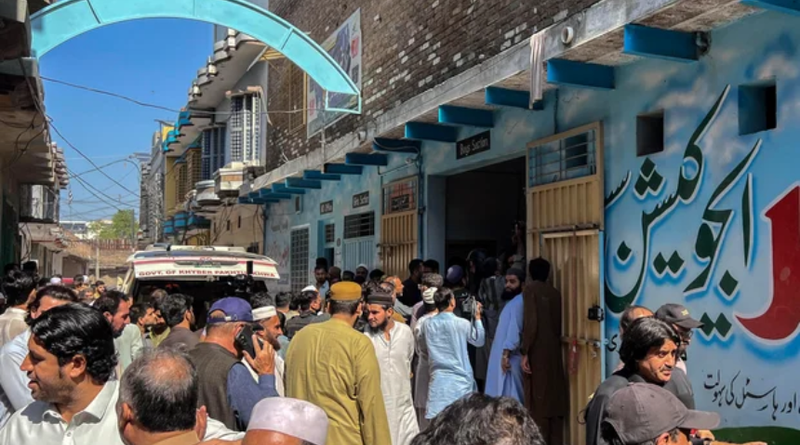
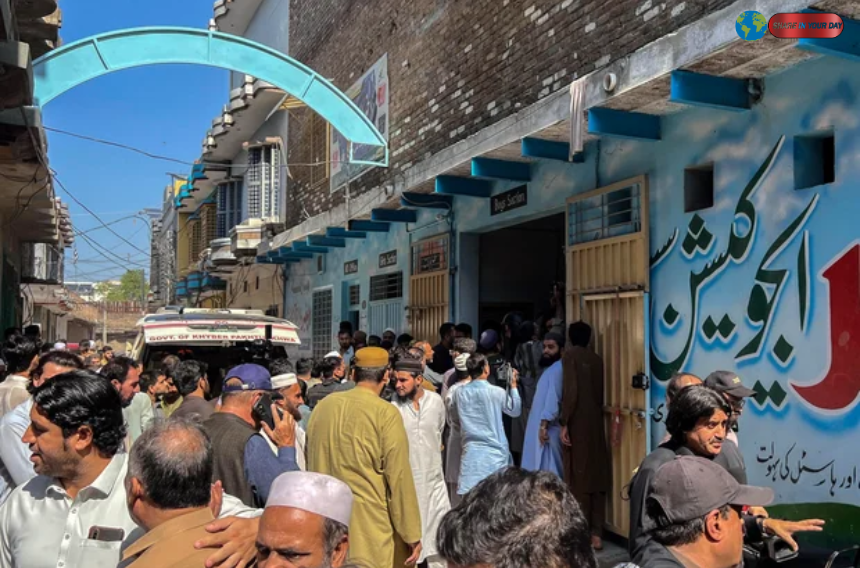
Witnesses described a chaotic scene, with families desperately trying to find their children while rescue workers removed debris and carried injured students to waiting ambulances.
The narrow streets surrounding the school also created difficulties for people trying to reach the scene. Residents joined emergency teams in efforts to help children escape the wreckage.
The disaster struck during the school day, making the consequences especially devastating for families who had sent their children to class expecting an ordinary morning.
Death Toll Rises as Children and Teacher Are Identified
At least 35 people, including 34 students and one female teacher, were reported killed in the disaster, according to updated reporting from the Associated Press and other news organizations.
Many of the children were between six and 12 years old, although some victims were older. Hospital officials reported that the dead included 12 girls and the teacher.
More than 45 children were injured, with some suffering serious injuries. Medical staff at Lady Reading Hospital treated victims as emergency services worked to account for those who had been inside the school.
The hospital declared an emergency to help manage the influx of casualties. Some injured students required intensive treatment, while others were discharged after receiving medical care.
The loss of so many young lives has devastated families and the surrounding community. Parents gathered near the school and hospitals, hoping for information about their children.
For families who lost loved ones, the tragedy has raised painful questions about how a school building could collapse while lessons were underway.
Rescue Teams Search Through the Rubble
Emergency responders worked for several hours to recover victims and ensure that no one remained trapped beneath the debris.
Nearly 100 rescuers participated in the operation, supported by local residents and relatives who helped clear material from the damaged building.
The rescue effort involved searching collapsed classrooms, moving heavy debris, and transporting injured children to medical facilities.
Officials later reported that everyone believed to be trapped beneath the rubble had been recovered. The operation demonstrated the importance of rapid emergency coordination when buildings collapse in crowded residential areas.
However, the recovery effort could not prevent the loss of dozens of lives.
The sight of injured children being carried away from the school underscored the severity of the incident and the challenges faced by emergency workers responding to a disaster involving so many young victims.
Authorities Investigate the Cause of the School Collapse
Police have described the school building as structurally weak. According to local officials, construction on the roof may have placed additional weight on an already vulnerable structure.
Investigators are examining whether poor construction, structural deficiencies, or other factors contributed to the collapse.
The school’s owner was arrested as authorities began investigating the circumstances surrounding the incident. The owner reportedly blamed recent rainfall for weakening the roof, but officials have not established a final cause.
A provincial government committee has also been formed to investigate the disaster.
The findings will be important in determining whether construction standards were followed and whether the building was suitable for use as a school.
Until the investigation is completed, the precise sequence of events that caused the roof to collapse remains uncertain.
School Safety Concerns Grow in Pakistan
The Peshawar disaster has renewed concerns about the safety of school buildings across Pakistan.
Many families rely on low-cost private schools because affordable educational options are limited in their communities. However, some schools operate in rented residential buildings that may not have been designed to accommodate large numbers of students.
Questions about building maintenance, construction quality, inspections, and enforcement of safety regulations have become increasingly important following the tragedy.
The Peshawar collapse also follows another fatal incident in Lahore in June, when a building collapse at a tutoring center reportedly killed at least 14 children.
Such incidents raise concerns about whether existing safety rules are being consistently enforced and whether schools receive adequate structural inspections.
UNICEF called for urgent action to ensure that public and private schools meet building safety standards and undergo regular inspections.
Ensuring that classrooms are structurally sound is essential to protecting children, teachers, and other school staff.
Government Responds as Families Demand Accountability
Pakistan’s national leadership expressed condolences to the families affected by the collapse.
President Asif Ali Zardari and Prime Minister Shehbaz Sharif conveyed their sorrow over the deaths and called attention to the suffering experienced by the affected community.
Meanwhile, grieving relatives demanded accountability and answers about the building’s condition.
For many families, the immediate priority has been mourning those who died and supporting children recovering from their injuries. At the same time, the investigation is expected to examine whether negligence or violations of safety requirements contributed to the disaster.
Any confirmed findings could influence future enforcement measures and efforts to improve school infrastructure.
What Happens Next After the Peshawar Tragedy?
The investigation into the Pakistan school collapse remains central to determining responsibility and preventing similar incidents.
Authorities must establish why the structure failed, whether warning signs were overlooked, and whether the school complied with applicable building requirements.
The disaster has also highlighted the importance of regular structural inspections, safe classroom conditions, and emergency preparedness.
For the families affected, however, the consequences extend far beyond official investigations. The loss of children and a teacher has left a community facing profound grief.
As Pakistan examines the circumstances surrounding the collapse, the tragedy serves as a stark reminder that access to education must be accompanied by adequate safety protections.
Every child should be able to attend school without being exposed to preventable structural hazards. Ensuring that buildings are safe, properly maintained, and regularly inspected will be essential to reducing the risk of similar tragedies in the future.