US Stocks Dip as Oil Surge Fuels Inflation Fears
US stocks ended lower on Monday as renewed military strikes in the Middle East pushed crude oil prices higher and revived concerns that inflation could remain elevated. The sell-off came as investors also weighed a more hawkish tone from Federal Reserve Chair Kevin Warsh, increasing speculation that the central bank could raise interest rates at its September meeting.
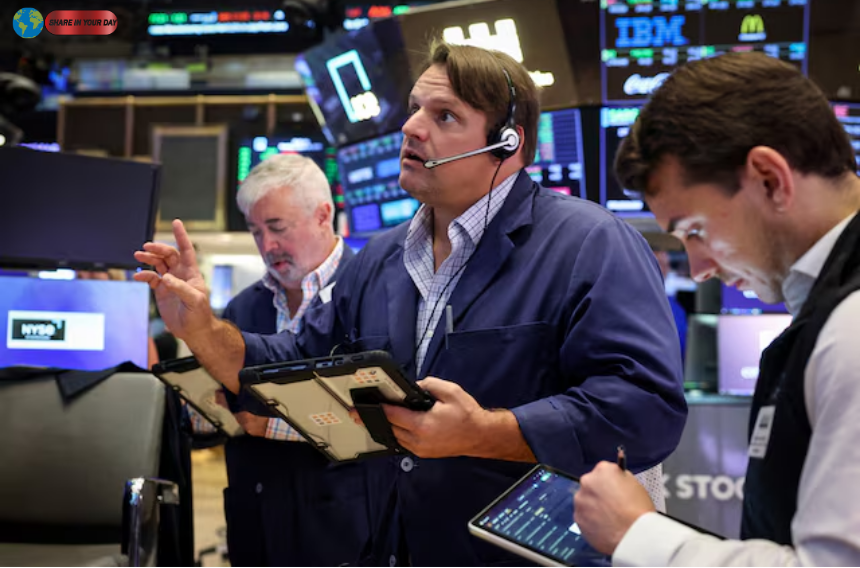
The Dow Jones Industrial Average fell 374.09 points, or 0.70%, to close at 53,185.90. The S&P 500 dropped 25.62 points, or 0.33%, to 7,686.14, while the Nasdaq Composite slipped 31.53 points, or 0.12%, to 26,370.89.
Despite Monday’s decline, all three major U.S. indexes finished August higher. The Nasdaq posted the strongest monthly percentage gain, helped by continued enthusiasm around artificial intelligence stocks. The Dow also recorded its fifth consecutive monthly advance.
The latest market move highlights a difficult combination for investors. Rising energy prices can push inflation higher, while higher inflation can make it harder for the Federal Reserve to reduce borrowing costs.
US Stocks Face New Pressure From Rising Oil
The immediate catalyst for the market weakness was a renewed increase in oil prices following another round of military exchanges involving the United States and Iran.
The conflict has already disrupted expectations for energy supplies in the region. The Strait of Hormuz has become a major source of concern because prolonged disruption could keep pressure on crude prices and increase costs across the global economy. Reuters reported that the renewed hostilities and the related closure of the strait were fueling concerns that higher energy prices could spread into broader inflation.
Oil is closely watched by investors because changes in energy prices affect much more than gasoline costs.
Higher crude prices can increase transportation expenses, raise production costs and pressure companies that depend heavily on fuel. Those increases can eventually reach consumers through higher prices for goods and services.
That creates a particularly difficult environment for central banks.
If inflation remains stubbornly high, policymakers may have less room to cut interest rates. If rates stay high or rise further, companies and consumers face higher financing costs.
Inflation Fears Return to Wall Street
The latest decline shows how quickly geopolitical developments can become a financial-market issue.
Investors had already been evaluating whether inflation was moving toward levels that would allow the Federal Reserve to maintain or eventually loosen monetary policy. The renewed rise in oil prices has complicated that outlook.
Reuters reported that financial markets were pricing in more than a 65% probability of a 25-basis-point rate increase at the Fed’s September meeting.
That represents a significant shift in the market narrative.
Instead of focusing primarily on the possibility of lower rates, investors are now considering whether the central bank may need to tighten policy again to prevent energy-driven inflation from becoming more persistent.
For stock investors, that possibility matters because interest rates influence how financial markets value companies.
When Treasury yields rise, the future earnings of growth companies can become less attractive relative to safer fixed-income investments. High-growth technology stocks can be especially sensitive because much of their valuation depends on profits expected years into the future.
Fed Chair Kevin Warsh Changes the Rate Debate
Federal Reserve Chair Kevin Warsh’s comments at the Jackson Hole Symposium added another layer of uncertainty.
His hawkish tone encouraged investors to reconsider the path of monetary policy. Reuters reported that investors were processing Warsh’s remarks alongside the renewed Middle East tensions and higher energy prices.
The combination is important.
A geopolitical shock that raises oil prices can create inflationary pressure at precisely the time when the central bank is trying to determine whether price growth is cooling sufficiently.
That leaves policymakers with a difficult choice.
If the Fed raises rates to fight inflation, it could place additional pressure on economic growth and financial markets. If it keeps rates unchanged while inflation expectations rise, investors could worry that policymakers are falling behind the problem.
Markets therefore have an unusually strong focus on incoming economic data and communications from Federal Reserve officials.
Treasury Yields Move Higher
The pressure was not limited to equities.
Rising oil prices and expectations for tighter monetary policy also pushed benchmark U.S. Treasury yields higher, according to Reuters.
Bond yields are a crucial part of the market equation because they influence borrowing costs throughout the economy.
Higher Treasury yields can translate into more expensive mortgages, corporate borrowing and other forms of credit. They can also change the relative attractiveness of stocks compared with bonds.
For investors, the combination of falling stock prices and rising yields can be particularly uncomfortable.
The market is effectively being forced to price in the possibility that inflation could remain elevated for longer than previously expected.
The Dow, S&P 500 and Nasdaq All Fall
The three major indexes all finished Monday’s session lower, although the losses were relatively modest.
The Dow suffered the largest decline, falling 0.70%. The S&P 500 lost 0.33%, while the Nasdaq declined just 0.12%.
The relatively small Nasdaq decline was notable because technology and growth stocks can be particularly sensitive to changes in interest-rate expectations.
The continued resilience of technology shares also reflects the strength of the artificial intelligence investment theme.
Reuters noted that the AI trade remained active during August even as technology stocks experienced periods of weakness. The Nasdaq ultimately recorded the largest percentage gain among the major U.S. indexes for the month.
That suggests investors have not abandoned the long-term growth story surrounding AI.
However, the sector remains vulnerable if bond yields rise significantly or if monetary policy becomes more restrictive.
Energy Stocks Benefit From Higher Oil Prices
Not every part of the market moved lower.
Energy stocks were the strongest-performing sector in the S&P 500 as higher crude prices boosted expectations for oil and gas companies.
Halliburton and Valero Energy each gained 1.9%, according to Reuters.
The performance illustrates the different effects of higher oil prices across the stock market.
For energy producers and certain service companies, higher crude prices can increase revenue opportunities and improve profitability expectations.
For airlines, transportation companies and other fuel-intensive businesses, the effect can be the opposite.
This divergence can become increasingly important if oil prices remain elevated for an extended period.
Utilities Struggle as PG&E Plunges
Utilities were among the weaker areas of the S&P 500 on Monday.
Reuters reported that the sector was pressured by developments involving a California Senate bill and concerns about grid operators’ exposure to wildfire liabilities.
PG&E suffered an especially sharp decline, plunging 20.1%. Reuters described the move as the company’s largest percentage loss in more than six years.
The sharp drop demonstrates that Monday’s market weakness was not exclusively about oil or Federal Reserve policy.
Individual stocks continued to respond to company-specific and regulatory developments, creating significant differences between sectors and individual companies.
GameStop Shares Rise Despite Market Weakness
GameStop moved in the opposite direction from the broader market.
The company’s shares gained 2.9% after it said it would use cash on hand to fund about 27% of a previously announced $1.4 billion debt exchange instead of issuing additional shares.
The decision would prevent further stock dilution associated with the transaction.
The move provided a reminder that company-specific news can sometimes overpower broader market trends.
Even when major indexes are falling because of macroeconomic concerns, individual companies can rise if investors respond positively to earnings, financing decisions, restructuring plans or other corporate developments.
Market Breadth Shows Broader Caution
The market’s internal numbers also showed that Monday’s weakness was broader than the headline index moves suggested.
On the New York Stock Exchange, declining issues outnumbered advancing stocks by 1.95 to 1. There were 112 new highs and 234 new lows.
On the Nasdaq, 1,859 stocks rose while 2,931 declined, producing a 1.58-to-1 ratio of decliners to advancers.
The S&P 500 recorded five new 52-week highs and 11 new lows. The Nasdaq recorded 40 new highs and 146 new lows.
These figures indicate that investors were becoming more selective even though the major indexes remained relatively close to their recent highs.
Why the September Fed Meeting Matters
The September Federal Reserve meeting has now become a central focus for investors.
Markets were pricing in more than a 65% chance of a 25-basis-point rate hike, according to the CME FedWatch tool cited by Reuters.
That expectation means upcoming economic data could have an unusually large impact on financial markets.
If inflation data remains strong, traders could increase expectations for tighter policy. If inflation cools and economic growth weakens, expectations could shift in the opposite direction.
The labor market will also matter.
Investors will be watching employment data for signs that higher borrowing costs and elevated prices are beginning to weaken economic activity. A significant slowdown could complicate the Fed’s decision because policymakers must balance price stability against employment and growth.
Middle East Conflict Remains a Major Market Risk
The Middle East remains one of the biggest variables facing global financial markets.
Iranian President Masoud Pezeshkian said Tehran was still seeking a negotiated solution, according to Reuters, even as renewed airstrike exchanges increased tensions.
For investors, the crucial issue is whether the conflict continues to disrupt energy transportation.
A sustained disruption could keep oil prices elevated and increase inflationary pressure worldwide. A reduction in tensions, by contrast, could ease some of the risk premium built into crude prices.
That makes developments around the Strait of Hormuz particularly important for markets.
What Investors Are Watching Next
The market’s attention is now shifting toward several major factors.
First is the direction of oil prices. A continued rise could increase concerns about inflation and monetary policy.
Second is the Federal Reserve’s September decision. Investors will closely examine speeches, inflation figures and other economic data for clues about whether policymakers are preparing to raise rates.
Third is the health of the U.S. economy.
Investors need to determine whether higher energy costs are simply a temporary shock or the beginning of a broader inflationary cycle.
Fourth is the performance of the technology sector.
AI-related stocks helped drive August’s gains, but higher Treasury yields could challenge valuations if investors become more cautious about long-term growth expectations.
The Bigger Picture for US Stocks
The latest decline does not necessarily signal the beginning of a major stock-market correction.
The broader picture remains more complicated.
All three major U.S. indexes finished August with monthly gains despite Monday’s decline. The Nasdaq led the monthly advance, while the Dow recorded its fifth consecutive monthly gain.
That resilience shows that investors continue to have confidence in parts of the U.S. economy and corporate earnings outlook.
However, the market is entering September with several significant risks.
Oil prices are rising. Inflation remains a concern. Treasury yields are elevated. The Federal Reserve’s policy outlook has become more hawkish. Meanwhile, geopolitical tensions remain unpredictable.
Together, those factors could produce more volatility in the weeks ahead.
Bottom Line
US stocks closed lower on August 31 as renewed Middle East hostilities pushed oil prices higher and revived concerns about inflation and interest rates.
The Dow fell 0.70%, the S&P 500 dropped 0.33% and the Nasdaq declined 0.12%.
Yet the monthly picture remained positive. All three major indexes finished August higher, with the Nasdaq benefiting from continued AI enthusiasm and the Dow recording its fifth straight monthly gain.
The bigger concern now is what happens next.
If higher oil prices persist, inflation could become more difficult for the Federal Reserve to control. That could increase the likelihood of additional rate hikes and put pressure on stock valuations.
For investors, the next several weeks will therefore be shaped by three interconnected forces: oil prices, Federal Reserve policy and geopolitical risk.
The market has already begun adjusting to the possibility of higher interest rates. Whether that adjustment continues will depend heavily on how the Middle East conflict develops and whether incoming economic data confirms or challenges the Fed’s more hawkish outlook.