Trump Says Russia Won’t Attack NATO: 5 Key Risks
U.S. President Donald Trump says Russia won’t attack NATO, dismissing concerns that Vladimir Putin could order a military operation against a member of the Western alliance. The comments came as European governments remain focused on the possibility that Moscow could test NATO’s unity through a limited military action, cyberattack or other form of provocation.
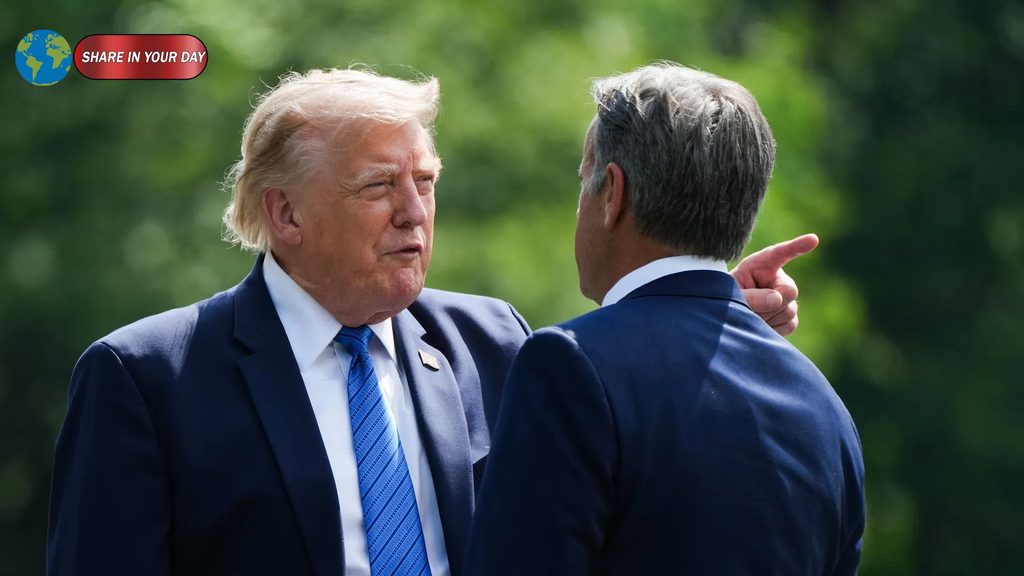
Trump made the remarks during a phone interview with Axios on August 27, saying he was not concerned that Russia would attack NATO territory. He also rejected the idea that CIA Director John Ratcliffe had traveled to Moscow specifically to deliver a warning to Russian officials.
The president’s assessment offers reassurance on one level. However, it also highlights a growing debate inside the Western alliance over Russia’s intentions, NATO’s deterrence strategy and the future of the war in Ukraine.
Reuters separately reported that Trump told reporters at the White House that Putin would not attack NATO territory. The president also described Ratcliffe’s meeting with Russian intelligence officials as routine.
The issue matters because NATO’s security commitment rests heavily on deterrence. If Russia believes an attack against a NATO member would trigger a unified response, the risk of such an attack should be lower.
But the challenge is that a direct invasion is not the only scenario worrying European officials.
Russia Won’t Attack NATO, Trump Says
Trump’s message was unusually direct.
Asked about the possibility of Russia attacking a NATO country, the president expressed confidence that Putin would not take such a step. Axios reported that Trump said he was not worried about a Russian attack on NATO and rejected suggestions that Ratcliffe’s Moscow trip was designed to issue a specific warning.
The Kremlin has also pushed back against reports that Russia might be preparing an attack against NATO. Russian officials have characterized such reports as exaggerated and denied that Moscow is planning military action against alliance members.
The public statements from Washington and Moscow therefore point in the same direction: Neither side is acknowledging preparations for a direct Russia-NATO war.
Yet intelligence assessments and European concerns remain important because governments often prepare for scenarios they do not publicly discuss.
That creates a complicated strategic picture.
Why NATO Is Still Worried About Russia
The central concern is not necessarily that Putin would launch a massive conventional invasion of NATO territory.
Instead, European officials have increasingly focused on the possibility of gray-zone operations.
These could include cyberattacks, sabotage, disinformation campaigns, attacks on critical infrastructure or limited border incidents. Such actions can create uncertainty about who is responsible and whether they qualify as an armed attack under NATO’s collective-defense framework.
Reuters reported that European and U.S. intelligence officials have monitored Russian sabotage and other gray-zone activity across Europe. These activities are generally viewed as attempts to weaken Western unity and influence the willingness of NATO members to support Ukraine.
That distinction is crucial.
A full-scale Russian invasion of a NATO member would represent an enormous escalation. A cyberattack or ambiguous border incident could be designed to remain below that threshold.
Moscow could potentially test how far NATO members are willing to go without creating an immediate confrontation between Russia and the United States.
For NATO, that is a difficult problem because deterrence depends not only on military power but also on credibility.
NATO Article 5 Remains the Biggest Deterrent
The foundation of NATO’s collective defense is Article 5.
Under Article 5 of the North Atlantic Treaty, an armed attack against one NATO member is considered an attack against all. Each member agrees to assist the attacked ally with whatever action it considers necessary to restore and maintain security. That assistance can include military force, but Article 5 does not automatically prescribe a specific military response.
Article 5 has been invoked only once in NATO history, following the September 11, 2001, terrorist attacks against the United States.
Its importance today goes beyond the possibility of an actual invocation.
The real power of Article 5 is deterrence.
A potential aggressor must assume that attacking one NATO country could result in a much broader confrontation involving the alliance’s combined military and political capabilities.
NATO leaders reaffirmed that commitment at the 2026 Ankara summit, stating that an attack on one is an attack on all and emphasizing the alliance’s commitment to collective defense. The summit declaration also identified Russia as a long-term threat to Euro-Atlantic security.
That creates a strategic contradiction.
Trump says Russia won’t attack NATO, while NATO continues to strengthen its defenses against the possibility of Russian aggression.
Those positions are not necessarily incompatible. Deterrence is intended to prevent an attack before it happens.
The John Ratcliffe Moscow Meeting Adds Another Layer
The controversy surrounding CIA Director John Ratcliffe’s visit to Moscow has added to the uncertainty.
Russia’s foreign intelligence chief, Sergei Naryshkin, confirmed that he met with Ratcliffe in Moscow. Both sides have described the meeting as a working-level or relatively routine intelligence discussion, but its timing attracted significant attention.
The meeting took place against the backdrop of the continuing Ukraine war and growing concern about Russia’s future intentions toward NATO.
Some U.S. media reports said Ratcliffe warned Russian officials against attacking a NATO member. However, U.S. and Russian officials have not publicly confirmed that such a warning was delivered. Reuters reported that Naryshkin confirmed the meeting but did not disclose its substance.
Trump has sought to play down the significance of the visit.
He said Ratcliffe meets his Russian counterpart periodically and rejected the suggestion that the CIA director had been sent to Moscow with a special message.
That does not necessarily mean the meeting was unimportant.
Intelligence channels can remain open even when political relations are deeply strained. Such contacts can be used to reduce misunderstandings, exchange warnings or communicate positions that governments do not want to discuss publicly.
Ukraine Remains at the Center of the Problem
The debate over NATO cannot be separated from the war in Ukraine.
Russia’s full-scale invasion of Ukraine has fundamentally changed Europe’s security environment. NATO itself says the war represents the gravest threat to Euro-Atlantic security in decades.
Ukraine is not a NATO member, which means the alliance’s Article 5 guarantee does not automatically apply to Ukrainian territory.
However, NATO members have provided extensive political, military and economic support to Kyiv.
That support has created another strategic calculation for Moscow.
Russia may seek to pressure Ukraine while simultaneously testing the limits of Western support. At the same time, European governments must consider whether continued assistance to Kyiv could increase the possibility of confrontation with Moscow.
The result is a delicate balance.
Western governments want to help Ukraine defend itself without creating a direct Russia-NATO war. Russia, meanwhile, has repeatedly criticized Western military assistance to Ukraine and accused European governments of pursuing hostile policies.
The longer the war continues, the more difficult that balance becomes.
Five Risks Behind the Russia-NATO Debate
1. A Limited Provocation Could Be Hard to Interpret
A major invasion would be relatively straightforward to identify.
A small border incident would be much more complicated.
If an unmanned aircraft enters NATO airspace, infrastructure is sabotaged or a cyberattack causes serious disruption, alliance members must determine what happened and how to respond.
The ambiguity itself can become a strategic weapon.
2. NATO Unity Could Be Tested
Russia’s potential objective would not necessarily be to defeat NATO militarily.
It could instead attempt to expose divisions between members.
If some governments demand a strong response while others urge restraint, Moscow could conclude that NATO’s political unity is weaker than its military capabilities suggest.
That is why European governments pay close attention to American statements about NATO.
The United States remains the alliance’s most powerful military member, and Washington’s commitment is central to NATO’s deterrence.
3. The U.S. Military Presence in Europe Is Under Review
Another important development is Washington’s review of its military posture in Europe.
Reuters reported on August 27 that the Pentagon is preparing options for U.S. troop deployments in Europe, with a review expected to produce recommendations later in 2026. The process has raised questions among NATO allies about whether Washington could eventually reduce parts of its military presence on the continent.
That makes Trump’s reassurance particularly significant.
If Russia won’t attack NATO, the United States may have more room to demand that European allies take greater responsibility for their own defense.
But European governments must also prepare for the possibility that U.S. force levels could change.
4. European Defense Spending Is Rising
NATO members have responded to the changing security environment by increasing defense spending.
At the 2026 Ankara summit, NATO reaffirmed its collective-defense commitment and highlighted new investments in military capabilities and defense production.
European governments are increasingly investing in air defense, ammunition production, drones, long-range weapons and other military capabilities.
This suggests that even if leaders believe a direct Russian attack is unlikely, they are preparing for a more dangerous European security environment.
5. The Ukraine War Could Remain Unresolved
The biggest long-term uncertainty is the war itself.
Trump has repeatedly expressed a desire to end the conflict, while Russia and Ukraine remain divided over fundamental issues, including territory, security guarantees and the future political settlement.
As long as the war continues, the possibility of escalation remains.
A ceasefire could reduce immediate risks. A broader settlement could fundamentally reshape European security.
But if diplomacy fails and fighting intensifies, pressure on NATO governments could increase again.
What Trump’s Statement Really Means
The statement that Russia won’t attack NATO should not be interpreted as proof that the risk has disappeared.
It is better understood as Trump’s current assessment of Putin’s intentions.
That distinction matters.
A president can believe that an adversary will not attack while simultaneously maintaining military capabilities designed to prevent that attack.
In fact, deterrence works precisely because governments prepare for threats they hope never materialize.
Trump’s comments also reflect his broader approach to NATO. His administration has pushed European allies to assume more responsibility for continental defense while emphasizing higher defense spending.
The White House says the administration has secured a NATO commitment involving increased defense investment and describes stronger allied capabilities as part of its national-security strategy.
For European governments, however, the message is more complicated.
They must interpret Trump’s confidence alongside Russia’s continuing war in Ukraine, reported gray-zone activity and uncertainty surrounding the future U.S. military presence in Europe.
What Happens Next?
The most important developments to watch will be diplomatic rather than rhetorical.
First, attention will remain on the war in Ukraine and whether Washington can help push Russia and Ukraine toward a durable settlement.
Second, intelligence agencies will continue monitoring Russian military movements and potential hybrid operations across Europe.
Third, NATO allies will have to decide how much military capability they need if the United States expects Europe to shoulder a larger share of the alliance’s defense.
Finally, the relationship between Washington and Moscow will remain critical.
The Ratcliffe-Naryshkin meeting demonstrates that intelligence channels remain open despite the broader confrontation. If those contacts help prevent misunderstandings, they could become an important part of crisis management.
If relations deteriorate, however, the same channels could become increasingly important for communicating warnings.
The Bottom Line
Trump’s declaration that Russia won’t attack NATO provides a clear public assessment from the U.S. president, but it does not eliminate the strategic concerns surrounding Russia, Ukraine and European security.
NATO continues to regard collective defense as its central mission. Its members are strengthening military capabilities, while European governments remain alert to the possibility of Russian provocations that fall below the threshold of conventional war.
The most serious danger may therefore not be an immediate Russian invasion of NATO territory.
It may be a gradual escalation involving cyberattacks, sabotage, border incidents, drone incursions or other ambiguous actions that force NATO to decide how far it is willing to go.
For now, Trump believes Putin will not cross the line.
The challenge for NATO is making sure Moscow has no reason to believe that line can be tested without consequences.
Source: Axios, Reuters and official NATO materials. The article above is an original news analysis based on those reports and does not reproduce the source article.