Apple Is Reportedly Developing an iPhone Game Controller
Apple could be preparing to make a bigger push into mobile gaming with a dedicated game controller designed specifically for the iPhone.
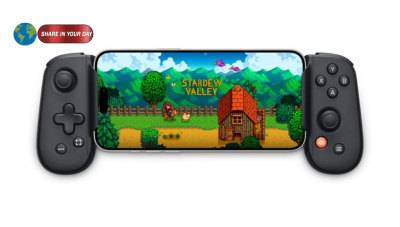
References discovered in recent Apple software suggest that the company is working on two game controller devices. While Apple has not officially announced the products, the discovery adds weight to earlier reports that the company has been exploring dedicated gaming hardware for more than a year.
The idea makes sense as Apple continues to position the iPhone as a serious gaming platform. Modern iPhones have increasingly powerful processors and graphics capabilities, while the App Store has become home to games that once would have been associated primarily with consoles and PCs.
Apple appears to be working on two controllers
The latest clues reportedly come from code found in macOS 26.7. The software references two Apple-developed controller devices carrying the model identifiers T6502 and T1057.
The code does not reveal exactly what the finished products will look like, but it provides some interesting details about their capabilities.
Both controllers appear to be designed as traditional gamepads, with physical controls that would make them more suitable for demanding games than touchscreen controls alone. References point toward features such as a D-pad, thumbsticks and haptic feedback.
One of the controllers may also include motion sensors, potentially allowing players to control games by moving or tilting the controller.
That would give the device functionality similar to controllers already available for major gaming platforms.
Haptic feedback could be a major feature
Haptic feedback is another important detail found in the software references.
For mobile gaming, haptics could make an Apple-designed controller feel considerably more integrated with the iPhone. Instead of simply pressing buttons and seeing an action happen on screen, players could potentially receive physical feedback when firing a weapon, hitting an object, driving over rough terrain or performing another in-game action.
Apple already uses sophisticated haptic technology across its devices, so bringing that experience to a dedicated gamepad would not be particularly surprising.
The bigger question is how deeply the controller would integrate with iOS.
Apple could potentially build the hardware around its existing gaming frameworks, giving developers an easier way to support the accessory across a wide range of titles.
Beats could be the brand behind the controller
Perhaps the most interesting part of the report is that Apple may not sell the controller under the Apple name.
According to Bloomberg’s Mark Gurman, the company is considering releasing the gaming accessory through Beats.
That strategy would be unusual for a major Apple hardware product, but it could make sense for gaming.
Beats already operates as a separate consumer-facing brand within Apple’s wider ecosystem. The company is particularly well known for headphones and audio products, but its branding is also positioned differently from Apple’s premium hardware lineup.
A Beats-branded controller could therefore give Apple more flexibility with pricing, design and marketing.
It could also help the company enter the gaming accessory market without positioning the product as a direct competitor to Apple’s core hardware portfolio.
Why an iPhone controller makes sense now
Apple’s interest in gaming comes at an interesting time.
The iPhone has become powerful enough to run demanding console-quality games, while Apple continues to improve the tools available to developers. The company has also been promoting better gaming experiences through its software platforms and developer technologies.
Touchscreen controls remain convenient, but they are not ideal for every type of game.
A physical controller can provide more precise movement, faster reactions and a familiar control layout. That is particularly important for action games, racing titles, platformers and other games that require several simultaneous inputs.
Apple’s move could also make the iPhone more attractive to players who already own a console or PC but want a capable mobile gaming option.
The design remains a mystery
Despite the growing evidence, there is still no clear picture of what Apple’s controller will actually look like.
It is not known whether the company plans to produce a traditional standalone gamepad or a controller that physically attaches to an iPhone.
An attachable design could make the product more portable and directly associated with the iPhone, while a traditional wireless controller could offer a more comfortable experience for longer gaming sessions.
The discovery of two separate controller models also raises the possibility that Apple is testing different approaches.
One could be a simpler or more affordable version, while the other may include additional hardware such as motion sensors and advanced haptic features.
For now, those details remain speculation.
Apple has not announced the controller
It is important to remember that Apple has not publicly confirmed the project.
Software references can provide useful evidence of products under development, but hardware projects can change or be cancelled before they reach consumers. Apple could ultimately decide to release one controller, several versions, or none at all.
Still, the appearance of specific controller identifiers and hardware features suggests that this is more than a vague concept.
If Apple does eventually launch an iPhone game controller, it could become an important addition to the company’s growing gaming strategy.
For now, gamers will have to wait for Apple to reveal whether its rumored controller becomes a real product. If it does, the biggest questions will likely be its design, price, compatibility and how closely it integrates with the iPhone.
One thing is becoming increasingly clear: Apple appears to be taking iPhone gaming more seriously, and a first-party controller could be the next step.