Israel Gaza Cease-Fire Faces New Test After Trump Official’s Warning
The Israel Gaza cease-fire is facing a serious new test after a senior official involved in President Donald Trump’s Gaza peace initiative warned that Israeli military strikes could undermine the fragile truce and Washington’s broader plan for the territory.
Nickolay Mladenov, the Trump administration’s high representative for Gaza, delivered the unusually direct criticism during an address to the United Nations Security Council on Wednesday. He argued that continued Israeli attacks risk preserving the conditions that produced the October 2023 Hamas-led assault rather than creating the security environment needed for a lasting settlement.
The warning comes as Washington attempts to move the Gaza process beyond the cease-fire and toward a more difficult phase involving Hamas disarmament, Israeli military withdrawal, international security arrangements and reconstruction.
Those objectives remain deeply disputed.
Israel has continued to argue that military action is necessary to address immediate threats and prevent Hamas from rebuilding its capabilities. At the same time, officials working with Trump’s Gaza plan have stressed that the cease-fire requires restraint from both sides.
That tension is becoming increasingly important because the success of the peace plan depends on turning a fragile reduction in violence into a durable political and security arrangement.
Israel Gaza Cease-Fire Comes Under Growing Pressure
The latest dispute reflects a broader disagreement over what should happen after the fighting decreases.
The U.S.-backed framework calls for Hamas and other armed groups in Gaza to stop military activity and eventually surrender their weapons. It also envisions an Israeli withdrawal from Gaza, a new Palestinian governing arrangement and an international effort to stabilize and rebuild the territory.
However, implementation has remained difficult.
Israeli Prime Minister Benjamin Netanyahu has resisted moving forward with parts of the plan unless Hamas is genuinely disarmed. Reuters previously reported that Netanyahu reaffirmed his opposition to an Israeli withdrawal without guarantees that Hamas would give up its weapons. At the same time, a Board of Peace official said the Trump plan remained operative and that discussions with Israel were continuing.
The disagreement puts the Israel Gaza cease-fire at the center of a complicated diplomatic balancing act.
Washington wants the agreement to survive.
Israel wants guarantees against another Hamas attack.
Hamas has faced pressure to surrender its military capabilities while maintaining its own political and security interests.
For civilians in Gaza, meanwhile, the overriding concern is whether the reduction in fighting will actually translate into lasting safety.
Trump Official Criticizes Israeli Military Strikes
Mladenov’s comments represented one of the clearest public criticisms of Israel from a senior figure associated with Trump’s Gaza initiative.
During his Security Council address, Mladenov questioned whether individual Israeli strikes could solve the underlying security problem.
His argument was that attacks on weapons facilities or other targets may not eliminate Hamas’s ability to reorganize. Instead, he suggested, continued strikes could delay the broader process of demilitarizing Gaza.
The comments are significant because Mladenov is not an outside critic of the administration’s approach. He has been involved in negotiations intended to implement the Gaza peace framework.
His remarks therefore highlight a growing divide between the operational reality on the ground and the political objectives outlined in Washington’s plan.
Mladenov also emphasized that Hamas has obligations under the agreement.
He said the militant group must halt its military activity and dismantle its underground tunnel network. In other words, the criticism of Israel did not amount to an endorsement of Hamas’s conduct.
Instead, the message was that both sides must fulfill their commitments if the cease-fire is to develop into a permanent settlement.
Why Israel Says Military Action Is Necessary
Israel’s position remains rooted in security concerns.
The October 2023 Hamas attack killed about 1,200 people in Israel and triggered the war in Gaza. Since then, Israeli authorities have repeatedly argued that Hamas cannot be allowed to retain the military infrastructure that made the attack possible.
That position has shaped Netanyahu’s approach to the peace negotiations.
Israeli officials have demanded meaningful disarmament before accepting major steps toward an Israeli withdrawal. They have also maintained that military forces must be able to respond to immediate threats.
That creates a difficult question for the Israel Gaza cease-fire.
If Israel responds to every perceived threat with military action, the cease-fire could become increasingly fragile. But if Israel refrains from responding to threats that it considers genuine, Israeli officials fear that Hamas or other armed groups could exploit the pause to rebuild.
The U.S.-backed plan attempts to solve this problem through verification mechanisms and a phased process.
Yet the two sides disagree over who should determine whether the necessary conditions have been met.
Gaza Strikes Threaten to Undermine Confidence
Recent Israeli attacks have intensified concerns that the cease-fire could gradually lose meaning.
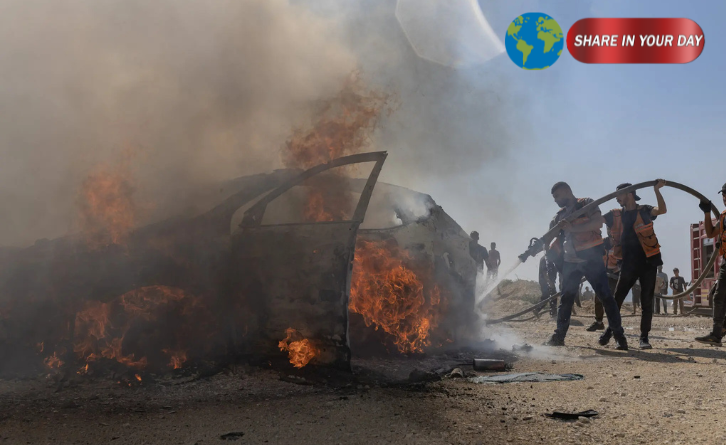
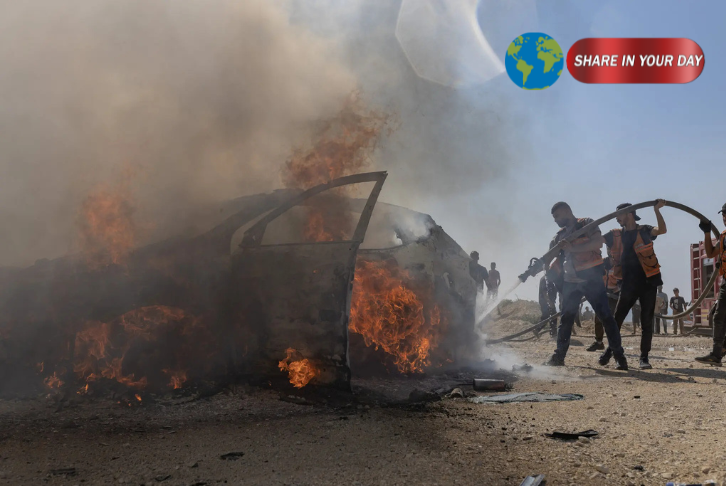
Associated Press reported that Israeli airstrikes and tank fire in Gaza killed at least four people on Aug. 24, including two children, despite recent U.S. efforts to persuade Israel to reduce military operations. Israel said it was targeting Hamas weapons sites.
The incidents have reinforced concerns among mediators that the gap between the political agreement and conditions on the ground is widening.
That gap matters because cease-fires depend heavily on trust.
When one side believes the other is violating the agreement, it becomes more difficult to persuade that side to make additional concessions.
The problem can then become circular.
Military action creates suspicion.
Suspicion makes negotiations harder.
Failed negotiations increase the possibility of further military action.
The result can be a cease-fire that technically remains in place while violence continues at a level that prevents genuine stabilization.
Mladenov warned about precisely this problem in his U.N. remarks, saying the distance between what has been agreed and what is happening on the ground threatens both the cease-fire and the disarmament process.
Hamas Also Faces Pressure Under the Gaza Plan
Although much of the recent criticism has focused on Israel, Hamas faces major obligations under the U.S.-backed framework.
The most difficult issue is disarmament.
For Israel, eliminating Hamas’s military capability is central to any permanent settlement. For Hamas, however, surrendering weapons represents a fundamental strategic and political decision.
That makes disarmament one of the hardest elements of the negotiations.
The plan also calls for Hamas and other armed groups to end military activity and dismantle their tunnel networks.
Mladenov’s comments made clear that Washington’s Gaza initiative is not designed to provide Hamas with an indefinite military role.
Instead, the objective is to establish a Gaza in which armed factions no longer control security and where a new governing arrangement can take shape.
The challenge is determining how that transition can happen without renewed warfare.
Netanyahu’s Political Calculations Add Another Complication
The dispute over the Israel Gaza cease-fire is unfolding against a complicated Israeli political backdrop.
Netanyahu has faced pressure from elements of his political base that favor continued military pressure on Hamas. Any decision to accept a deal perceived as allowing Hamas to survive politically or militarily could carry significant domestic consequences.
At the same time, continued fighting carries its own risks.
A prolonged military campaign could undermine the credibility of the cease-fire, complicate relations with Washington and make reconstruction and governance arrangements more difficult.
The political calculation is therefore not straightforward.
Netanyahu must balance pressure from his coalition, Israeli security concerns, negotiations with Washington and the international consequences of continued military operations.
The Trump administration faces its own dilemma.
President Trump has presented his Gaza initiative as a major diplomatic achievement. If the cease-fire collapses, the failure could weaken Washington’s influence over the next phase of the conflict.
That helps explain why senior U.S. officials have become increasingly involved.
U.S. Officials Have Intensified Pressure on Israel
Trump’s administration has sent senior officials to the region as it attempts to keep the peace process moving.
Jared Kushner, Trump’s son-in-law and a key figure in the administration’s Gaza initiative, traveled to the region earlier in August to address Israeli objections to the plan.
The effort followed Netanyahu’s rejection of key elements of the proposal, particularly those involving Israeli withdrawal and Hamas’s disarmament.
The involvement of senior U.S. officials reflects the stakes.
Washington is attempting to persuade Israel to accept a process that could eventually require significant military and political concessions.
At the same time, the administration is pressing Hamas to accept disarmament and the dismantling of its military infrastructure.
The United States therefore has to maintain pressure on both sides without losing its ability to act as the principal mediator.
That is an exceptionally difficult position.
The Cease-Fire Is More Than a Pause in Fighting
One of the most important questions surrounding the Israel Gaza cease-fire is how the agreement should be measured.
A cease-fire can be understood simply as a reduction in military attacks.
But the Trump administration’s broader plan appears to envision something much more ambitious.
The proposed framework involves security, governance, disarmament, withdrawal and reconstruction. The cease-fire is supposed to create the conditions for those steps to happen.
That means a temporary decline in violence is not enough.
The parties must also establish mechanisms that can prevent renewed conflict.
For Gaza’s population, this includes reliable humanitarian access, reconstruction and basic security. For Israel, it means confidence that Hamas will not return to its previous military capabilities.
For the United States and regional mediators, it means creating a process that both parties consider sufficiently credible to continue.
Every new military strike makes that objective harder.
A Fragile Balance Between Security and Diplomacy
The dispute also demonstrates the fundamental tension at the heart of the Gaza negotiations.
Israel argues that security requires eliminating Hamas’s military infrastructure.
The Trump administration’s Gaza plan argues that long-term security ultimately requires moving beyond repeated cycles of military escalation.
Those ideas are not necessarily mutually exclusive, but the sequencing is highly contentious.
Israel wants confidence that disarmament is real before making major concessions.
The peace plan’s architects appear to believe that disarmament can only happen within a broader process that includes a cease-fire and Israeli withdrawal.
The disagreement over sequencing has become one of the biggest obstacles to progress.
As long as the sides cannot agree on which step comes first, negotiations can remain stuck.
What Happens Next for the Israel Gaza Cease-Fire?
The immediate priority for U.S. mediators will likely be preventing the current tensions from escalating into a wider breakdown.
That means encouraging Israel to limit military action to what it considers genuine and imminent threats while pressing Hamas to halt military activity and comply with its own commitments.
A recent warning from a U.S.-led Gaza peace official emphasized precisely that principle. An official associated with Trump’s Board of Peace said Israel must comply with the cease-fire and that military action should not extend beyond responding to genuine and imminent threats.
The next challenge will be translating those principles into an enforceable mechanism.
Without verification, each side can continue accusing the other of violations.
With a credible monitoring process, mediators may have a better chance of determining whether an incident represents a genuine security threat or an unacceptable breach.
That distinction could prove decisive.
Gaza’s Humanitarian Crisis Remains Central
Beyond the diplomatic arguments, the humanitarian consequences remain enormous.
Every renewed attack risks additional civilian deaths and further damage to homes and infrastructure. Continued instability also makes it harder to rebuild Gaza’s health, housing, water and economic systems.
The longer political negotiations remain stalled, the more difficult reconstruction becomes.
A lasting cease-fire could open the door to a major rebuilding effort. But reconstruction requires security, funding and a governing authority capable of coordinating the work.
Those conditions cannot easily exist while military confrontation continues.
That is why the dispute between Washington and Jerusalem matters beyond the immediate question of individual strikes.
The issue is whether the cease-fire can evolve into a political process capable of addressing the underlying causes of the conflict.
A Critical Moment for Trump’s Gaza Strategy
The latest warning from Trump’s Gaza official puts the administration’s strategy at a critical juncture.
Trump has invested substantial political capital in presenting his Gaza initiative as a pathway toward ending the conflict.
Now his own representatives are warning that continued Israeli military operations could undermine that objective.
At the same time, Washington cannot simply dismiss Israel’s security concerns or ignore Hamas’s obligations.
The administration must find a way to make both sides comply with the commitments required by the plan.
That will require more than public statements.
It will require sustained diplomatic pressure, credible monitoring and agreement over what constitutes a legitimate security response.
The Israel Gaza cease-fire has already survived significant political and military tensions. Its future will depend on whether the parties can close the widening gap between the agreement negotiated by diplomats and the reality experienced on the ground.
For Palestinians in Gaza, the ultimate test is simple: whether the reduction in violence becomes lasting safety.
For Israelis, the test is whether the agreement can provide security without returning to an endless cycle of war.
And for the Trump administration, the test is whether its ambitious Gaza plan can move from diplomatic blueprint to functioning political settlement.
The coming weeks could determine whether the cease-fire becomes the foundation for a broader peace process or another temporary pause before the conflict resumes.