RFK Jr. Measles Deaths Claim Triggers New Dispute
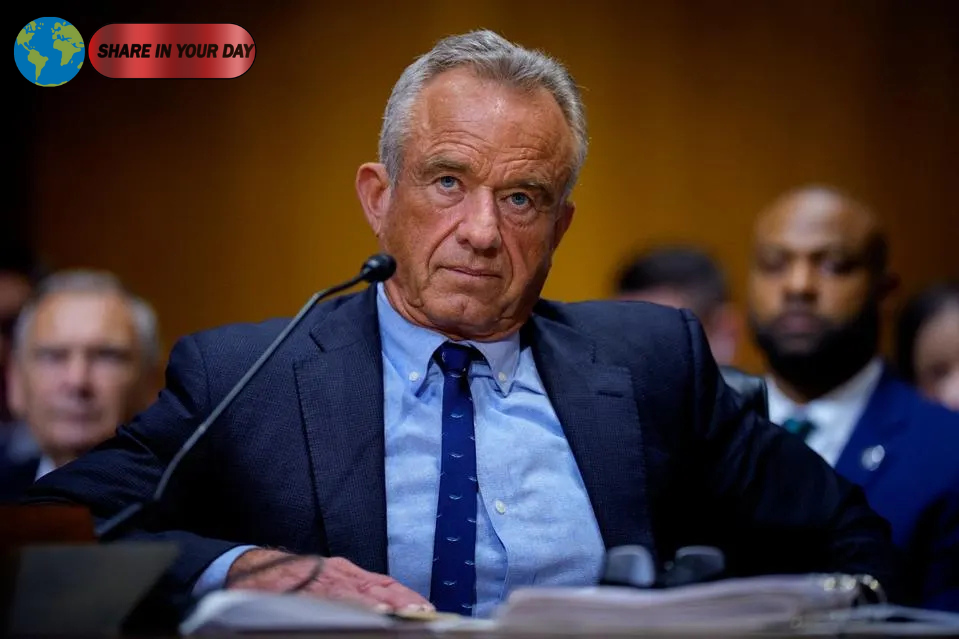
The RFK Jr. measles deaths controversy has intensified after U.S. Health and Human Services Secretary Robert F. Kennedy Jr. questioned Pennsylvania’s announcement that two unvaccinated residents had died in connection with measles.
Pennsylvania health officials announced the two deaths on Aug. 25, saying they were the state’s first measles-associated deaths in 35 years. Both victims were residents of Lancaster County and were unvaccinated, according to the Pennsylvania Department of Health. At the time of the announcement, the state said it had confirmed 393 measles cases across 28 counties in 2026. PPennsylvania Government
The announcement quickly became political.
Kennedy challenged Pennsylvania’s account and accused state officials of failing to provide enough information about the deaths. He subsequently suggested that the reported deaths could have been fabricated, a claim for which no evidence has been publicly established.
The dispute has now placed a local public health investigation at the center of a much broader argument over measles, vaccination, government transparency and the role of federal health officials.
What Happened With the Pennsylvania Measles Deaths?
The Pennsylvania Department of Health confirmed two measles-associated deaths on Aug. 25.
Officials said both individuals were unvaccinated residents of Lancaster County. The state also emphasized that it would not release personally identifying information about the victims because of privacy concerns. PPennsylvania Government
Pennsylvania described the deaths as “measles-associated” rather than necessarily stating that measles was the sole immediate cause of death.
That distinction has become central to the dispute.
According to reporting on the case, one of the victims was a newborn who tested positive for measles. Lancaster County Coroner Stephen Diamantoni said the infant appeared to have acquired the infection before birth and died shortly after birth following a spleen injury.
Measles can affect multiple organs and can cause complications involving the immune system and respiratory system. Medical experts have also explained that measles can cause an enlarged spleen, which can create a risk of rupture.
The question, therefore, is not simply whether the infant had measles. The more specific question is whether measles contributed sufficiently to the death for the case to be classified as a measles-associated fatality.
That distinction helps explain why the issue has become so contentious.
Why Did RFK Jr. Challenge Pennsylvania?
Kennedy’s criticism followed comments from the Lancaster County coroner and concerns about the information being made available publicly.
In statements reported by multiple outlets, Kennedy argued that Pennsylvania’s announcement appeared premature. He also claimed that the state had not provided the Centers for Disease Control and Prevention with sufficient information.
Kennedy went further by suggesting that the deaths could have been fabricated by someone connected to Gov. Josh Shapiro.
Those allegations have not been established by evidence.
Pennsylvania’s health secretary, Dr. Debra Bogen, strongly disputed Kennedy’s characterization. She said she had reviewed the case investigations and confirmed that both individuals had tested positive for measles.
Bogen also said the cases had been reported to the CDC’s measles response team early Tuesday, before the state publicly announced the deaths. TThe Guardian
That creates a sharply divided picture.
Kennedy and federal officials have raised questions about the classification and documentation of the deaths. Pennsylvania health officials maintain that their epidemiologists investigated the cases and that the deaths were appropriately classified as measles-associated.
The CDC Has Also Raised Questions
The controversy became even more complicated when the CDC entered the dispute.
The agency said it was working to determine what actually occurred, including whether measles caused the two reported deaths. The CDC also raised concerns about the information it said it had received from Pennsylvania. AABC News+1
However, Pennsylvania officials disputed the suggestion that the state had failed to notify federal authorities.
Bogen said Pennsylvania had reported the deaths to the CDC’s measles response team early Tuesday morning.
The disagreement illustrates an important issue in public health reporting: preliminary classifications can change as investigators obtain more medical, laboratory and forensic evidence.
At the same time, the existence of an investigation does not mean that the deaths were fabricated.
Those are separate questions.
What Does “Measles-Associated Death” Mean?
The terminology is particularly important in this case.
A death associated with an infectious disease does not necessarily mean the disease was listed as the only immediate cause of death on a death certificate.
A person may have an infection while another complication ultimately leads to death. If medical evidence indicates that the infection contributed to that complication, public health authorities may classify the death as associated with the disease.
That appears to be the key issue surrounding at least one of Pennsylvania’s reported deaths.
The newborn reportedly tested positive for measles but also suffered a fatal spleen injury. Experts cited in reporting have noted that measles can affect the spleen and that spleen enlargement and rupture can occur in connection with infection.
This makes the case medically complex.
It also means headlines describing the dispute simply as whether the victims “died from measles” can obscure the underlying question of causation.
Pennsylvania’s Measles Outbreak Is Growing
The argument over the deaths comes as Pennsylvania continues to deal with a significant measles outbreak.
The state Department of Health reported 460 infections in 31 counties by Aug. 28, up from 393 cases in 28 counties when the two deaths were first announced. PPennsylvania Government+1
Lancaster County has been at the center of the outbreak.
State officials have repeatedly warned that people who are not immune are at the greatest risk of infection. They have also increased vaccination efforts in affected communities.
In July, Pennsylvania said its health centers had administered more than three times as many measles, mumps and rubella vaccinations in Lancaster County during 2026 than they had during all of 2025. PPennsylvania Government
That increase suggests the outbreak is changing vaccination behavior in some communities.
However, public health officials remain concerned about people who have not been vaccinated, particularly those who are too young to receive routine vaccination and others who may be medically vulnerable.
Why Vaccination Rates Matter
Measles is among the most contagious infectious diseases.
Because the virus spreads so efficiently, public health experts generally aim for very high vaccination coverage to prevent sustained transmission.
Pennsylvania has seen its kindergarten MMR vaccination coverage decline compared with a decade earlier. CBS Philadelphia reported that approximately 92.7% of Pennsylvania kindergarteners had received the MMR vaccine before the 2025-26 school year, compared with 95.5% a decade earlier. CCBS News
That difference may appear small, but at the population level it can have significant consequences.
When immunity falls, measles can spread more easily after being introduced into a community.
This is especially important because some people cannot rely on vaccination for protection. Very young infants, for example, are not yet old enough to receive their routine measles vaccination.
High vaccination coverage therefore protects not only vaccinated individuals but also people who are temporarily or permanently unable to receive a vaccine.
The MMR Vaccine Remains the Main Protection
Pennsylvania health officials have emphasized that the MMR vaccine remains the best protection against measles.
The state’s Department of Health says two doses provide approximately 97% lifetime protection against measles. PPennsylvania Government
That message has become increasingly significant during the current outbreak.
Kennedy has a long history of questioning aspects of vaccine policy and vaccine safety. His statements about the Pennsylvania deaths have therefore attracted particular attention because he now leads the federal Department of Health and Human Services.
The political consequences are considerable.
When a federal health secretary questions the validity of deaths reported by state health authorities, the disagreement can influence how members of the public interpret official health information.
That is why medical experts have urged officials to focus on evidence and clear communication rather than political accusations.
Josh Shapiro and RFK Jr. Clash Over Public Health
Pennsylvania Gov. Josh Shapiro has strongly criticized Kennedy’s comments.
Shapiro has argued that misinformation about measles and vaccination has real-world consequences and has urged Kennedy to use his position to encourage vaccination.
Kennedy, meanwhile, has accused Pennsylvania officials of fearmongering and questioned the state’s handling of the deaths.
The disagreement has unfolded through press conferences and social media posts, turning a public health investigation into a highly visible political confrontation. AABC News+1
The dispute also highlights the growing tension between state and federal authorities over health policy.
Pennsylvania officials say they have investigated the cases and provided information to federal authorities. Federal officials say important questions remain unanswered.
Until the investigation is completed, the precise circumstances surrounding the deaths may remain contested.
Five Key Questions Still Unanswered
1. What was the exact cause of each death?
Pennsylvania has publicly identified the deaths as measles-associated, but it has not released detailed medical information about the victims.
That means outside observers cannot independently assess every element of the investigations.
2. Did measles directly cause the deaths?
This question is particularly important in the newborn’s case.
The infant reportedly had laboratory evidence of measles but also suffered a fatal spleen injury. Investigators must determine the medical relationship between those conditions.
3. What information did Pennsylvania provide to the CDC?
State officials say the deaths were reported to the CDC’s measles response team before the public announcement.
The CDC has nevertheless indicated that it needs additional information to resolve discrepancies.
4. Will the classifications change?
It is possible for public health classifications to be updated when additional forensic or epidemiological evidence becomes available.
That is normal in disease surveillance and does not, by itself, prove that an initial report was intentionally false.
5. What will the dispute mean for vaccination efforts?
This may ultimately be the most important question.
Pennsylvania is experiencing a growing outbreak, and health officials are trying to increase vaccination rates. A highly publicized dispute over whether deaths were genuinely associated with measles could either encourage people to seek more information or deepen distrust in public health institutions.
Why the Dispute Matters Beyond Pennsylvania
The RFK Jr. measles deaths controversy is bigger than a disagreement between one federal official and one state governor.
It illustrates the challenge governments face when communicating about infectious disease during an outbreak.
Public health authorities need enough information to explain their decisions while protecting patients and families from unwanted exposure. That can create tension between transparency and privacy.
In this case, Pennsylvania has declined to provide identifying information about the victims, citing privacy protections. That limits what journalists and members of the public can independently verify.
At the same time, claims that the deaths were fabricated require a high evidentiary standard.
As of Aug. 30, no credible evidence establishing that the Pennsylvania deaths were fabricated has been publicly presented.
What has been established is that Pennsylvania reported two measles-associated deaths, both involving unvaccinated Lancaster County residents; one involved a newborn who tested positive for measles; and federal and state officials disagree about the evidence and classification surrounding the deaths. PPennsylvania Government+1
What Happens Next?
The CDC investigation and local medical review will be important in determining how the cases are ultimately classified.
Meanwhile, Pennsylvania’s measles outbreak continues.
The state’s Department of Health has expanded vaccination and public education efforts, while health officials continue monitoring cases and potential exposures.
The timing is especially significant as children return to school, where close contact can facilitate measles transmission.
For families, the immediate public health issue is less about the political argument and more about immunity.
People who are unsure of their vaccination status can consult their healthcare provider or local health department. Pennsylvania has also encouraged people who may have been exposed and are unvaccinated to seek medical guidance.
The broader lesson from the controversy is that disease statistics can sometimes involve complicated medical judgments. Those judgments deserve scrutiny, but they also need to be evaluated using evidence rather than speculation.
For now, the Pennsylvania deaths remain officially classified by the state as measles-associated, while federal and local investigators continue to examine the details.
As the investigation develops, additional information could clarify whether the classifications remain unchanged or are revised.
Until then, the political battle between Kennedy and Shapiro is likely to continue drawing attention—but the expanding measles outbreak remains the central public health concern.