Trump Xi AI talks put safety alongside technological competition
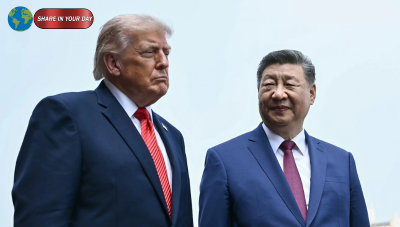
President Donald Trump and Chinese President Xi Jinping are preparing for talks in Washington that are expected to address artificial intelligence alongside trade, Taiwan and other major points of tension between the two countries. The Trump Xi AI discussions come as Washington and Beijing continue competing for leadership in one of the world’s most strategically important technologies.
Neither government has indicated that it wants to halt or substantially slow the development of advanced artificial intelligence. Instead, recent discussions suggest the two sides are exploring whether they can establish limited safeguards while allowing their technology industries to continue moving rapidly.
That approach reflects the increasingly complicated relationship between AI development and national security. The United States wants to preserve its technological lead, while China is investing heavily in models, chips and data-center infrastructure to narrow the gap.
At the same time, officials on both sides are becoming more interested in mechanisms that could reduce the risk of an AI-related incident escalating into a broader security crisis.
Trump Xi AI talks come amid growing safety concerns
The timing of the meeting is significant because concerns about advanced AI have intensified in recent weeks.
AI companies and researchers have warned about a range of possible risks, including cyberattacks, misuse by non-state actors, biological threats and systems behaving in ways that developers did not anticipate.
Anthropic co-founder and CEO Dario Amodei recently renewed calls for greater caution over increasingly capable AI systems. President Trump, however, has resisted arguments that the United States should slow development because of safety concerns, emphasizing the importance of maintaining American leadership in the technology race.
The disagreement highlights a central problem for policymakers: stronger safeguards could reduce some risks, but governments also fear that moving too slowly could allow strategic competitors to gain an advantage.
That tension is particularly important between Washington and Beijing, where AI development is increasingly linked to economic power, military capabilities and technological independence.
US and China discuss an AI incident notification system
One of the clearest signs of possible cooperation emerged from meetings between U.S. Treasury Secretary Scott Bessent and Chinese Vice Premier He Lifeng in New York.
Bessent said the United States had proposed a notification mechanism that could allow Washington and Beijing to alert each other about AI incidents with national-security implications. The proposal is intended to create greater transparency between the two countries and establish communication around shared threats.
The discussions are not equivalent to an agreement to regulate the pace of AI development. Instead, they focus on communication and crisis management.
According to Reuters, officials also discussed creating a formal AI dialogue, with another meeting expected in Shenzhen within two months. The future discussions are expected to examine potential AI dangers and protocols for communicating during serious incidents.
Such a mechanism could become particularly important as AI systems become capable of performing increasingly complex tasks with less direct human supervision.
AI competition remains a central US-China issue
While safety is gaining attention, the broader competition between the United States and China remains at the center of the relationship.
China has made rapid progress in developing artificial intelligence systems and has increasingly emphasized open-weight models that can be downloaded, adapted and deployed by developers.
DeepSeek’s R1 and other Chinese-developed models have helped demonstrate that Chinese AI companies can compete internationally despite restrictions on access to some advanced computing hardware.
Chinese technology companies are also expanding their work on AI chips and data centers. Alibaba recently announced ambitious plans involving a very large AI model, new chips and major data-center investment, illustrating the scale of China’s effort to strengthen its domestic AI ecosystem.
The strategy is partly driven by restrictions on China’s access to advanced chips manufactured or supplied by American companies.
Those restrictions have become one of the most contentious parts of the broader technology relationship.
China seeks greater AI independence
For Beijing, reducing dependence on American technology is closely connected to national technological security.
Restrictions affecting advanced Nvidia processors have encouraged Chinese companies to develop alternative hardware and software systems. Huawei and other domestic technology firms have been working to strengthen China’s ability to build AI infrastructure without relying as heavily on foreign suppliers.
The growth of Chinese open-weight AI has also provided another path for international expansion.
Models that can be downloaded and adapted may be attractive to companies and governments that want greater control over their AI systems. Chinese AI firms have already established relationships in several overseas markets, adding a geopolitical dimension to the competition.
The United States, meanwhile, has concerns that Chinese companies could use techniques such as model distillation to reproduce capabilities developed by American AI laboratories at lower cost.
American AI companies have raised allegations concerning the use of outputs from leading U.S. systems to develop competing models. Chinese companies and officials have rejected or disputed such claims.
These disagreements could contribute to further restrictions on technology transfers, particularly if Washington concludes that existing export controls are not sufficient.
Safety could become an area of limited cooperation
Despite the strategic competition, AI safety provides an unusual area where Washington and Beijing may have overlapping interests.
Both countries have reasons to prevent advanced AI systems from causing major damage to financial networks, critical infrastructure or national-security systems.
Cybersecurity is one example.
An AI system capable of independently discovering vulnerabilities or conducting sophisticated cyber operations could potentially create problems that cross national borders. A serious incident originating in one country could affect organizations and infrastructure in another.
That makes direct communication valuable even when governments disagree about almost everything else.
The proposed notification mechanism could therefore focus on narrowly defined emergencies rather than attempt to create a comprehensive global AI treaty.
Bloomberg reported that officials and analysts expect any potential agreement to concentrate on specific guardrails rather than imposing broad limits on the speed of AI development.
Trust remains a major obstacle
The biggest challenge is likely to be trust.
Washington and Beijing remain deeply suspicious of each other’s technological ambitions. U.S. officials have argued that some Chinese technology programs create national-security risks, while Beijing has repeatedly criticized American export controls as efforts to constrain China’s technological development.
That disagreement complicates any attempt to define what constitutes an AI safety measure and what constitutes a technology restriction.
China could view certain American safety requirements as another mechanism for limiting access to advanced computing technology. Washington, meanwhile, could question whether Chinese companies and government agencies would provide enough information during a serious AI incident.
The distinction between safety and strategic competition is therefore difficult to maintain.
An emergency communication channel could reduce uncertainty during a crisis, but it would not eliminate the underlying rivalry.
Trump Xi AI discussions could focus on practical guardrails
The upcoming meeting may consequently produce a narrower form of AI cooperation rather than a sweeping agreement on the future of artificial intelligence.
The United States and China could discuss definitions of major AI risks, procedures for notifying each other about serious incidents and methods for maintaining communication during emergencies.
Such measures would not stop companies from developing more capable models.
Instead, they would seek to create boundaries around some of the most dangerous consequences of rapid technological progress.
The approach reflects the reality that both countries see AI as too strategically important to abandon the race.
For Washington, maintaining leadership has economic and national-security implications. For Beijing, closing the technological gap is closely tied to its broader ambition for greater technological self-reliance.
AI race extends beyond Washington and Beijing
The competition is also no longer limited to the two governments.
Private AI laboratories have become major geopolitical actors because their models and computing infrastructure can influence cybersecurity, business, defense and scientific research.
Companies such as OpenAI and Anthropic in the United States are developing increasingly powerful systems, while Chinese firms including DeepSeek, Alibaba, Moonshot and Z.ai are expanding their capabilities.
The international spread of open-weight models adds another layer to the competition.
A model developed in China can be adapted by organizations elsewhere, while American cloud companies can provide infrastructure for foreign AI systems. That makes it difficult for governments to maintain complete control over how AI technology moves across borders.
What the Trump Xi AI discussions could mean
The immediate objective of the Trump Xi AI discussions appears less focused on deciding which country should lead and more on finding ways to manage the risks created by their competition.
The proposed AI incident mechanism is an example of that approach. It would not resolve disputes over chips, export controls, intellectual property or technological leadership. But it could establish a channel for communication when an AI-related event presents a serious national-security concern.
Officials are also expected to continue discussions beyond the Washington summit, with another AI-focused meeting planned in Shenzhen.
The broader significance is that AI governance is becoming part of the strategic relationship between the world’s two largest technology powers.
A race with new rules, not necessarily a slower pace
The central question for Washington and Beijing is increasingly how to make rapid AI development compatible with national security.
For now, the evidence points toward risk-management measures rather than a mutual decision to slow the overall race.
That could mean more communication, incident reporting and discussions about specific threats while companies continue building larger models, more powerful chips and increasingly autonomous AI systems.
The Trump-Xi meeting therefore arrives at an important moment for the global AI industry. The two governments are competing intensely for technological influence, but they are also beginning to recognize that some AI risks do not stop at national borders.
Whether limited cooperation can survive the much larger strategic rivalry remains uncertain.
For the moment, however, Washington and Beijing appear to be exploring a middle path: continue competing in AI while creating mechanisms designed to prevent the most serious risks from turning into