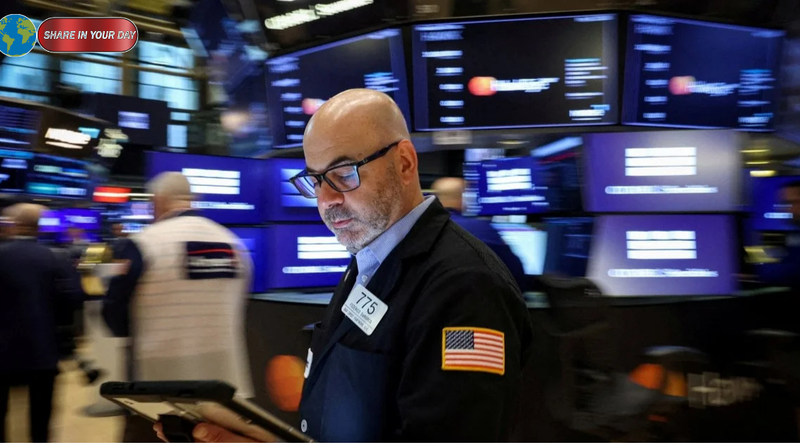
US Stock Futures: 5 Key Risks as Iran Tensions Rise
US stock futures moved lower Monday as renewed military hostilities between the United States and Iran pushed oil prices sharply higher and revived concerns about inflation, interest rates and global economic growth.

Dow Jones, S&P 500 and Nasdaq 100 futures all traded lower in early activity as investors assessed the impact of fresh U.S. military strikes against Iranian targets near the Persian Gulf. The renewed confrontation has put the Strait of Hormuz back at the center of financial-market attention because disruptions there could have significant consequences for global energy supplies.
Reuters reported that U.S. stock futures declined after the renewed clashes drove crude prices higher and intensified inflation concerns. Brent crude jumped nearly 6% at one point, while investors also increased bets that the Federal Reserve could raise interest rates in September. RReuters
The latest market move comes after a strong August for major U.S. equity indexes. That leaves investors facing a difficult question: Can Wall Street maintain its momentum if geopolitical risks continue pushing energy prices higher?
US Stock Futures Fall as Oil Prices Surge
The immediate market reaction was driven largely by oil.
Brent crude climbed above $90 a barrel after U.S. forces struck Iranian rocket launchers near the Strait of Hormuz. U.S. West Texas Intermediate crude also rose sharply.
The increase in energy prices matters because oil affects virtually every part of the economy.
Higher crude prices can increase transportation costs, manufacturing expenses and household energy bills. If those increases remain elevated for long enough, companies can face pressure on profit margins while consumers may have less money available for discretionary spending.
That creates a difficult environment for stocks.
The latest data showed Brent trading around $91 a barrel during Monday’s session, with the benchmark up significantly from the previous trading day. TTrading Economics+1
For investors, the biggest concern is not simply that oil prices have risen.
The bigger question is whether the increase will last.
If shipping through the Strait of Hormuz remains relatively stable, some of the geopolitical premium could eventually disappear. However, a prolonged disruption to oil transportation could create a much larger shock for global markets.
1. Iran Tensions Could Keep Markets Volatile
The first major risk for US stock futures is the possibility of continued escalation.
The United States and Iran have exchanged further military strikes after a period in which hostilities had eased. The latest attacks have once again placed the security of energy infrastructure and shipping routes under scrutiny.
The Strait of Hormuz is particularly important because it is one of the world’s most strategically significant oil-transit routes.
Any serious disruption could quickly change the market’s calculations.
Investors would likely begin pricing in a larger and longer-lasting supply shock. That could push crude prices even higher and increase pressure on inflation-sensitive assets.
Monday’s market reaction already showed how quickly geopolitical developments can affect financial markets.
The S&P 500, Dow and Nasdaq futures all moved lower, while energy prices jumped. At the same time, energy companies benefited from higher crude prices, creating a sharp divide between different parts of the stock market. IInvesting.com+1
That divergence could continue if oil remains elevated.
2. Higher Oil Prices Revive Inflation Fears
The second major risk is inflation.
For much of the year, investors have been watching whether price pressures would continue moving toward the Federal Reserve’s 2% target.
A sustained oil-price increase could make that process more difficult.
Energy is an important component of consumer prices. More expensive gasoline, transportation and energy-related products can eventually feed into broader inflation.
That creates a potential problem for the Federal Reserve.
If inflation remains stubbornly high, policymakers may have less flexibility to cut interest rates. In a more extreme scenario, they could even consider raising rates to prevent inflation expectations from becoming entrenched.
Investors have already started adjusting their expectations.
According to Reuters, market pricing for a September Fed rate hike rose to nearly 60%, up from about 41.4% one week earlier. RReuters
That is a significant shift.
Higher interest rates can put pressure on stock valuations because future corporate earnings become less attractive when discounted at higher rates.
Growth and technology companies can be especially sensitive because a larger portion of their valuations may depend on earnings expected many years into the future.
3. Federal Reserve Expectations Are Back in Focus
The third major risk for US stock futures is monetary policy.
Federal Reserve Chair Kevin Warsh recently delivered remarks at the Jackson Hole symposium that investors interpreted as hawkish.
Warsh emphasized the importance of bringing inflation back toward the central bank’s 2% target and indicated that policymakers could use interest rates to address persistent price pressures. RReuters+1
That message has become more important because the geopolitical shock is arriving at a delicate time.
The Fed would ideally like to respond to economic weakness with lower interest rates. But if oil prices push inflation higher, cutting rates becomes more difficult.
This creates a potential policy dilemma.
If economic growth slows while inflation rises, policymakers could face the kind of environment commonly described as stagflationary.
Markets generally dislike that combination.
Investors therefore have a strong incentive to watch both oil prices and upcoming economic data.
4. The Jobs Report Could Move Markets
The fourth major risk is the U.S. labor market.
Investors are preparing for the August employment report, scheduled for release on September 4.
The report could become one of the most important pieces of economic data for markets because it may help determine whether the Federal Reserve has enough reason to change its interest-rate stance.
Recent labor-market data have shown signs of cooling, increasing concerns about the strength of economic growth.
At the same time, inflation remains a concern.
That creates a difficult combination for policymakers.
If employment weakens significantly while oil prices continue rising, investors may have to reassess expectations for monetary policy.
A stronger-than-expected jobs report could produce the opposite reaction.
Markets could interpret robust employment as evidence that the economy can withstand tighter monetary policy, potentially supporting the case for higher rates.
As a result, volatility could remain elevated throughout the week.
5. Wall Street Is Coming Off a Strong August
The fifth factor is the market’s recent performance.
Despite Monday’s decline, U.S. equities entered the final trading day of August after a strong month.
Investopedia reported that the Dow was up about 2.1% for August, while the S&P 500 had gained roughly 3% and the Nasdaq had risen around 4.1%. IInvestopedia
That creates an interesting backdrop.
Markets are not entering the latest geopolitical shock after a prolonged sell-off. Instead, investors are coming from a position of relatively strong gains.
When markets have risen significantly, traders can become more willing to lock in profits when new risks appear.
That could amplify short-term declines.
However, strong corporate earnings and continued enthusiasm around artificial intelligence could provide some support.
The key question is whether investors view the Middle East situation as a temporary shock or the beginning of a longer-lasting economic problem.
Energy Stocks Could Be the Biggest Beneficiaries
Not every part of the stock market is responding negatively.
Higher oil prices generally provide support for energy producers and other companies whose revenues are closely connected to crude prices.
Reuters reported that energy stocks including Halliburton and Valero Energy gained as oil prices climbed. RReuters
This creates an important sector rotation story.
Energy companies can benefit when crude prices rise, while airlines, transportation companies and other fuel-intensive businesses can face greater costs.
Consumer stocks could also experience pressure if higher gasoline prices reduce household spending power.
Investors may therefore move toward companies that are better positioned to withstand higher energy costs.
That could make sector performance particularly important over the next several trading sessions.
Technology Stocks Face a Different Challenge
Technology stocks face a different set of pressures.
The Nasdaq has been one of the strongest areas of the market during August, helped by continuing interest in artificial intelligence and semiconductor companies.
But technology shares can be sensitive to changes in bond yields and interest-rate expectations.
If inflation expectations rise and Treasury yields increase, investors may become less willing to pay premium valuations for high-growth companies.
Still, Monday’s early trading showed that the reaction was not uniform.
Several semiconductor names, including Nvidia, Intel and Texas Instruments, were showing modest gains despite the broader weakness in futures. RReuters
That suggests investors are not abandoning technology stocks outright.
Instead, the market appears to be reassessing which companies can continue delivering strong earnings in a potentially more challenging macroeconomic environment.
What Investors Are Watching Next
The direction of US stock futures will likely depend on several variables over the coming days.
The first is the military situation between the United States and Iran.
Any evidence of de-escalation could quickly reduce the geopolitical premium in oil prices. Conversely, further attacks involving energy infrastructure or shipping routes could send crude prices significantly higher.
The second factor is the oil market itself.
The physical flow of crude through the Strait of Hormuz will be especially important. If shipments continue with limited disruption, investors may eventually conclude that the initial price spike was excessive.
The third factor is the Federal Reserve.
Markets will closely examine economic data and comments from policymakers for clues about September’s interest-rate decision.
Finally, investors will watch corporate earnings.
Broadcom and Dell are among the companies scheduled to report this week, while economic releases such as the ISM manufacturing report and Friday’s employment data could influence the broader market outlook. MMarketWatch
Could US Stock Futures Recover?
A decline in futures does not necessarily mean Wall Street is entering a prolonged bear market.
Markets have repeatedly demonstrated their ability to absorb geopolitical shocks when investors believe the economic damage will remain contained.
The crucial variable is duration.
A short-lived increase in oil prices may have limited consequences for corporate earnings and consumer spending. A prolonged disruption could be very different.
If crude remains above $90 or climbs substantially higher, inflation expectations could rise further.
That could force investors to reconsider assumptions about interest rates, economic growth and corporate valuations.
For now, the market appears to be pricing in greater uncertainty rather than an immediate economic crisis.
That distinction is important.
Bottom Line
US stock futures slipped Monday as renewed U.S.-Iran hostilities pushed oil prices higher and revived concerns about inflation and Federal Reserve policy.
The Dow, S&P 500 and Nasdaq futures all faced pressure as investors assessed the potential economic consequences of higher energy prices. Meanwhile, energy stocks benefited from the surge in crude.
The biggest risk is whether the conflict remains contained or begins disrupting the physical flow of oil through the Strait of Hormuz.
At the same time, investors are reassessing the likelihood of a September Federal Reserve rate hike. Reuters reported that market expectations for a hike had risen to nearly 60%, highlighting how quickly geopolitical developments can change monetary-policy expectations. RReuters
The upcoming U.S. jobs report will provide another important test.
Until there is greater clarity on the conflict, oil prices and Federal Reserve policy, Wall Street could remain volatile.
For investors, the message is straightforward: the next major move in U.S. stocks may depend less on corporate earnings alone and more on whether the latest geopolitical shock remains temporary—or becomes a sustained threat to global energy markets and inflation.
Image ALT Text
US stock futures fall as Iran tensions push oil prices higher
Suggested Image
Use a licensed editorial image showing a Wall Street trading floor, U.S. stock-market futures screens, or crude-oil trading alongside a geopolitical news backdrop. Do not reuse the Investing.com/Reuters image without the appropriate license.
Suggested External Sources
- Reuters — U.S. stock futures and Middle East tensions
- Reuters — Oil and broader market reaction
- Investopedia — Key market developments for August 31, 2026
- Investing.com — Original source article
Suggested Internal Links
Replace these with relevant URLs from your own website:
- U.S. stock market today
- Federal Reserve interest-rate outlook
- Latest oil price news
- S&P 500 market analysis
- Nasdaq market news
This version is structured for Yoast/Rank Math-style optimization, but the actual green indicators should be verified after pasting it into your SEO plugin because scores can vary based on the plugin’s current configuration and your site’s internal-link structure.