Nepal Floods Put China’s Disaster Reporting Under Scrutiny
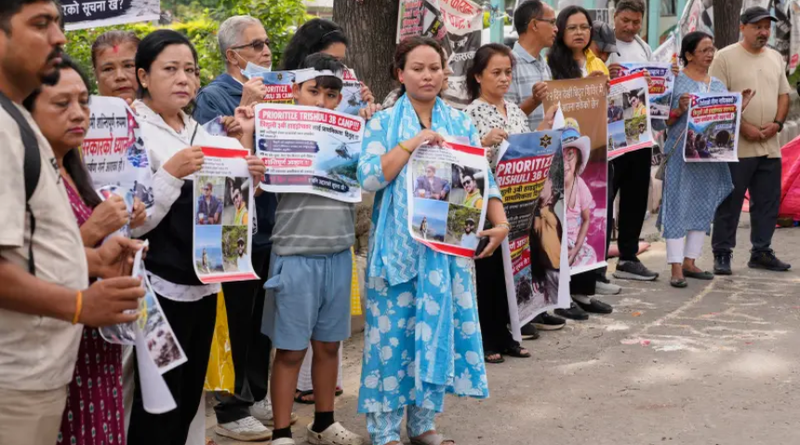
The Nepal floods have developed into not only one of the Himalayas’ most devastating disasters in recent years, but also a growing dispute over transparency and access to information. As Nepal continues identifying victims and searching for thousands of missing people, questions are mounting over how China has reported the catastrophe on the other side of the border.
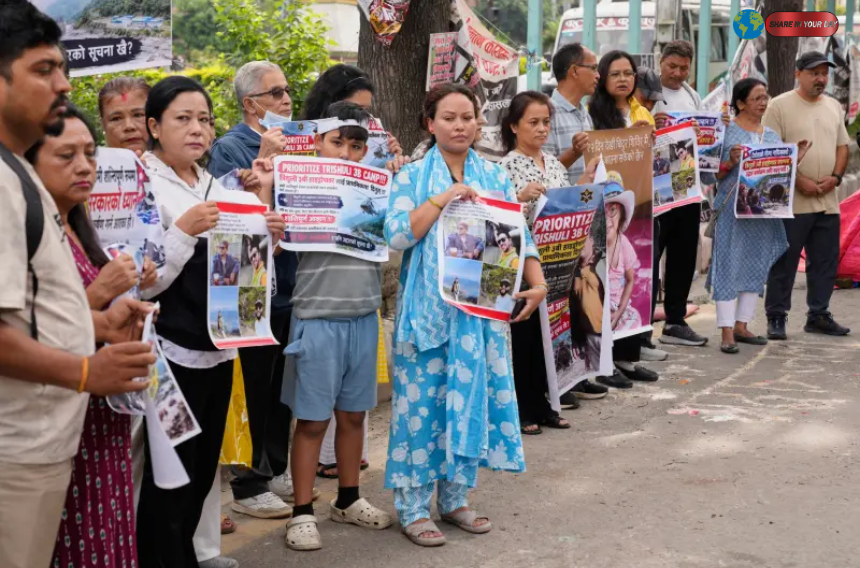
The floods began on Aug. 26 after a glacier-related collapse triggered a devastating surge of water, mud and debris along areas near the Nepal-China border. Communities in Nepal and China’s Tibet Autonomous Region were hit, with major infrastructure destroyed and thousands of people killed or reported missing.
By Sept. 7, Nepal had reported more than 1,300 deaths and thousands of missing people. Chinese authorities, meanwhile, had reported a much smaller number of deaths and more than 500 missing people in Tibet. The difference has intensified questions about whether the scale of the disaster on the Chinese side is being fully documented. GGeorgia Public Broadcasting+1
The issue is particularly sensitive because Tibet is a heavily controlled region where independent journalists have historically faced significant restrictions.
What happened in the Nepal floods?
The disaster struck with extraordinary speed.
A massive flow of water, rock and sediment moved through valleys along the Nepal-Tibet border after a glacial collapse. The resulting flood destroyed roads, bridges, buildings and border infrastructure.
One of the most severely affected locations was Gyirong, on the Chinese side of the border. The Gyirong Port crossing was effectively devastated, with a major customs building among the structures destroyed.
On the Nepalese side, the impact extended across several districts, including Rasuwa and Nuwakot. Hydropower infrastructure was particularly badly affected.
Search teams have also been attempting to reach workers believed to be trapped inside underground hydropower tunnels. Recent rescues of workers alive after days underground have raised hopes that others could still be found. AAP News+1
The humanitarian crisis remains fluid. Search teams continue working through mud, debris and unstable terrain, while families wait for information about relatives who remain missing.
Reuters coverage of the ongoing rescue operation
Why is China’s reporting attracting attention?
One of the biggest concerns is the difference in the flow of information between Nepal and Tibet.
According to reporting cited by NPR, Nepal quickly released information about missing foreign nationals, including names, ages and nationalities. China took several days before publicly identifying the nationalities of hundreds of foreigners reported missing in Tibet.
The contrast goes beyond numbers.
Journalists and international observers have been able to operate relatively openly on the Nepalese side. Authorities have provided updates, while rescue workers, humanitarian organizations and reporters have documented conditions on the ground.
Access to the Chinese side has been much more restricted.
Foreign journalists were initially prevented from independently reporting from the affected area. After repeated requests, a limited number of foreign media organizations were eventually allowed to visit parts of the disaster zone under controlled conditions. NPR said it was not granted access. GGeorgia Public Broadcasting
That lack of independent access makes it difficult for outside organizations to independently verify the official casualty figures.
It does not, by itself, prove that China is deliberately undercounting victims. But it does make independent verification considerably more difficult.
China rejects accusations of withholding information
Chinese officials have rejected suggestions that authorities are understating the scale of the disaster.
Foreign Ministry spokesperson Guo Jiakun said China had been open and timely in releasing information and criticized what he described as misinformation surrounding the disaster.
Chinese authorities have also emphasized the work of rescue teams operating in the affected areas.
State media organizations, including Xinhua and CCTV, have reported extensively on rescue operations, logistics, emergency workers and government responses. GGeorgia Public Broadcasting
The Chinese government’s position is therefore substantially different from that of critics who argue that the public has received an incomplete picture.
Beijing says the response is focused on rescue and recovery.
Critics say the problem is that the public cannot independently determine the full scale of the disaster when access to affected communities is restricted.
That distinction is at the heart of the current debate.
Nepal floods reveal a wider information gap
The disagreement is not simply about a single death toll.
It is also about who can gather information, who can publish it and whether independent observers can verify official statements.
On the Nepalese side, journalists have interviewed survivors and rescue workers. International organizations have been able to assess conditions. Local authorities have also published updates through official channels.
On the Chinese side, state media have played a much larger role in shaping the public narrative.
The coverage has concentrated heavily on rescue teams, emergency logistics and the government’s response. According to journalism researchers cited by NPR, reporting about individual victims and affected villages has been much less prominent. GGeorgia Public Broadcasting
That difference matters because disaster reporting is not only about statistics.
Names, photographs, eyewitness accounts and information from affected families can help establish the human scale of a catastrophe. They can also allow relatives and foreign governments to locate missing people.
When those details are limited, uncertainty grows.
Social media has become another battleground
The debate over the Nepal floods has also moved onto social media.
Some videos and eyewitness accounts reportedly circulated online after the disaster. Researchers monitoring Chinese media and censorship said that some flood-related material was later removed.
Chinese officials have disputed allegations that authorities systematically deleted firsthand accounts.
Chinese police have also taken action against people accused of spreading misinformation related to the floods, according to reporting cited by NPR and other international media. GGeorgia Public Broadcasting+1
This creates a complicated information environment.
During a disaster, misinformation can spread rapidly. Governments have a legitimate interest in stopping fabricated casualty figures, fake rescue information and dangerous rumors.
However, aggressive censorship can also remove legitimate eyewitness evidence.
The challenge is determining where legitimate misinformation control ends and excessive information control begins.
Why Tibet makes the situation more sensitive
The location of the disaster is crucial.
The Chinese territory affected by the floods is part of Tibet, a politically sensitive region where Beijing maintains tight control over media access and information.
That makes the disaster different from a flood in an area where international journalists can freely travel, interview residents and inspect damaged infrastructure.
Rights groups have argued that the lack of independent access in Tibet means the actual humanitarian impact could be larger than the official figures indicate. The International Campaign for Tibet has also raised concerns about destroyed homes and restrictions affecting people in severely damaged communities. GGeorgia Public Broadcasting
These claims should be treated carefully because independent access is limited.
Still, the absence of independent verification is itself significant.
It means outside observers have fewer ways to establish what happened in remote communities or determine whether every missing person has been properly accounted for.
The numbers tell only part of the story
The casualty figures have changed as rescue teams have reached remote areas.
By Sept. 7, reports from Nepal put the combined death toll across Nepal and Tibet at more than 1,300, with more than 5,500 people missing. Chinese figures for Tibet were significantly lower than Nepal’s overall figures, reporting dozens of deaths and hundreds of missing people. RReuters+1
The figures are not necessarily directly comparable.
Nepal and China are reporting on different territories, populations and administrative systems. Different methods for registering missing people can also produce major variations.
In addition, the destruction of communications and transportation infrastructure makes it difficult to establish an accurate count immediately.
Nevertheless, the gap is large enough to attract international attention.
For families, the difference is more than a statistical argument.
Every unidentified body represents a family waiting for confirmation. Every person listed as missing represents another household hoping for news.
The disaster also raises questions about early warnings
Another major issue emerging from the floods is the need for better cross-border disaster warnings.
The Himalayas do not follow political boundaries.
Rivers, glaciers, mountains and landslide risks can affect communities in more than one country. A hazard originating in one location can become a life-threatening event downstream within minutes.
Nepal has subsequently pushed for stronger early-warning mechanisms and greater access to information about glacier and water risks along the China border. Reuters has reported that Nepal is working to rebuild and improve early-warning infrastructure following the catastrophe. RReuters+1
This could become one of the most important lessons from the disaster.
Better monitoring alone is not enough.
Information has to reach people quickly enough for them to act.
Climate change adds another layer of risk
Scientists have increasingly warned about the growing risks associated with glaciers and glacial lakes as temperatures rise.
The precise chain of events behind the Aug. 26 disaster remains subject to investigation. However, experts have warned that warming conditions can increase instability in high-mountain environments and contribute to dangerous glacial-lake and glacier-related events.
The United Nations has previously reported a substantial increase in the frequency of glacial lake outburst floods over recent decades. AAl Jazeera
For Nepal, the consequences are particularly serious.
The country sits among some of the world’s highest mountains and has communities, roads and power infrastructure concentrated along steep valleys and river systems.
That combination creates enormous exposure to sudden flooding.
China and Nepal face pressure to improve cooperation
The Nepal floods have demonstrated that disaster management in the Himalayas cannot easily be separated from geopolitics.
Nepal needs reliable information about risks originating near or across its northern border. China has advanced monitoring capabilities and significant infrastructure in Tibet.
Both countries therefore have an interest in improving the exchange of hydrological and environmental information.
The same applies to India and other downstream countries.
Major Himalayan rivers cross national boundaries, meaning early warnings can become a regional security issue as much as an environmental one.
The recent disaster has already prompted renewed discussion about information sharing, early-warning systems and international cooperation. RReuters+1
What happens next?
For now, the immediate priority remains finding survivors and recovering victims.
Rescue teams are still working in difficult conditions. In Nepal, specialized teams have been deployed to hydropower facilities where workers may remain trapped underground. China has also continued rescue and recovery operations around the destroyed Gyirong area. RReuters+1
At the same time, families are demanding answers.
The longer missing-person cases remain unresolved, the greater the pressure will be on authorities to provide detailed information.
For China, that means questions about access and transparency are unlikely to disappear simply because rescue operations continue.
For Nepal, the challenge is different but equally serious: authorities must continue identifying victims, restoring infrastructure and accounting for thousands of missing people while managing an enormous reconstruction effort.
The disaster has already exposed weaknesses in infrastructure, communication and preparedness.
It has also exposed something less visible but equally important: the difficulty of obtaining reliable information when a catastrophe crosses a politically sensitive international border.
A disaster that goes beyond Nepal
The Nepal floods are ultimately more than a story about a devastating natural disaster.
They are a test of emergency response, regional cooperation, journalism and public transparency.
Nepal’s comparatively open access to the affected areas has allowed reporters and aid organizations to document the tragedy in detail. China’s tighter restrictions have made independent assessment on the Tibetan side much harder.
That difference does not automatically establish that China’s official figures are inaccurate.
But it does explain why questions about China’s reporting have become such an important part of the story.
As rescue workers continue searching through wreckage and families wait for news, accurate information is not merely a journalistic concern.
It can determine whether missing people are found, whether foreign governments can help their citizens, whether communities receive appropriate assistance and whether future disasters can be better anticipated.
The Himalayan flood disaster therefore leaves behind two urgent tasks.
The first is to find and identify those still missing.
The second is to build a system in which the next warning crosses borders faster than the flood itself.